
TL;DR:
- To furnish a practical and modular retro family living room, you need to measure the space, define zones, and prioritize circulation. It's essential to incorporate multi-functional furniture with storage, while maintaining natural light and a clean style. Modularity, harmonious textures, and suitable organization ensure conviviality and lasting aesthetics.
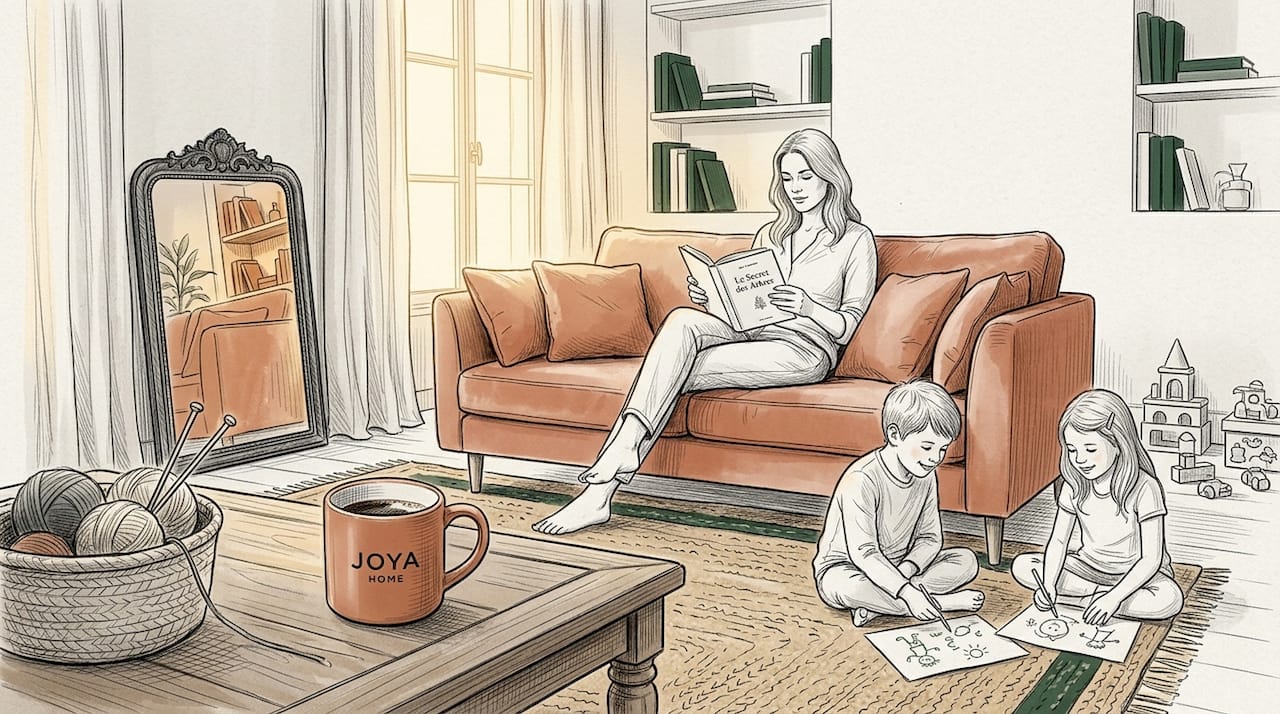
You live in an apartment where the living room has to do everything at once: host friends, serve as a playground for children, remain aesthetically pleasing, and exude a warm atmosphere. This daily challenge leads many young parents to sacrifice style for practicality, or vice versa. However, there's a real method to reconcile a confident retro look, intelligent modularity, and family comfort without your living room looking like a toy warehouse or a museum display.
Table of Contents
- Essential prerequisites before furnishing your family living room
- Step 1: Analyze the space and define zones
- Step 2: Choose multi-functional and retro furniture without overwhelming
- Step 3: Create a harmonious and easily tidiable play area
- Common mistakes to avoid and finishing tips
- Our perspective: why true retro family style is primarily about modularity
- Take action: selection of sofas and space-saving solutions
- Frequently asked questions about family living room design
Key Points
| Point | Details |
|---|---|
| Prioritize circulation | A pleasant living room requires fluid circulation, even in a small space. |
| Focus on multi-functional furniture | Well-chosen furniture makes your living room both beautiful and practical. |
| Integrate retro style subtly | A few vintage pieces are enough to create a warm atmosphere without overdoing it. |
| Create dedicated spaces | Define living zones for a harmonious and easy-to-live-in family living room. |
Essential prerequisites before furnishing your family living room
To start on the right foot, you first need to clarify some fundamentals. Before buying anything, take out your tape measure and note every dimension: length, width, ceiling height, position of windows, outlets, and radiators. This raw data will dictate all your decisions.
Next, list your real needs. A family living room is not a magazine living room. You need to plan for:
- A comfortable relaxation area, easily accessible from the kitchen or hallway.
- A play area for children, delineated but integrated into the room.
- Sufficient storage so that the room remains presentable in five minutes.
- Fluid circulation between the different zones.
Natural light plays a central role. To optimize every square meter, position your furniture so as never to block windows. A bright room always appears larger and more inviting. The cozy living room styles approach is based on this principle: light, soft textures, and an open layout immediately create warmth.
Arranging for good circulation, creating convivial zones, and prioritizing light are the three pillars of a successful retro living room.
Pro tip: Take inspiration from rustic decor for your choice of materials and colors. Earth tones, natural wood, and warm textiles provide a retro base without visually overwhelming the room.
| Priority | Concrete action | Expected impact |
|---|---|---|
| Measure | Take all dimensions | Avoids purchasing errors |
| Light | Clear windows | Visually enlarged space |
| Circulation | Allow 60 cm minimum | Comfort and safety |
| Storage | Identify storage areas | Always presentable living room |
Step 1: Analyze the space and define zones
Once the basics are laid, let's move on to the concrete organization of your space. Zoning is the key to a successful multi-functional living room. Here's how to proceed methodically:
- Draw a scaled plan on paper or with a simple app. Represent doors, windows, and outlets.
- Identify essential pathways between the entrance, kitchen, and bedrooms. These virtual corridors must remain clear.
- Assign a zone to each use: television, reading, play, storage.
- Place large furniture first, starting with the sofa, which structures the entire space.
The analysis, circulation, and zoning method involves measuring, identifying essential pathways, and limiting bulky furniture to streamline daily life. It's a proven approach that avoids the most common mistakes.
For an L-shaped or U-shaped living room, the corner sofa naturally becomes the pivot between zones. It visually delineates the relaxation area without adding partitions. A compact sofa designed for small spaces can save up to 30% of circulation space compared to a traditional configuration with a straight sofa and separate armchairs.
Key benchmark: always leave at least 60 cm in front of a door and 40 cm between your sofa and the coffee table. These are the minimum thresholds for comfortable movement.
| Configuration | Space saved | Child-friendly | Retro style possible |
|---|---|---|---|
| L-shaped corner sofa | Yes, very good | Yes | Easily |
| Straight sofa + armchair | Medium | Little | Yes |
| Chaise lounge + stools | No | Difficult | Very good |
| Sofa bed | Yes | Yes | Depending on model |
Step 2: Choose multi-functional and retro furniture without overwhelming
Now that you know how to segment the space, it's time to choose suitable furniture. The classic mistake is to buy pieces that look perfect in the store but overwhelm the apartment once installed. The golden rule: each piece of furniture must fulfill at least two functions.
Here are the essentials for a practical and retro family living room:
- Sofa with integrated storage: ideal for blankets, cushions, or board games.
- Coffee table with chest or drawers: dual use as decor and discreet storage.
- Wall shelves: free up floor space and go vertical without cluttering the area.
- Nesting tables: slide one under the other and adapt to all uses.
Opt for multi-functional furniture like a sofa with storage or a coffee table with chests to combine practicality and aesthetics. This logic applies even more in an apartment where every square centimeter counts.
For a retro style, select two or three strong pieces rather than accumulating. A rounded brass mirror, a 70s ceramic lamp, or a solid wood coffee table are enough to set the mood. Introducing a few retro reference pieces and alternating old and contemporary without over-cluttering is the formula that truly works long-term.
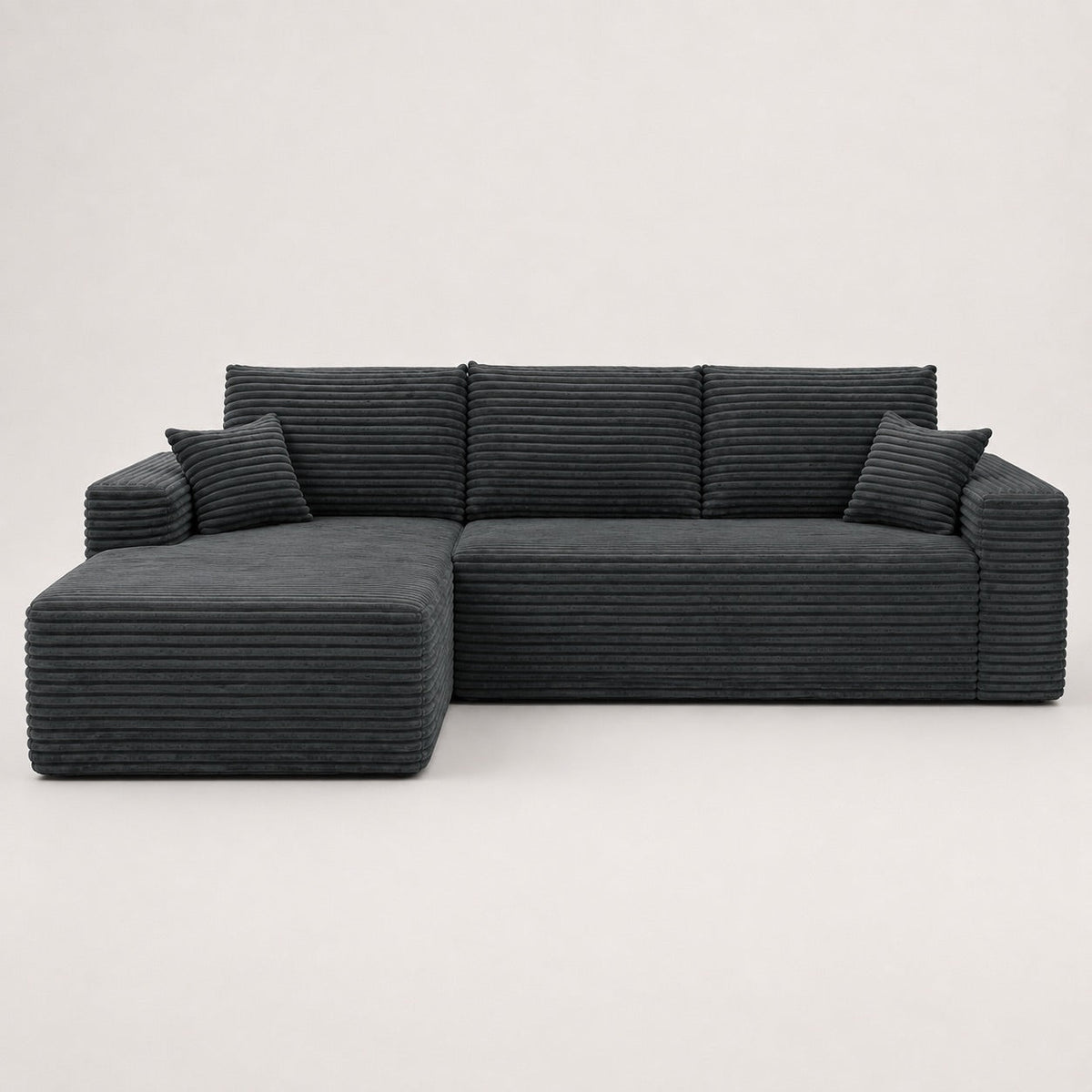
Vintage furniture can integrate perfectly with contemporary sofas, provided you play with textiles. A corduroy sofa in terracotta or bottle green instantly creates a bridge between modernity and vintage spirit. Discover how to optimize compactness with well-designed furniture.
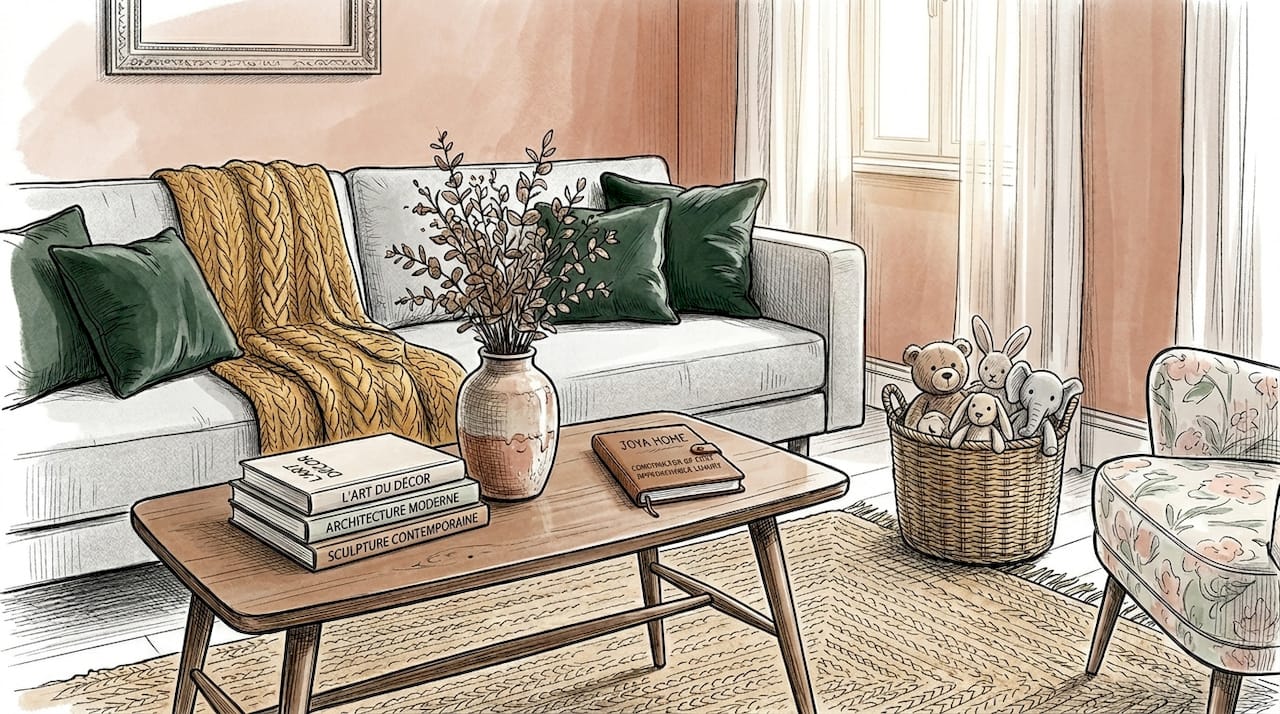
Pro tip: To mix old and new, use textiles as a binder. A wool throw, velvet cushions, and a retro geometric patterned rug effortlessly unify furniture from different eras.
To find a small space sofa that combines retro style and family practicality, prioritize corduroy models with modular structures.
Step 3: Create a harmonious and easily tidiable play area
In a family living room, the challenge is not just decor but also daily practicality. A well-thought-out play area can integrate into the living room without breaking the retro ambiance, provided it is organized from the start.
Here's how to create this corner step-by-step:
- Choose a corner or a delimited zone, ideally near a window for light, away from the main thoroughfare.
- Install low and accessible furniture: open bookshelves, stackable cubes, child-height shelves.
- Organize by categories: a bin for Legos, a basket for stuffed animals, a box for books.
- Harmonize colors with the rest of the living room by choosing storage in natural wood or wicker.
The low, child-height furniture and the principle of express tidying in less than five minutes are the two criteria that make a play area truly functional in the long run.
The concrete advantages of this organization:
- Children tidy up on their own because everything is accessible.
- The living room regains its "adult" appearance in a few minutes before a visit.
- Natural materials (wicker, wood, cotton) naturally complement retro decor.
- The play area becomes a decorative element in its own right, not an eyesore in the room.
To delve deeper into ambiances, consult our inspirations on cozy living rooms that naturally integrate family constraints.
Common mistakes to avoid and finishing tips
To avoid missteps, here's what you should anticipate before finalizing your layout.
The most common mistakes we observe:
- Overloading from the start: buying all the furniture at once without letting the room breathe.
- Neglecting lighting: a single overhead light source creates a cold and flat look.
- Choosing overly large furniture: a 120 cm coffee table in a 15 m² living room obstructs circulation.
- Mixing too many styles: Scandinavian, retro, industrial, and bohemian all at once leads to visual chaos.
Accumulating retro objects overloads the room and detracts from its conviviality. It's better to introduce reference pieces over several weeks to maintain control of the ambiance.
For lighting, multiply sources at different heights: a vintage floor lamp in a corner, wall sconces, a bedside lamp on a low shelf. This play of light adds depth and warmth to any space. Try the 3-2-1 method to structure your decor additions progressively and coherently.
Pro tip: Wait two to three weeks between each important decorative addition. This allows you to observe how the room evolves with natural light and living habits before making your next decision.
Our perspective: why true retro family style is primarily about modularity
To take a step back, let's consider the philosophy behind balancing a family living room and retro style. Most articles on this subject show you photos of immaculate living rooms, with no children in sight. The reality of a family apartment is quite different.
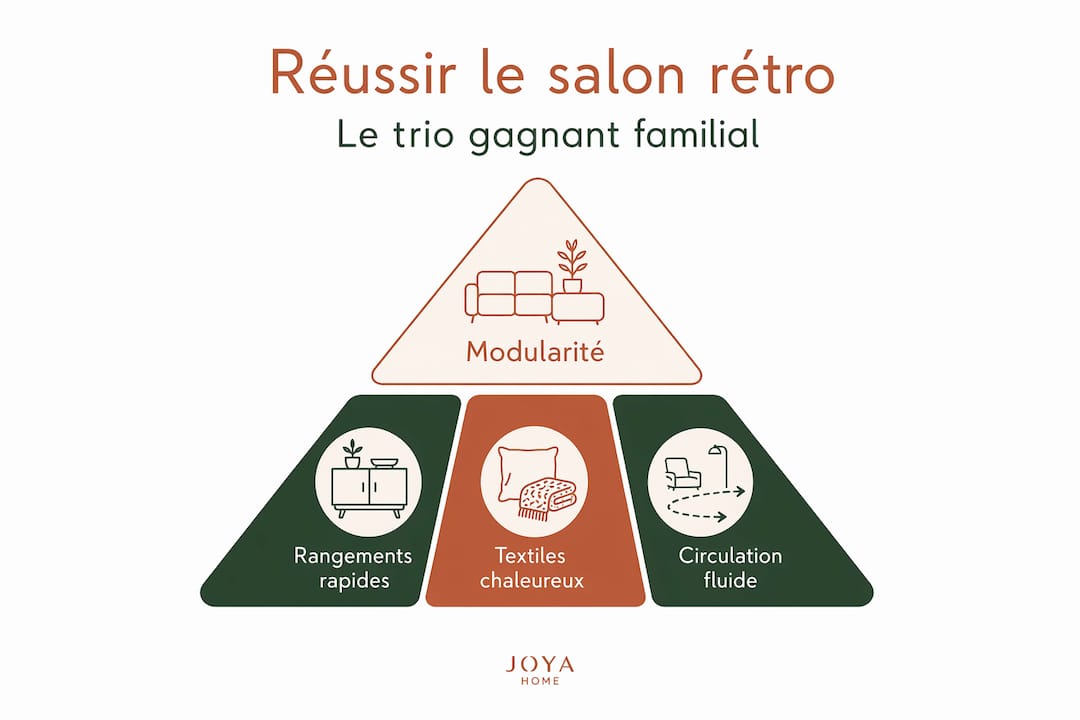
What we've realized is that successful retro style in a family context is never achieved through accumulation. It's achieved through modularity. A truly functional living room must be able to change configuration according to the moment: a large family gathering on the weekend, a quiet corner for homework during the week, a play area in the afternoon.
The winning trio always remains the same: clear circulation, quick tidying in less than five minutes, and warm textures as a visual base. Corduroy, wood, and natural cotton form a palette that supports all variations of use without ever looking out of place.
The trap of "all retro" is real. When every object is vintage, the eye doesn't know where to rest, and the room quickly becomes tiring. An evolving decor, where the background is modern and understated, and retro accents are chosen sparingly, resists time and life changes much better. The evolution of the compact sofa perfectly illustrates this idea: a sober and versatile central piece of furniture frees up all decorative choices around it.
Take action: selection of sofas and space-saving solutions
Once you're ready to act, here's where to find what will truly change your living room layout. At Joya Home, we've designed our sofas precisely for the situations this article describes: apartments where space is limited, families who need modularity, and a desire for a warm style without compromising practicality.
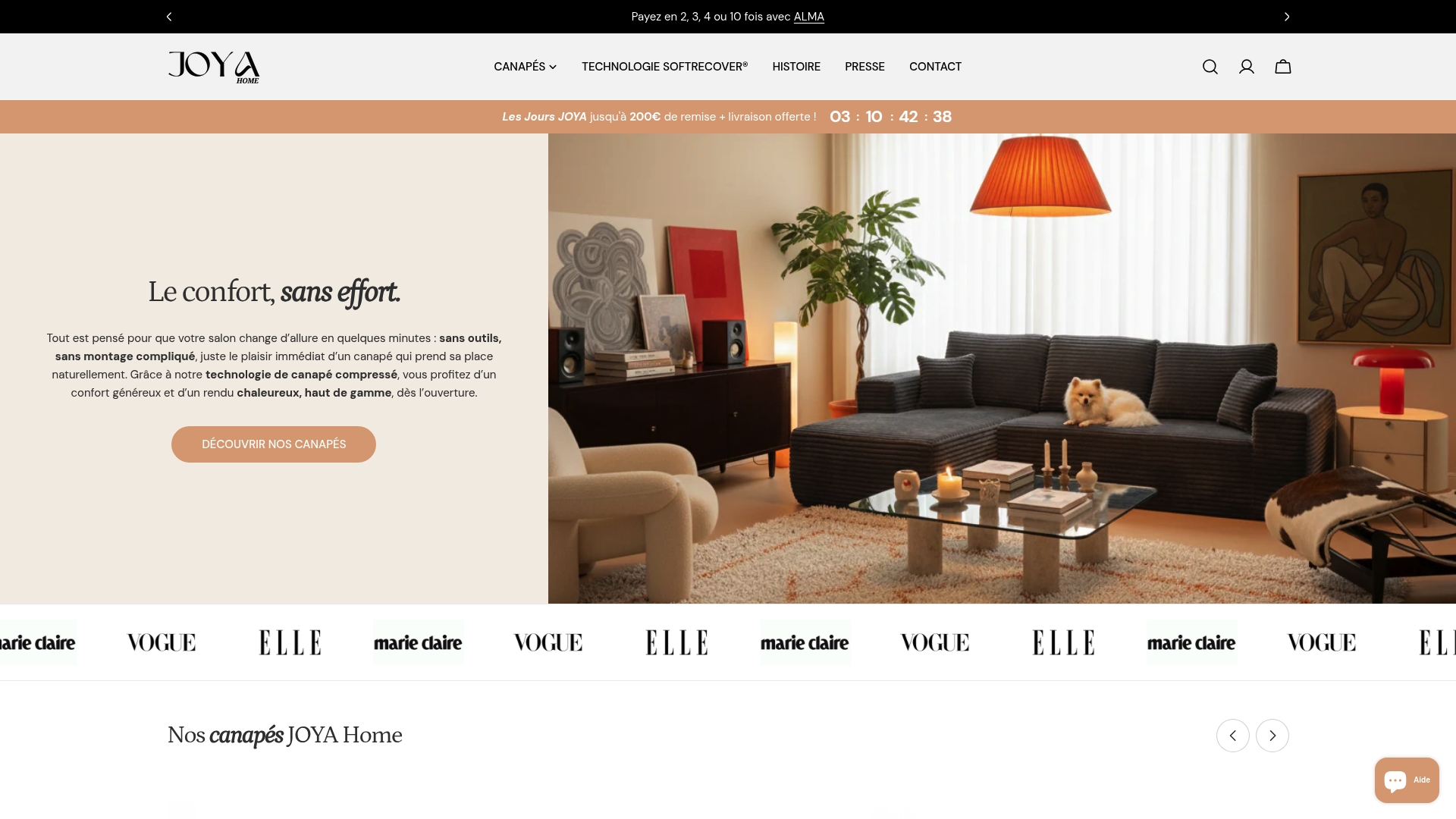
Our corduroy models, delivered compressed directly to your home and assembled in minutes, meet both circulation constraints and retro aesthetic desires. Discover our selection of small space sofas designed for apartments, or browse all sofa models to find the central piece that will structure your family living room.
Frequently asked questions about family living room design
What minimum space should be left in front of a sofa in a small family living room?
You should leave approximately 40 cm between the sofa and the coffee table, and at least 60 cm in front of a door for comfortable daily circulation.
How to integrate a play area into the living room without breaking the style?
Use low, child-height furniture, sort toys by categories in baskets made of natural materials, and harmonize colors with the rest of the room.
What are the tips for a warm retro living room without over-cluttering?
Choose a few retro key pieces, mix textures and materials, and alternate old and contemporary elements without multiplying objects.
How to keep a living room modular and easy to live with daily?
Favor modular and multi-functional furniture, with clear zoning and easily accessible storage for the whole family.