
TL;DR:
- Preparing for passage involves precisely measuring all sofa and access dimensions.
- Disassembly, protection, and ergonomic tools facilitate sofa handling.
- Modular or compressed sofas are ideal for small spaces and simplify transport.
You found the perfect sofa online, it arrives tomorrow, and then, panic: will it fit through the door? Thousands of young renters experience this scenario every year. Between narrow hallways, spiral staircases, and tiny elevators, transporting a sofa to an apartment can quickly turn into a nightmare. However, with good preparation, the right tools, and a few ergonomic tips, the operation becomes much simpler. Here's everything you need to know to transport your sofa without unnecessary effort, without damage, and with a smile.
Table of Contents
- Measure and anticipate: preparation above all
- Lighten the task: disassembly, protection, and ergonomic tips
- Safe carrying techniques: number and posture, essential tools
- Optimize passage in the building and vehicle transport
- What few experts will tell you: modular or compressed design, an ally for modern apartments
- Discover JOYA Home sofa solutions for stress-free transport
- Frequently Asked Questions
Key Points
| Point | Details |
|---|---|
| Preparation above all | Carefully measure sofa and passages to avoid unpleasant surprises on D-Day. |
| Disassemble and protect | Remove removable elements and pack well for easy and damage-free transport. |
| Adopt the right technique | Carry with at least two people, use the right tools, and adopt a safe posture. |
| Opt for a sofa designed for apartment living | Compact, compressed, or modular models simplify transport and installation. |
Measure and anticipate: preparation above all
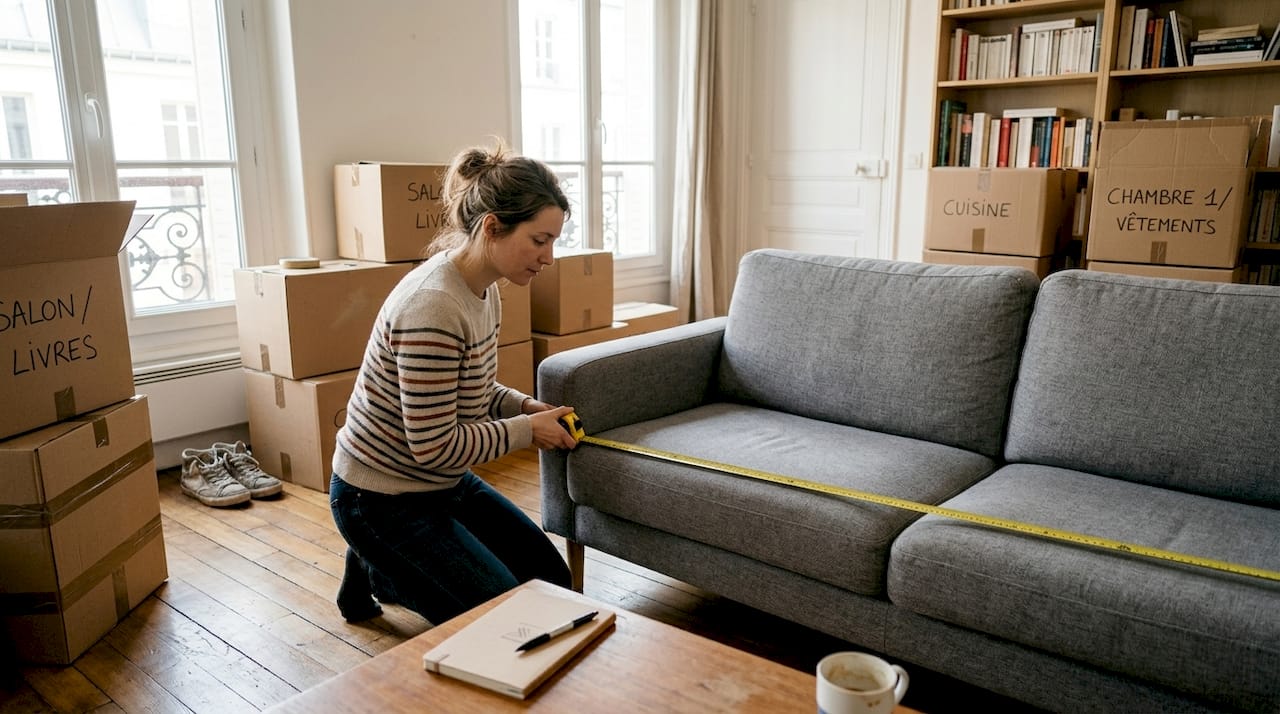
Before ordering, before renting a truck, even before asking your friends for help, one rule: measure everything. This is the absolute foundation. Measure the sofa dimensions (length, width, height) and compare them to doors, hallways, stairs, and elevators to anticipate passage problems. A 5 cm difference can block everything.
Here are the key dimensions to note before any operation:
- Width of each door (including frame)
- Ceiling height in turns
- Hallway width at the narrowest point
- Elevator cabin depth and width
- Stair width and landing dimensions
To help you visualize the constraints, here is a quick reference table:
| Sofa type | Average length | Average width | Average weight |
|---|---|---|---|
| 2-seater sofa | 150 cm | 85 cm | 45 kg |
| 3-seater sofa | 200 cm | 90 cm | 65 kg |
| Corner sofa | 250 x 180 cm | 95 cm | 90 kg |
| Compact compressed sofa | 220 cm | 85 cm | 55 kg |
Once you have the numbers, think about the diagonal. Many sofas that seem too long can pass by tilting them at 45°. 3D planning applications like MagicPlan or RoomSketcher allow you to simulate the passage before D-Day. Also, consult City-Drop expert tips for concrete scenarios.
If you're considering a new purchase, our compact sofa delivery guide explains how compression technology eliminates these measurement constraints. And to know if your sofa will last, check out our article on how to recognize a durable sofa.
Pro tip: Draw a simple diagram of your hallway with the angles and widths noted. Show it to your movers or friends before D-Day. This avoids unpleasant surprises and decisions made in haste.
Lighten the task: disassembly, protection, and ergonomic tips
Once the dimensions are verified, making the sofa more manageable is essential. An entire sofa is heavy and cumbersome. Intelligently disassembled, it becomes much easier to handle.
Disassemble removable parts: feet, armrests, backs, and cushions to reduce weight and size. Here is the optimal order for this step:
- Remove all cushions and store them separately
- Unscrew the feet (often screwed under the sofa)
- Detach armrests if they are removable
- Separate modules if the sofa is L-shaped or U-shaped
- Wrap each piece individually before moving them
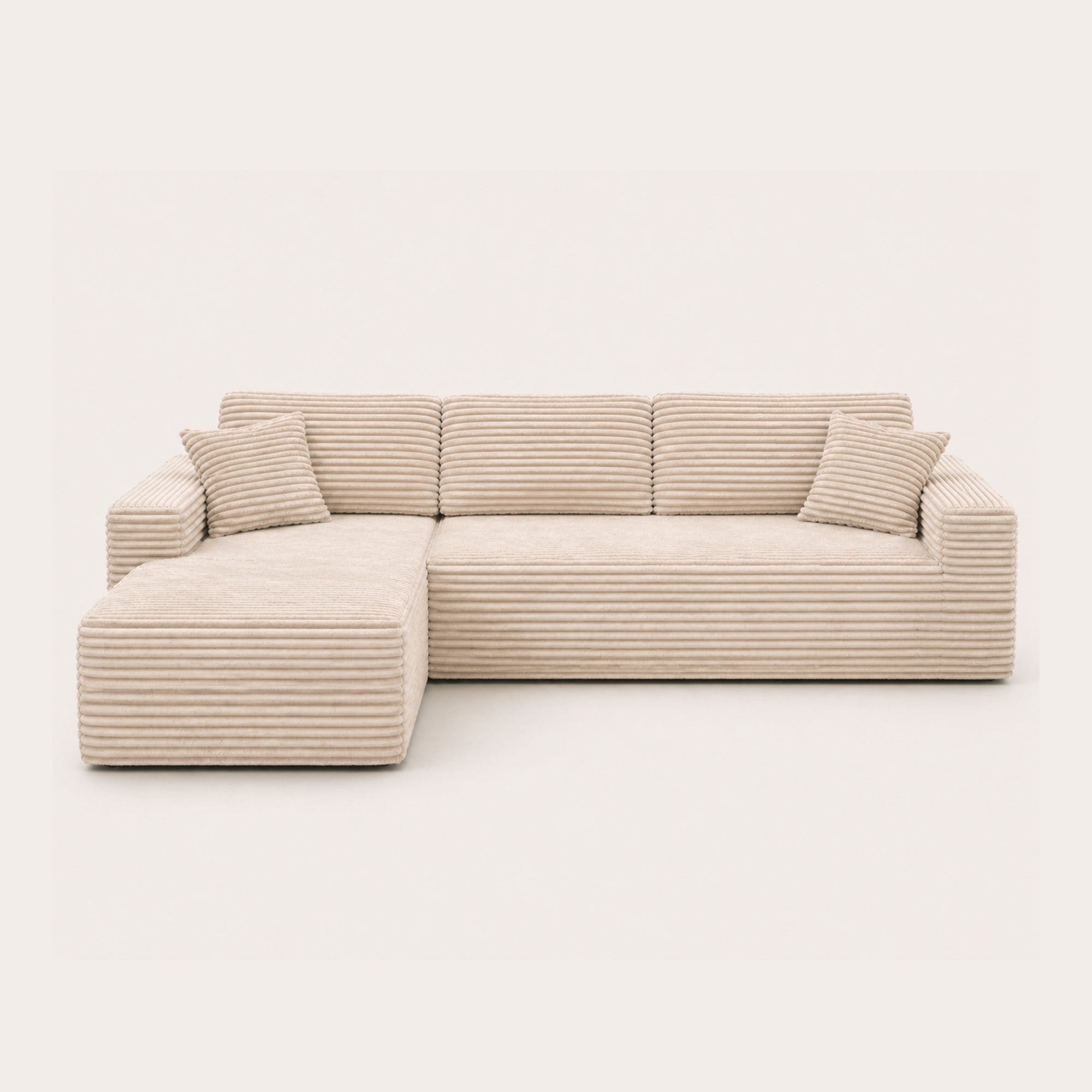
Protection is as important as disassembly. Protect the sofa with moving blankets, stretch plastic film, and suitable covers, while protecting walls and corners with foam protectors. A corduroy sofa, for example, scratches very easily when it comes into contact with a wall corner.
A poorly protected sofa during transport can lose all its aesthetic value in a few minutes. Better to spend 20 minutes wrapping than regretting it.
For floors, furniture sliders placed under the sofa allow it to glide effortlessly on parquet or tile. Carrying straps distribute weight to the shoulders rather than wrists, reducing fatigue. Our article on the compact sofa user guide shows how some models entirely avoid this step. To go further, discover how to optimize sofa assembly once you're home. If you're looking for a model designed for small spaces, our quick assembly sofa page will give you concrete ideas.
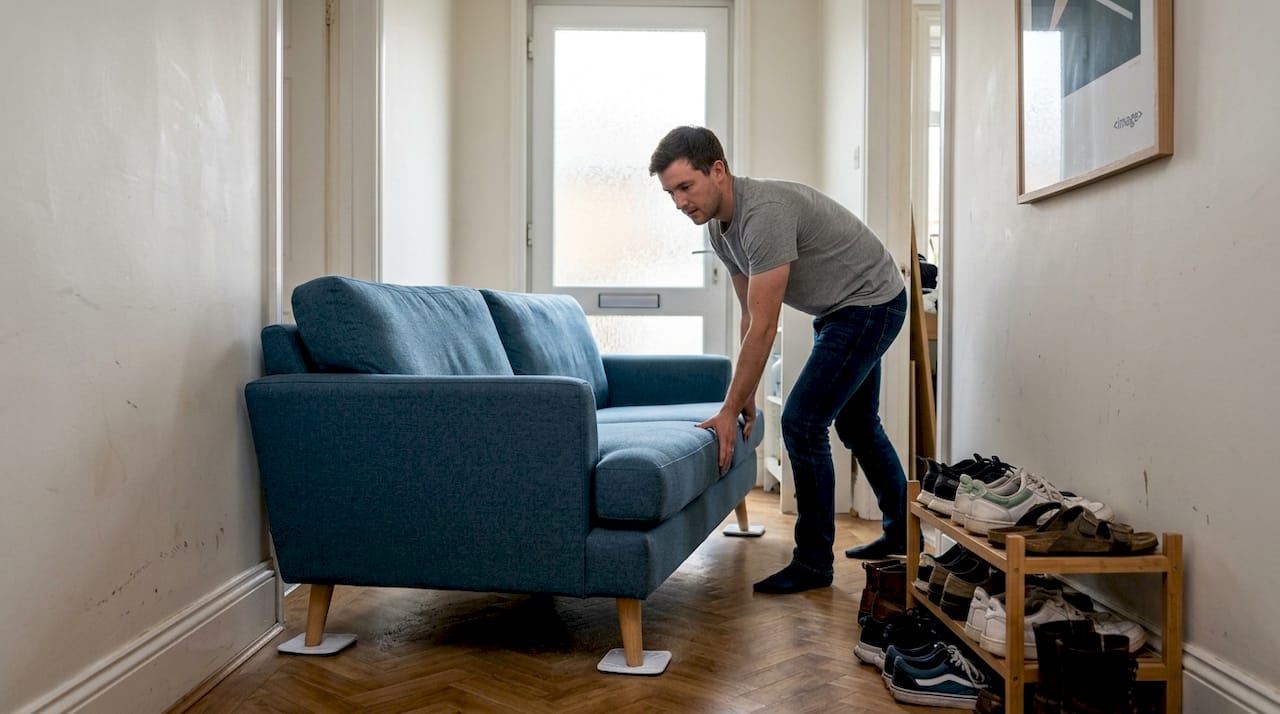
Pro tip: Slip all screws, nuts, and small parts into a hermetically sealed zip bag, then tape it directly to the sofa. You'll never lose anything, and reassembly will be immediate.
Safe carrying techniques: number and posture, essential tools
After lightening and protecting the sofa, it's time to handle the furniture. This is where mistakes are costly, both in injuries and material damage.
The golden rule: use at least 2 people, bend your knees, keep your back straight, and use lifting straps to distribute the load. Carrying a heavy sofa alone is one of the most common causes of back pain in young adults.
Here are the most common situations and their solutions:
| Situation | Number of people | Recommended tool |
|---|---|---|
| 2-seater sofa, ground floor | 2 | Furniture sliders |
| 3-seater sofa, stairs | 3 | Carrying straps |
| Corner sofa, no elevator | 3 to 4 | Stair climbing hand truck |
| Compressed sofa delivered in a box | 1 to 2 | No special tools |
Actions to absolutely avoid:
- Twisting your back while carrying
- Holding the sofa only by the armrests
- Moving backward down stairs without help
- Carrying furniture over 40 kg alone
Important statistic: It is strongly advised not to transport a sofa weighing over 40 kg alone. Beyond this threshold, the risk of muscle injury becomes significant, especially on stairs.
For corner models, consult our guide on corner sofa installation which details the positioning steps. And if you are still hesitant about which type of sofa to buy, our comparison of compact versus classic sofas will help you decide. For additional tips on sofa transport by stairs, City-Drop experts have documented very useful practical cases.
Optimize passage in the building and vehicle transport
Final step: adapt transport to the building's architecture and secure delivery to your living room. This is often where things get complicated.
Start with a complete diagnosis of the route:
- Locate the widest entrance (main or delivery door)
- Identify 90° turns in hallways
- Check the elevator's weight capacity (displayed in the cabin)
- Identify isolated steps or raised thresholds
- Plan the direction of placement in the living room before entering
For narrow stairs or buildings without an elevator, tilt the sofa at 45°, pivot it diagonally, and use a stair climbing hand truck or sliders to reduce friction. This technique, called the "pivot method," allows 220 cm sofas to pass through stairwells 90 cm wide.
For vehicle transport, here's a quick guide based on sofa size:
| Sofa size | Recommended vehicle | Necessary accessories |
|---|---|---|
| 2-seater compact | 6m³ utility van | Straps, blankets |
| 3-seater standard | 12m³ truck | Straps, chocks |
| Large corner sofa | 20m³ truck with tailgate | Straps, ramp, chocks |
| Compressed sofa | Standard car | None |
Secure the sofa in the vehicle with tie-down straps, protective blankets, and rent a truck suitable for the size of the furniture. An unsecured sofa can tip over during braking and cause irreparable damage.
If you want to avoid all this logistics, our article on compact or traditional sofas compares the two options. For small apartments, the criteria for apartment sofas are a must-read. And if space optimization is your priority, our compact sofa for optimized space guide will show you how to gain up to 70% space.
Pro tip: If your building has an elevator, reserve an exclusive time slot with the caretaker or neighbors. Blocking the elevator for 30 minutes avoids back-and-forth trips and unnecessary tension.
What few experts will tell you: modular or compressed design, an ally for modern apartments
We often talk about technique, straps, and hand trucks. But there is a truth that few guides dare to state clearly: the best way to avoid transport problems is to choose a sofa designed not to create them.
The most common misconception is that designer and comfortable sofas are necessarily bulky. This is false. New-generation modular and convertible sofas, especially compressed models, are designed specifically for urban apartments and difficult passages. They arrive in a compact box, unfold in minutes, and offer the same comfort as a traditional sofa.
Investing in modularity also means investing in freedom. Moving in two years? Your compressed sofa goes with you without a headache. Re-arranging your living room? The modules adapt. This is a logic of urban living that classic sofas simply cannot follow. Our comparison of the differences between compact and classic sofas perfectly illustrates why this choice changes everything, from the first day of delivery.
Discover JOYA Home sofa solutions for stress-free transport
To make this whole process even simpler, nothing beats a solution designed for this situation.

At JOYA Home, every sofa is designed to arrive at your home effortlessly. Thanks to compressed sofa technology, your furniture is delivered in a compact box that fits through all doors, even the narrowest. No more straps, hand trucks, and friends called upon on a Saturday morning. Our models, such as Le Méridia or Le Reverso, are specially designed for small space sofas, with quick and intuitive assembly. Discover our entire range of designer and compact sofas and order with complete peace of mind.
Frequently Asked Questions
What is the maximum recommended weight for carrying a sofa alone?
It is not recommended to carry a sofa weighing more than 40 kg alone to avoid the risk of injury. Beyond this threshold, ask at least one other person for help.
What tools are truly essential for moving a sofa in a building without an elevator?
Carrying straps, stair-climbing hand trucks, and furniture sliders are essential to facilitate handling in narrow staircases. This equipment can be easily rented from large DIY stores.
Is it necessary to disassemble the entire sofa before transport?
Disassembling removable parts reduces weight and volume, but complete disassembly is not always mandatory, depending on access. Evaluate on a case-by-case basis according to your building's configuration.
What type of vehicle is recommended for transporting a large corner sofa?
A 20m³ truck with a tailgate is ideal for large sofas, to ensure safe and efficient transport. For a compressed sofa, a standard car is sufficient.
Recommendation
- Compact Sofa 2026: +70% Space & Retro Comfort – Joya Home
- Compressed Sofa: Easy User Guide for Living Room 2026 – Joya Home
- Compact or Traditional Sofa: The Right Choice for Your Living Room – Joya Home
- What is a Practical Sofa: Complete Guide 2026 – Joya Home
- Efficient luggage organization: car and family 2026