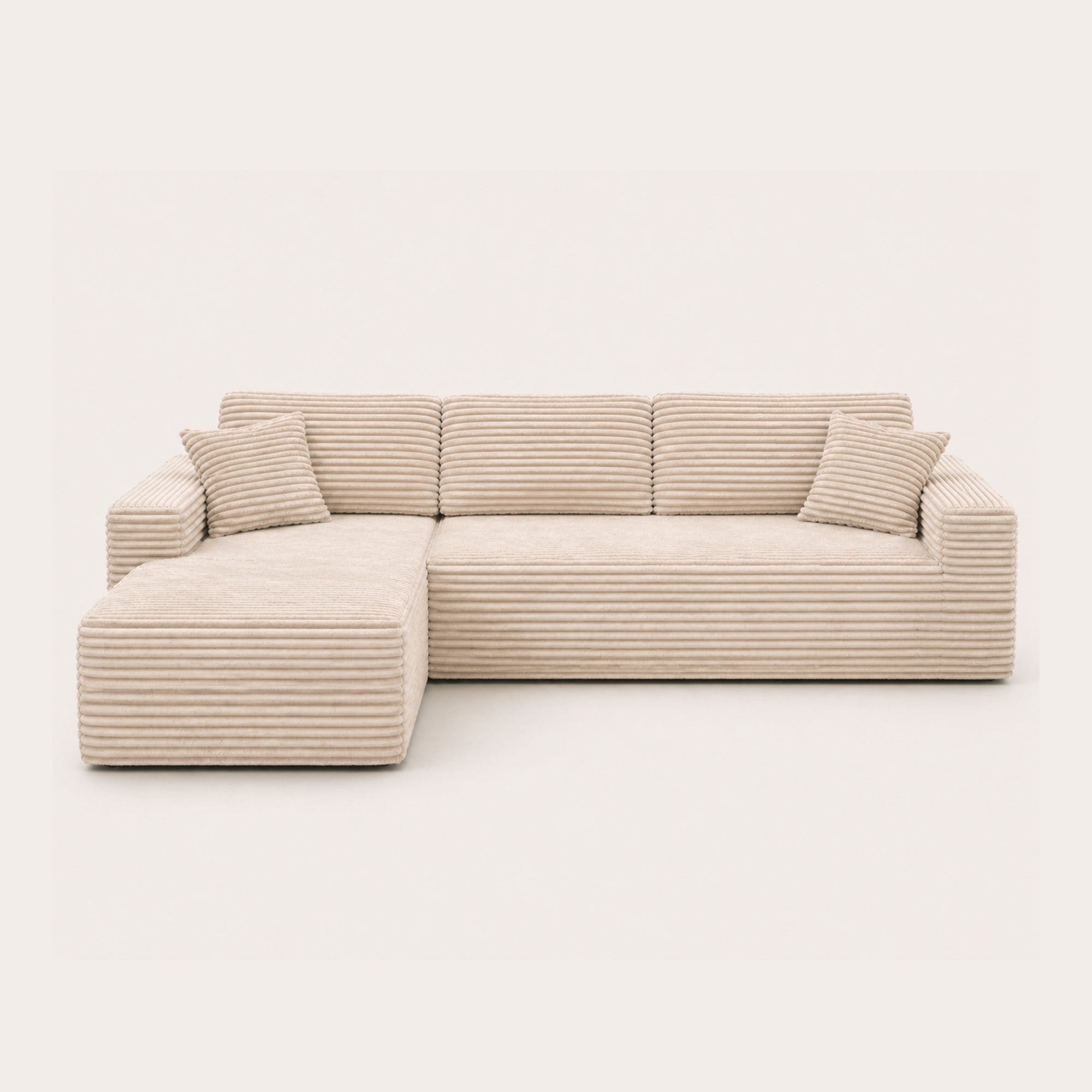


Choosing a sofa for a small apartment can quickly become a headache. Between compact models that promise to save space and classic sofas known for being more comfortable, how do you make sense of it all? The reality is that not all sofas are equal in terms of practicality and everyday comfort. This guide helps you decipher the mechanical, aesthetic, and functional differences between these two types of sofas to make an informed choice that truly fits your living space and needs.
Table of Contents
- Key Takeaways
- Transformation Mechanisms: Simplicity vs. Complexity
- Sleeping Quality and Comfort: At the Heart of the Choice
- Design, Delivery, and Ease of Use for Small Spaces
- How to Choose Between a Compact and Classic Sofa Based on Your Needs
- Discover Our Stylish and Practical Compressed Sofas
- Frequently Asked Questions
Key Takeaways
| Point | Details |
|---|---|
| Mechanisms | Compact sofas use simple systems to save space, while classic ones favor complex mechanisms with thicker mattresses |
| Sleeping Quality | Classic models generally offer more comfortable mattresses, but compact ones can incorporate memory foam |
| Delivery | Compact sofas are often vacuum-compressed to facilitate transport, unlike bulkier classic models |
| Design | Compact sofas frequently adopt a retro and modular style suitable for small urban spaces |
| Budget | The choice depends on daily or occasional use, available dimensions, and desired features |
Transformation Mechanisms: Simplicity vs. Complexity
Transformation systems represent the most visible difference between compact and classic sofas. Compact models favor simplified mechanisms such as direct unfolding or pull-out drawers. These systems reduce the overall footprint of the furniture, ideal for studios or small apartments. However, this simplicity often limits the thickness of the integrated mattress.
Classic sofas feature more elaborate mechanisms. Click-clack, BZ, or accordion systems offer a more generous sleeping surface. These devices require more deployment space and significantly increase the furniture's weight. The added weight complicates transport and installation, especially in multi-story buildings without elevators.
This mechanical difference directly impacts durability. A simple mechanism experiences less wear and tear during repeated transformations. For daily use, opt for reinforced hinges and robust metal rails. Cheap systems degrade quickly under regular stress.
Ease of transformation also matters. After a tiring day, you'll appreciate a system that unfolds in seconds with minimal effort. Compact sofas excel in this regard thanks to their intuitive design. Some models simply require removing the seat cushions to reveal the sleeping surface.
Pro Tip: Test the mechanism several times in the store before buying. A smooth system today can become problematic after six months of intensive use. Check the warranty on mechanical parts.
The 2026 compact sofa delivery guide explains how these simplified mechanisms also facilitate transport. Compact sofas often disassemble into lightweight modules, unlike the monolithic structures of classic models.
Comparison of Transformation Systems
| Criterion | Compact Sofa | Classic Sofa |
|---|---|---|
| Mechanism Type | Simple unfolding, drawer | Click-clack, BZ, accordion |
| Transformation Time | 30 seconds to 1 minute | 1 to 3 minutes |
| Mattress Thickness | 8 to 12 cm | 12 to 18 cm |
| Average Weight | 40 to 60 kg | 70 to 100 kg |
| Mechanical Durability | High (fewer parts) | Variable depending on quality |
Sleeping Quality and Comfort: At the Heart of the Choice
The mattress makes all the difference between a restful night and a painful awakening. Sleeping materials directly influence the quality of sleep in convertible sofas. Memory foam represents the best compromise for compact models. It conforms to the body's contours despite its reduced thickness, offering valuable ergonomic support.
Classic sofas generally incorporate thicker mattresses. Some high-end models even offer true pocket spring mattresses. This extra thickness improves comfort, especially for side sleepers or heavier individuals. The Tediber sofa bed recommended for daily use illustrates this approach with its 12 cm mattress and fixed slatted base.
The intended use determines your mattress requirements. For occasional sleeping, a 10 cm compact high-density foam mattress is amply sufficient. However, sleeping daily on a convertible sofa requires an investment in a higher-quality mattress. Your back will thank you in the long run.

Foam density is a key indicator often overlooked. A minimum density of 35 kg/m³ ensures proper support for an adult. Cheap foams quickly sag, creating uncomfortable pressure points. Always check this technical specification before purchasing.
Pro Tip: Always prioritize mattress quality over upholstery aesthetics. A beautiful but uncomfortable sofa will end up relegated to a mere seating option, wasting its sleeping potential. Invest in an ergonomic mattress even if it reduces your design budget.
The memory foam velvet convertible sofa precisely combines comfort and compactness. Its high-resilience foam supports the body without creating hollows, even after months of regular use.
Essential Characteristics of a Good Mattress
- Minimum thickness of 10 cm for regular use
- Foam density greater than 35 kg/m³
- Removable and washable cover for hygiene
- Anti-dust mite and antibacterial treatment
- Differentiated support zones for back and lumbar region
Design, Delivery, and Ease of Use for Small Spaces
Aesthetics and practicality converge in modern compact sofas. The retro style and ease of delivery particularly appeal to young urban adults and couples. Clean lines and noble materials like corduroy velvet naturally integrate into contemporary interiors. These minimalist designs visually maximize available space.
Delivery presents a major challenge for traditional sofas. Getting a 90 kg classic sofa up to an apartment building without an elevator can sometimes be an obstacle course. Vacuum-compressed sofas revolutionize this experience. Reduced by 70% of their volume, they easily fit through narrow stairwells and standard doors.
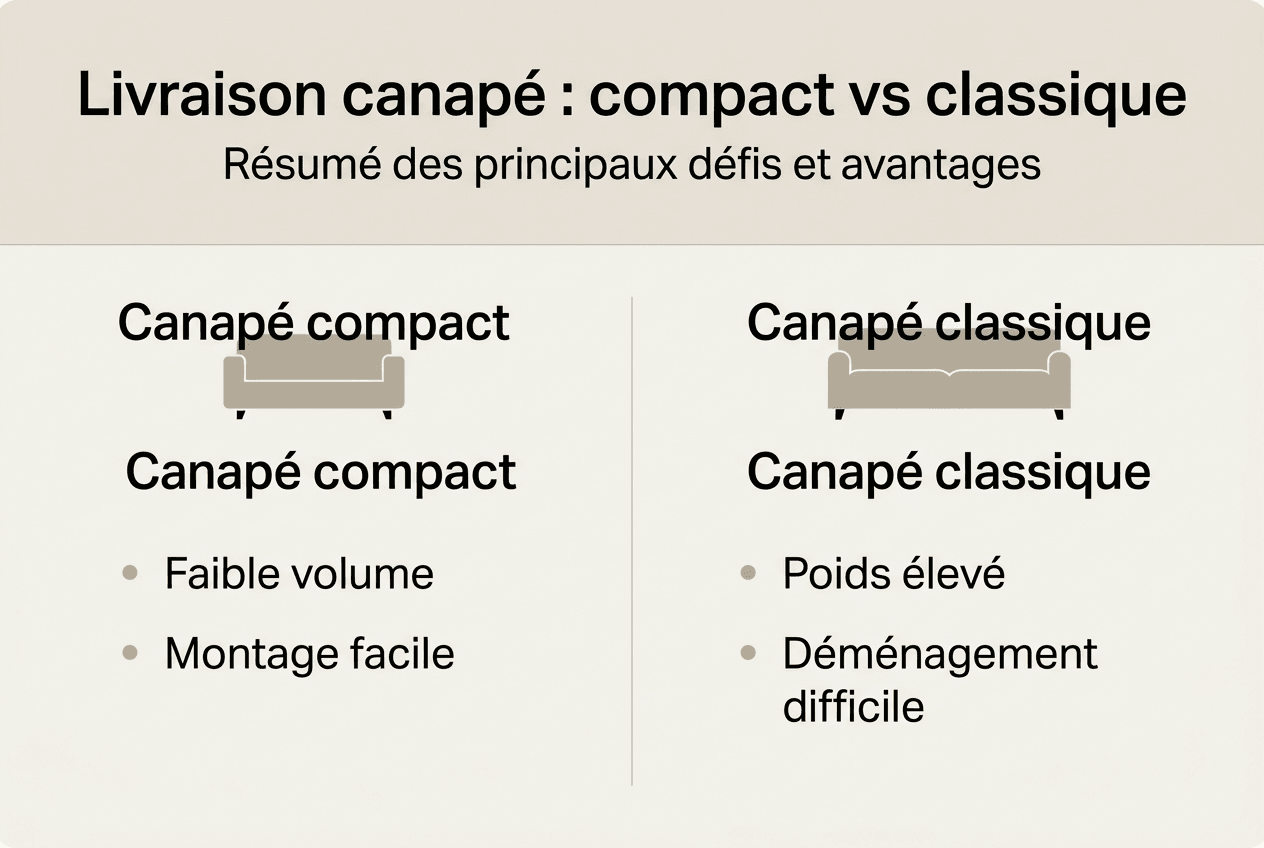
Modularity offers valuable flexibility. Some compact sofas consist of independent modules that can be assembled according to your needs. You can reconfigure the layout over time or during a move. This adaptability extends the furniture's useful life.
Integrated storage further optimizes space. Under-seat chests, side shelves, or hollow armrests transform your sofa into an additional storage solution. In a 25 m² studio, every cubic meter counts. These clever features eliminate the need for additional furniture.
The quick-assembly small space sofa assembles in less than 15 minutes without specialized tools. This simplicity contrasts sharply with classic sofas that sometimes require professional intervention. You thus save on assembly costs while saving time.
Comparative Table of Practicality and Design
| Aspect | Compact Sofa | Classic Sofa |
|---|---|---|
| Delivery Volume | 0.3 to 0.5 m³ (compressed) | 1.5 to 2.5 m³ |
| Package Weight | 30 to 50 kg | 80 to 120 kg |
| Assembly Time | 10 to 20 minutes | 30 to 60 minutes |
| Dominant Style | Retro, Scandinavian, minimalist | Traditional, baroque, contemporary |
| Storage Options | Frequent and innovative | Occasional |
| Space Adaptability | Excellent (modular) | Limited (fixed structure) |
The retro design compact sofas perfectly embody this philosophy. Their vintage aesthetic harmonizes with current trends while offering modern technical performance.
How to Choose Between a Compact and Classic Sofa Based on Your Needs
Making the right decision requires a methodical analysis of your situation. Here is a structured process for choosing based on daily use and your specific constraints.
-
Precisely define your use. Count the number of nights per month the sofa will serve as a bed. Beyond 10 nights per month, consider it a primary sleeping surface requiring a premium mattress. For occasional use, a standard compact model will suffice.
-
Rigorously measure your available space. Note the room dimensions, but especially the space needed once the sofa is unfolded. Add 50 cm of clearance around it for comfortable circulation. Check unfolded dimensions before any purchase to avoid unpleasant surprises.
-
Physically test the mattress comfort. Lie down for at least 5 minutes in the store in your usual sleeping position. Your spine should remain aligned without creating tension. A mattress that is too soft will cause lower back pain in the medium term.
-
Evaluate the robustness of the transformation mechanism. Operate the system several times consecutively. It should remain fluid without jerks or creaks. Examine the quality of the fixings, hinges, and rails. Plastic parts wear out faster than metal.
-
Match the style to your existing decor. A sofa is an investment for at least 7 to 10 years. Choose a timeless design rather than an ephemeral trend. Corduroy velvet, for example, endures through decades without going out of style.
-
Check delivery and assembly options. Calculate the total cost including transport and installation. Compressed sofas often eliminate these additional fees. Confirm that the package will fit through your stairs and doors before ordering.
-
Compare warranties and after-sales service. A minimum 5-year warranty on the structure and 2 years on the mechanism indicates the manufacturer's confidence. Check the availability of spare parts and the responsiveness of customer service.
-
Establish a realistic budget including accessories. Plan for a mattress topper, suitable sheets, and possibly a protective cover. These elements significantly improve the comfort and longevity of your investment.
The 2026 compact sofa guide delves into these criteria with concrete examples tailored to small urban spaces. This methodical approach eliminates impulsive purchases regretted months later.
Discover Our Stylish and Practical Compressed Sofas
Now that you understand the differences between compact and classic sofas, explore concrete solutions adapted to your situation. JOYA Home offers a range of compressed sofas specially designed for small urban apartments. Our models combine retro aesthetics, premium comfort, and simplified delivery thanks to vacuum compression technology.
Each JOYA sofa incorporates high-density mattresses and robust mechanisms tested for daily use. The compressed sofa arrives at your home in a compact box, assembles in 15 minutes, and instantly regains its optimal volume. Our collection of stylish and comfortable sofas meets the requirements of young couples looking for style and practicality. Discover our solutions for small spaces and transform your apartment without compromising on comfort.
Frequently Asked Questions
What are the main differences between a compact sofa and a classic sofa?
Compact sofas use simplified mechanisms that reduce overall bulk, often at the expense of mattress thickness. They prioritize easy delivery through vacuum compression and modular design. Classic sofas generally offer thicker mattresses and more elaborate transformation systems but require more space and complicate transport.
What type of mattress is recommended for a compact sofa used daily?
High-density memory foam is the best choice for daily use in a compact sofa. A minimum density of 35 kg/m³ ensures proper ergonomic support despite reduced thickness. Prioritize mattresses with differentiated support zones to maintain spinal alignment during sleep.
How to facilitate sofa delivery in a small apartment?
Opt for a vacuum-compressed sofa that reduces delivery volume by up to 70%. These modular models easily fit through narrow staircases and standard doors. Check the dimensions of the compressed package before ordering and measure your critical passages, especially in old buildings without an elevator.
What advantages does a compressed sofa offer compared to a classic sofa?
Compressed sofas optimize space thanks to their compact design and simplified delivery. They often combine trendy retro style with modern comfort technologies like memory foam. Quick, tool-free assembly and modularity that allows for layout reconfiguration are major advantages for small urban spaces.