
TL;DR:
- Living room comfort depends on ergonomics, textures, lighting, and spatial organization.
- A sofa must be adapted to body type with appropriate dimensions and foam density.
- 2026 trends favor modularity, technical fabrics, and ease of installation for practical use.
Many of us choose a sofa because it looks good in a photo. We fall in love with a color, a shape, a fabric. Then we go home, sit down, and something feels off. Our back aches, our legs dangle in the air, the atmosphere is cold despite the pretty sofa. This is no accident: the comfort of a living room is never born from visual appeal alone. It results from a precise balance between ergonomics, materials, light, and spatial organization. This guide explains how to combine these elements to create a living room where you truly want to settle in every evening.
Table of Contents
- Why Does Design So Strongly Influence Living Room Comfort?
- Seating Ergonomics: Dimensions for Optimal Comfort
- Textures, Materials, and Colors: Creating a Cozy Atmosphere
- 2026 Trends: Easy-to-Live-With Sofas and Design for Young Urbanites
- What Most People Forget: The Design/Comfort Balance Tested by Daily Life
- Find the Design and Comfortable Sofa Made for Your Living Room
- Frequently Asked Questions About Living Room Comfort and Design
Key Points
| Point | Details |
|---|---|
| Design = overall comfort | The aesthetics and ergonomics of a living room must work together to create a pleasant space. |
| Pay attention to proportions | Seat dimensions and foam choice determine daily well-being. |
| Materials and light | Soft textures and warm light make all the difference for a cozy atmosphere. |
| Innovative trends | 2026 modular and compact sofas optimize space without sacrificing comfort. |
Why Does Design So Strongly Influence Living Room Comfort?
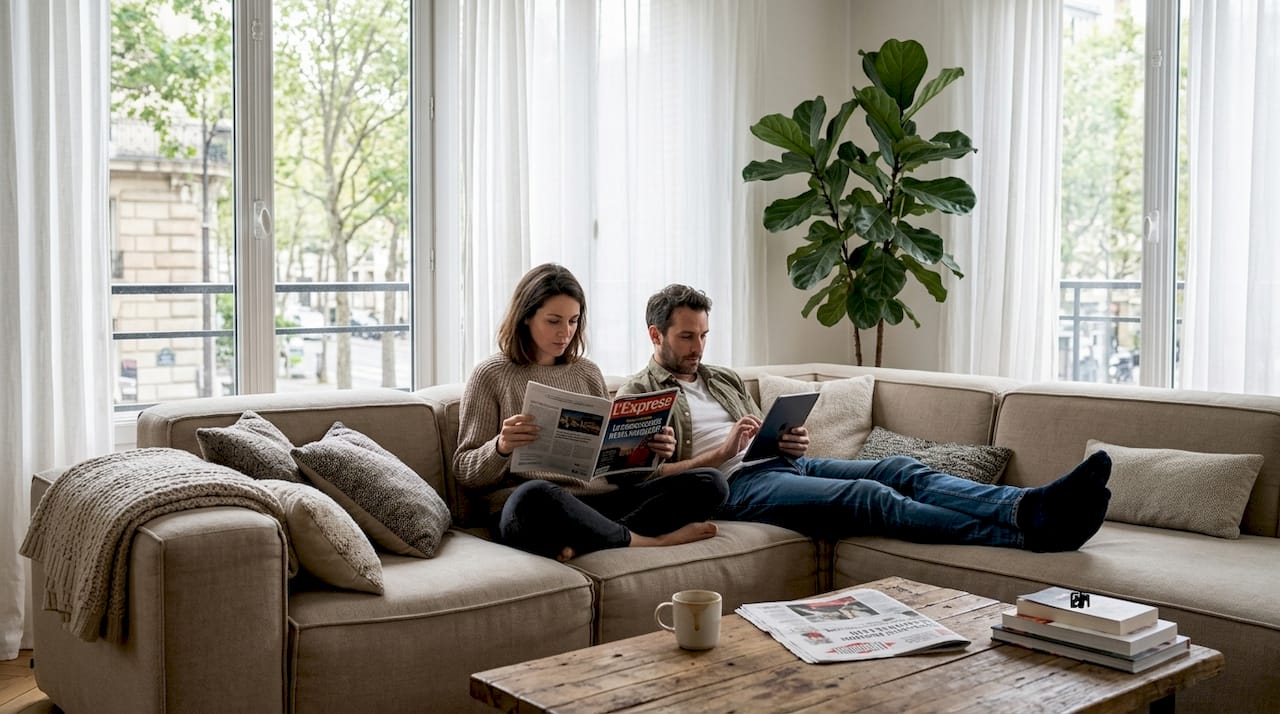
The design of a living room is not just about appearance. It structures how you perceive the space, how you move within it, and most importantly, how you feel in it. A well-designed living room directly impacts your stress level and your ability to relax after a long day.
Several factors work together to produce this sense of well-being. The ergonomics of the furniture define whether your body is supported or not. The textures of the fabrics influence your desire to touch, to snuggle up. Light, whether natural or artificial, radically changes the atmosphere of a room depending on its intensity and warmth. And the arrangement of objects in space determines whether your brain perceives order or chaos.
Professional designers emphasize a point often overlooked: visual clutter. Too many competing objects, colors, or patterns create unconscious mental fatigue. The result? You feel exhausted in your own living room without understanding why. A minimalist space, where every element has its place, reduces this stress and promotes relaxation. As specialists point out, design structures comfort through ergonomics, textures, and lighting, precisely by avoiding this visual clutter.
“A successful living room is not one you admire upon entering; it's one you never want to leave once you've sat down.”
Here are the key elements that designers prioritize to transform an ordinary living room into a true sanctuary:
- Seating ergonomics: height, depth, and lumbar support adapted to your body type
- Textures: soft, natural materials that invite touch and relaxation
- Light: varied sources and warmth adapted to each moment of the day
- Spatial organization: fluid circulation, defined zones, absence of clutter
- Visual consistency: limited color palette to rest the eyes
To delve deeper into this logic, our chic sustainable living room guide explains how to combine aesthetics and responsibility in the long term. Design is therefore not just a matter of personal taste: it is a discipline that impacts your daily quality of life.
Seating Ergonomics: Dimensions for Optimal Comfort
You can have the most beautiful sofa in the world: if it doesn't fit your body and your usage, it will become uncomfortable in a few weeks. Ergonomics is simply the art of adapting furniture to humans, not the other way around.
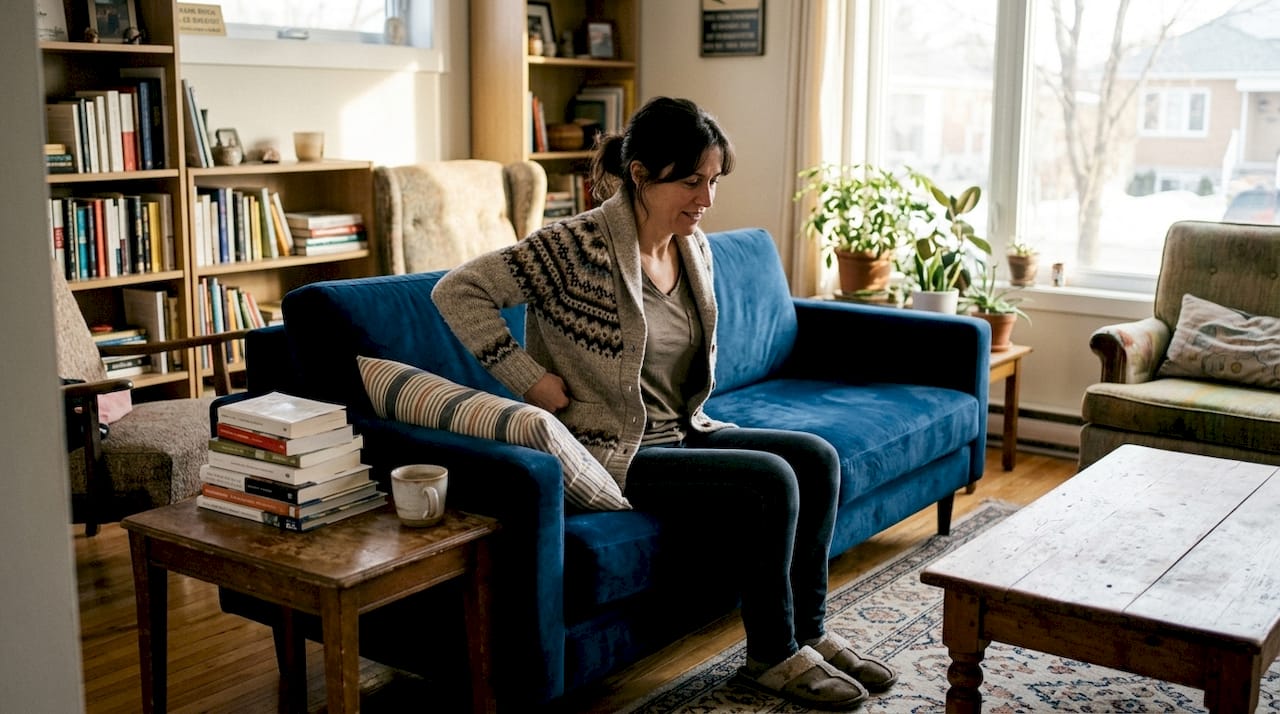
Key dimensions to know before any purchase are seat depth and seat height. According to recognized ergonomic benchmarks, a depth of 50 to 60 cm and a seat height of 45 to 60 cm ensure optimal comfort for most users. These figures are not arbitrary: they correspond to the natural angles of the human body in a relaxed sitting position.
| Dimension | Recommended Value | Ideal Use |
|---|---|---|
| Seat Depth | 50 to 56 cm | Active posture, reading, working |
| Seat Depth | 56 to 61 cm | Deep relaxation, movies, napping |
| Seat Height | 45 to 60 cm | Universal use, ease of getting up |
| Foam Density | 30 kg/m³ minimum | Durable support, long-term comfort |
Foam density is often overlooked when buying online, yet it makes all the difference. Industry standards set a minimum threshold of 30 kg/m³ to ensure good long-term support. Below this, the foam quickly sags, and the sofa loses its comfort in less than a year.
Pro Tip: When buying online, always look for the manufacturer's technical sheet. If the foam density is not mentioned, it's often a bad sign. A manufacturer confident in the quality of their products displays this data clearly.
To choose the right model for your space, compare the available options between a compact or traditional sofa depending on the size of your living room. Here are the steps to test a sofa remotely before buying:
- Check the seat depth and height in the product sheet.
- Check the foam density (minimum 30 kg/m³).
- Read customer reviews, filtering for comments after 6 months of use.
- Ask customer service for the exact dimensions of the lumbar support.
- Check the return policy to allow yourself a safety margin.
If you're furnishing an apartment, the criteria for choosing a suitable sofa for an urban space require special attention. And to maximize corner comfort, discover how a well-chosen corner sofa can transform the use of your main room.
Textures, Materials, and Colors: Creating a Cozy Atmosphere
Once ergonomics are mastered, it's sensoriality that differentiates a functional living room from a true cocoon. The materials you choose speak to your skin even before your brain analyzes them.
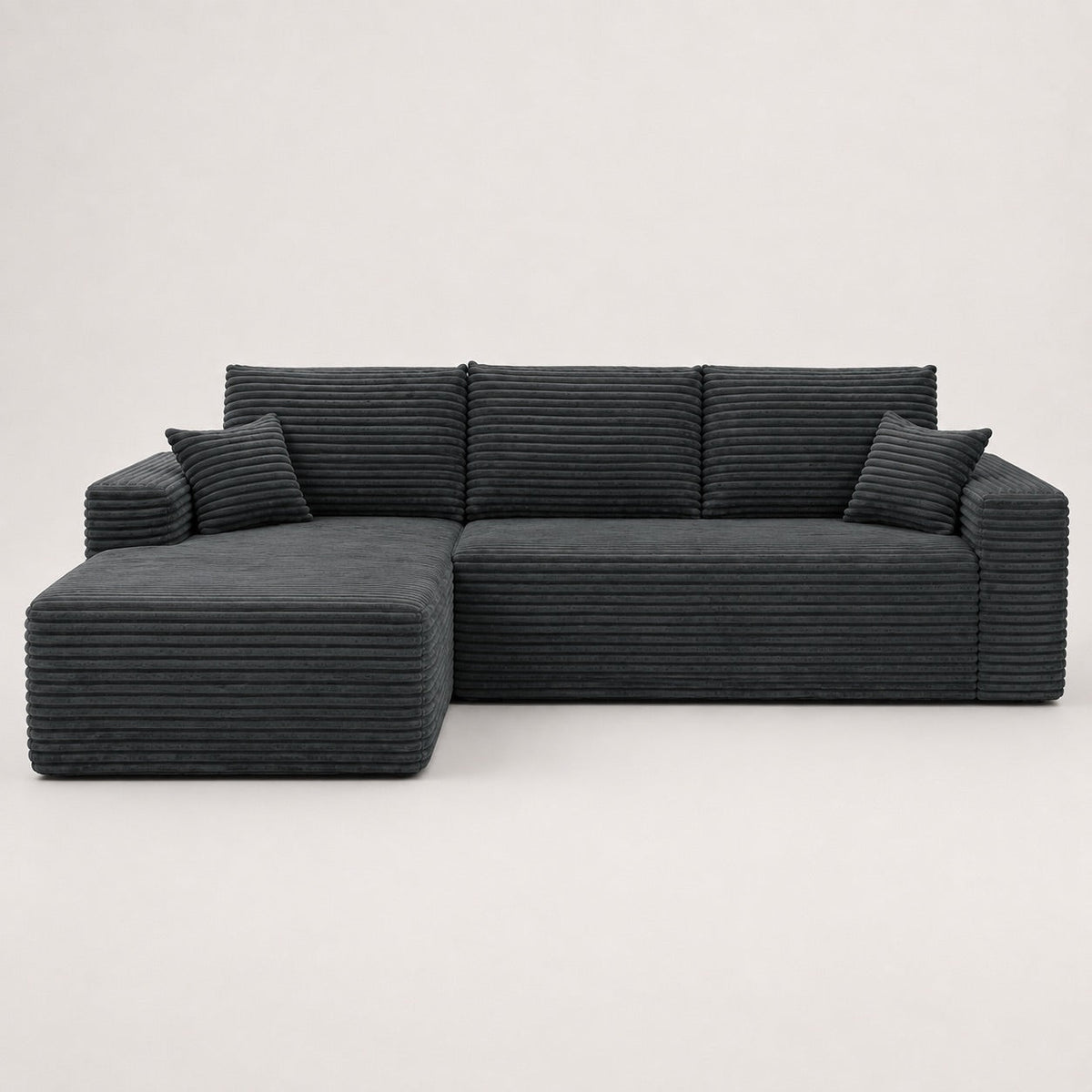
Corduroy, for example, has become a benchmark in contemporary interiors. Its soft texture to the touch, its ability to absorb light and create subtle reflections make it a fabric that visually warms an entire room. Textured cotton, washed linen, and boucle wool produce similar effects: they invite touch, relaxation, and settling in for good. Conversely, smooth synthetic materials or cold leathers can make a living room elegant but less inviting.
“The texture of a fabric is the first signal your brain receives to decide if a space is welcoming or not.”
Colors play an equally powerful role. Soothing shades like beiges, sage greens, powder blues, or soft terracottas create an atmosphere conducive to relaxation. Bright and saturated colors, on the other hand, stimulate energy but can be tiring over time if they dominate the space. The ideal is to reserve them for accessories: cushions, throws, decorative objects.
Pro Tip: Limit your main palette to two or three colors maximum. Add depth through textures rather than shades. A sage green corduroy sofa with natural linen cushions creates more visual richness than a mix of five different colors.
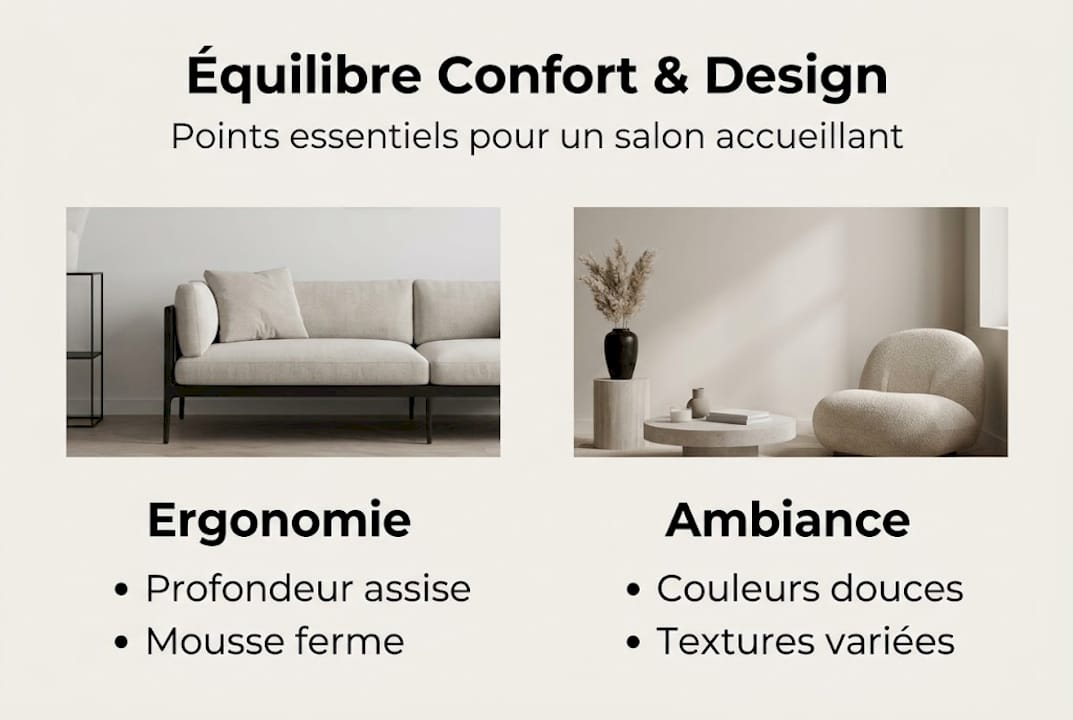
Light completes this picture. Designers recommend a warm light temperature between 2700 and 3000K, combined with soft textures and empty spaces for a truly welcoming living room. Avoid cold white bulbs above 4000K in living areas: they create an office atmosphere, not a sanctuary.
Here are the materials and decor choices that truly make a difference:
- Corduroy: visual warmth, soft touch, long-lasting durability
- Washed linen: lightness, natural feel, easy to maintain
- Textured wool: intense coziness, ideal for cushions and throws
- Light wood: adds warmth without weighing down the space
- Green plants: natural textures that soften straight lines
To explore fabric options suitable for your living room, corduroy corner sofas offer a concrete and inspiring starting point.
2026 Trends: Easy-to-Live-With Sofas and Design for Young Urbanites
The furniture market is evolving rapidly, and 2026 trends directly address the constraints of young professionals in apartments: limited space, frequent moves, and a desire for quality without compromising practicality.
The major trends this year revolve around three concepts: modularity, technical fabrics, and ease of installation. Modular, oversized, and curved sofas with high-performance fabrics dominate collections, combining aesthetics, comfort, and ease of installation for young urbanites.
| 2026 Trend | Main Advantage | Ideal for |
|---|---|---|
| Modular Sofa | Adaptable to every configuration | Small spaces, moves |
| Curved Shapes | Visual softness, conviviality | Open living rooms, couples |
| Technical Fabrics | Stain resistance, easy care | Families, pets, intensive use |
| Compressed Sofa | Simplified delivery, quick assembly | Apartments, narrow staircases |
| Deep Neutral Tones | Timeless, easy to accessorize | All profiles |
Modularity deserves special attention. A modular sofa can be reconfigured according to your needs: chaise lounge on the left or right, addition of an ottoman, transformation into an extra bed. It's an investment that adapts to your life, not the other way around. And when you move, it fits everywhere.
Here are the criteria to prioritize when choosing a trendy and practical sofa in 2026:
- Modularity: check if the sofa can be easily reconfigured.
- Technical fabric: opt for stain-resistant and easy-to-clean coverings.
- Ease of assembly: prefer tool-free systems or clear instructions.
- Adapted dimensions: measure your space before ordering, including the hallway.
- Warranty and service: a good manufacturer offers at least a 2-year parts warranty.
Compressed sofa technology represents a real revolution for apartments. Delivered in a compact box, it decompresses in a few hours effortlessly. For apartments with difficult access, this is a solution that modern compact sofas have made accessible to everyone. And if you're looking to simplify installation even further, an easy-to-assemble sofa can save you half a day of stress.
What Most People Forget: The Design/Comfort Balance Tested by Daily Life
We often see magnificent living rooms on Instagram that look like showrooms. Everything is perfect, nothing is out of place. But no one actually lives in those spaces. True comfort, the kind that matters, is measured after six months of daily use, not on delivery day.
A visually stunning but un-ergonomic sofa becomes a source of back pain. A delicate fabric that can't withstand cleaning becomes a source of anxiety. Sustainable design is one that stands up to real life: movie nights, meals on the couch, friends dropping by unexpectedly.
Our belief at Joya Home: investing in a modular sofa, easy to assemble and maintain, is investing in your long-term comfort. Beauty without practicality quickly wears out. Practicality without beauty doesn't make you want to go home. The balance between the two is what the differences between compact and classic sofas perfectly illustrate to guide your choice.
Find the Design and Comfortable Sofa Made for Your Living Room
After this comprehensive overview of dimensions, materials, and trends, one question remains: where can you find a sofa that truly ticks all these boxes? At Joya Home, every model is designed for young professionals and couples who want a living room that is beautiful, comfortable, and easy to set up. Our innovative design sofas arrive compressed in a compact box, with no delivery hassle or endless assembly.
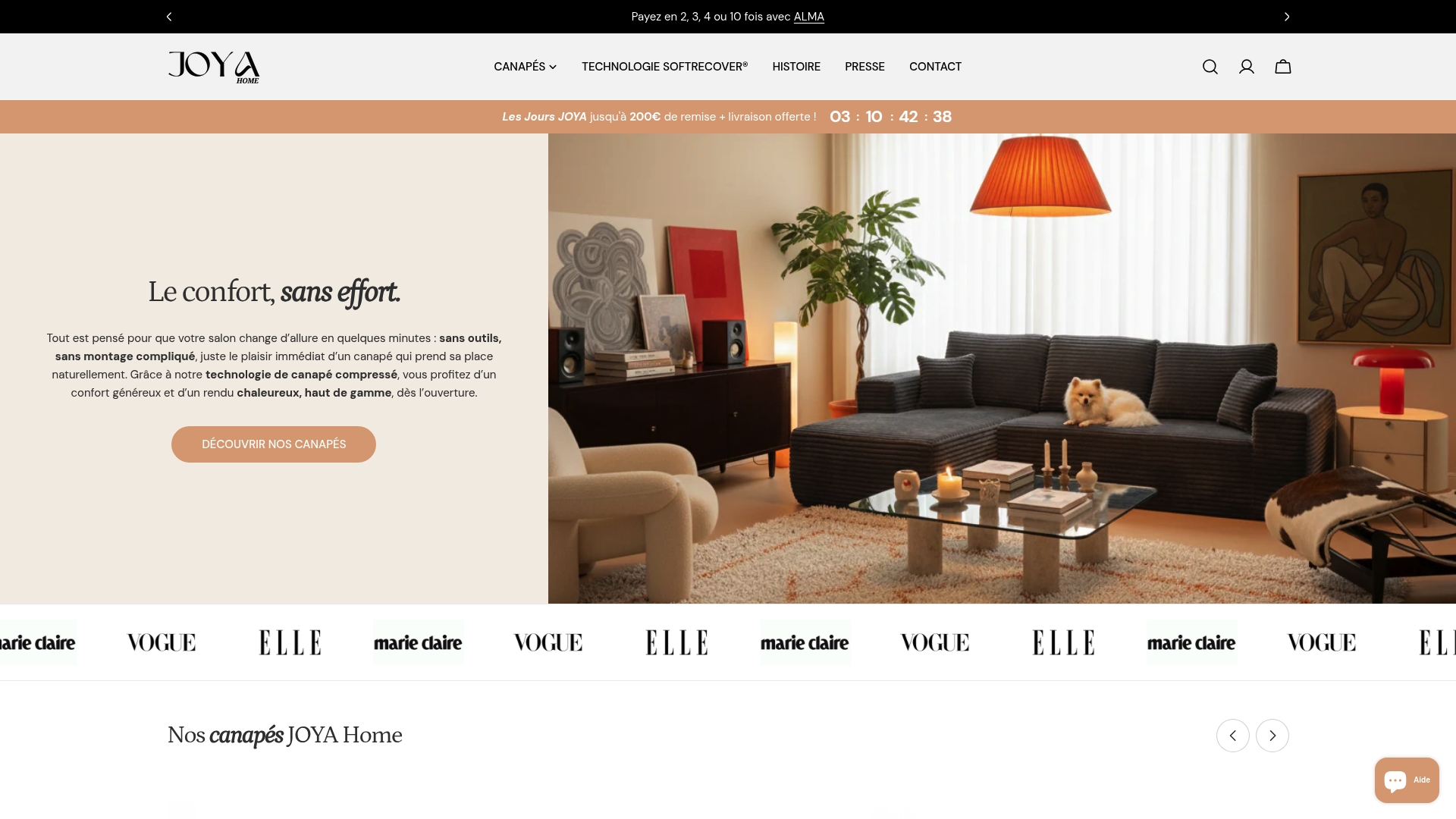
Whether you're looking for a comfortable high-end sofa for a large living room or a sofa for a small space suitable for an urban apartment, our range meets your concrete needs. Style, ergonomics, and practicality combined in a single piece of furniture.
Frequently Asked Questions About Living Room Comfort and Design
What dimensions ensure a truly comfortable sofa?
A depth of 50 to 60 cm and a seat height of 45 to 60 cm provide the best support for most body types, regardless of the adopted position.
How to choose the right foam for a sofa?
Opt for a density greater than 30 kg/m³ for durable support. Below this threshold, the foam quickly sags, and comfort disappears in less than a year.
What lighting should be created for a soothing living room?
Choose a temperature between 2700 and 3000K for a soft and warm ambiance, far from the cold atmosphere of offices.
Are designer sofas necessarily less practical?
No. The modular models of 2026 prove that style and intelligent use coexist perfectly, even in the most constrained spaces.
Recommendation
- Compact sofa 2026: +70% space & retro comfort – Joya Home
- Enhance your modern interior with velvet: style and comfort – Joya Home
- Corduroy velvet decor ideas: modern and warm interior – Joya Home
- Optimize your living room with an easy-to-assemble sofa – Joya Home
- Inspiratie moderne tegels: stijlvolle renovaties 2026