
TL;DR:
- Scandinavian style prioritizes warmth, simplicity, and functionality to create a welcoming space.
- Natural materials like light wood, linen, and wool are essential for an authentic ambiance.
- Hygge, combining textures and soft lighting, is key to a cozy Scandinavian interior.
Scandinavian style suffers from a persistent misunderstanding: many imagine it as an all-white, empty, and cold living room where one wouldn't dare to sit. This is the exact opposite of what it should be. Born in countries with long, dark winters, this style was designed to create a warm, functional, and profoundly pleasant living space. If you're currently furnishing your living room, you'll discover how to choose the right shapes, materials, and shades to achieve a space that exudes both modernity and conviviality.
Table of Contents
- Understanding Scandinavian Furniture Philosophy: Between Simplicity and Warmth
- Materials and Finishes: Nature at the Heart of Scandinavian Style
- The Role of Hygge: Textures, Lights, and Layers
- Tips for Recognizing True Scandinavian Furniture
- Our Perspective: Beyond Scandinavian Style Clichés
- Want an Easy-to-Live-in Scandinavian Living Room? Discover Our Solutions
- Frequently Asked Questions About Scandinavian Furniture Style
Key Points
| Point | Details |
|---|---|
| Functional simplicity | Scandinavian furniture favors simple, clean lines and designs that are directly useful for daily life. |
| Natural materials | For more light and warmth, light wood and natural textiles are adopted as the base for furniture. |
| Hygge ambiance | Layering textures and soft lighting create a truly welcoming Scandinavian living room. |
| Authenticity above all | Clean lines, quality materials, and the absence of ornaments are the keys to a true Scandinavian style. |
Understanding Scandinavian Furniture Philosophy: Between Simplicity and Warmth
Scandinavian style was not born from a desire to do less. It was born out of necessity: in countries like Sweden, Denmark, and Finland, homes had to be both practical and comforting, especially during the long winter months. This constraint gave rise to a unique design philosophy, where every furniture choice answers a real question: does this object improve my daily life?
“Scandinavian furniture is primarily defined by clean lines and simple forms, geared towards functionality, in a spirit of warm minimalism, not emptiness.”
In practice, this translates into several clear principles:
- Clean lines and soft forms: furniture avoids complex carvings or unnecessary ornamentation. Light curves and clean angles are preferred.
- Functionality first: a sofa must be comfortable, a table must offer space, storage must be accessible. Nothing is there just to look pretty without serving a purpose.
- Integrated warmth: unlike industrial or Japanese minimalism, Scandinavian style incorporates soft and inviting elements from the very design of the furniture itself.
What truly distinguishes this approach is the balance between modern design and comfort. A successful Scandinavian living room never sacrifices one for the other. It always seeks both simultaneously. It is this creative tension that makes it so difficult to imitate and so pleasant to live with when done well.
Materials and Finishes: Nature at the Heart of Scandinavian Style
If Scandinavian philosophy is the soul of the style, materials are its body. It’s impossible to achieve the desired ambiance with shiny synthetic materials or plasticized finishes. Scandinavian style relies on natural, soft, and durable elements.
Natural materials in Scandinavian style are primarily light wood (pine, oak, ash, birch), combined with natural textiles such as linen, wool, or cotton, and sometimes leather for more structured touches.
| Type of wood | Visual appearance | Character |
|---|---|---|
| Pine | Very light, visible grain | Rustic and warm |
| Oak | Golden beige, robust | Elegant and timeless |
| Ash | Light with fine veins | Delicate and modern |
| Birch | Very pale, almost white | Bright and clean |
| Walnut (dark) | Deep brown | Less Scandinavian, visually heavier |
Light wood remains the number one choice for main furniture: coffee table, bookshelf, sofa frame. It reflects natural light and visually expands the space. Dark wood, on the other hand, can weigh down the atmosphere and deviates from the authentic Scandinavian spirit.
For textiles, focus on:
- Linen for curtains and cushions, it brings a natural and slightly raw texture.
- Wool for throws and rugs, it immediately warms up the ambiance.
- Cotton for covers and sofa sheets, it is soft and easy to care for.
These natural textures for sofas play a central role in the success of your decor. They transform a living room that might seem too prim into a lively and tactile space.
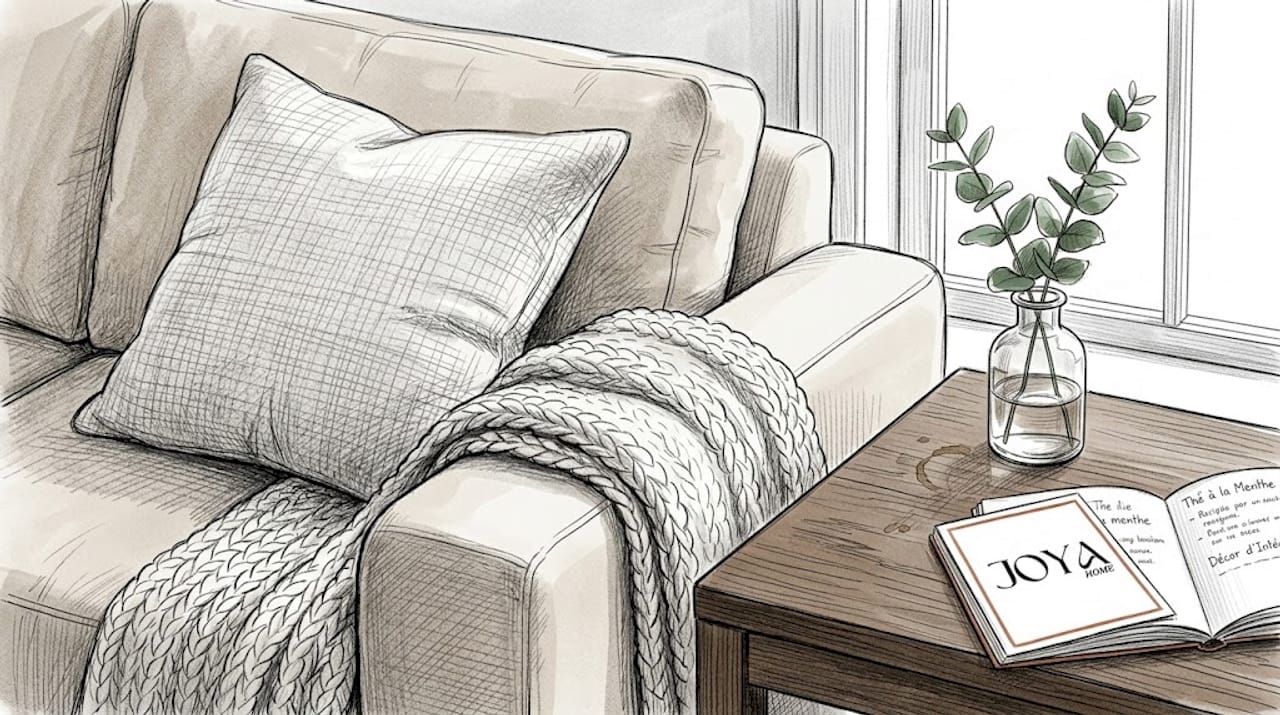
Pro tip: Prioritize OEKO-TEX certified textiles or wood from sustainably managed forests. Beyond the ethical aspect, these materials often last longer and have a more authentic appearance.
The Role of Hygge: Textures, Lights, and Layers
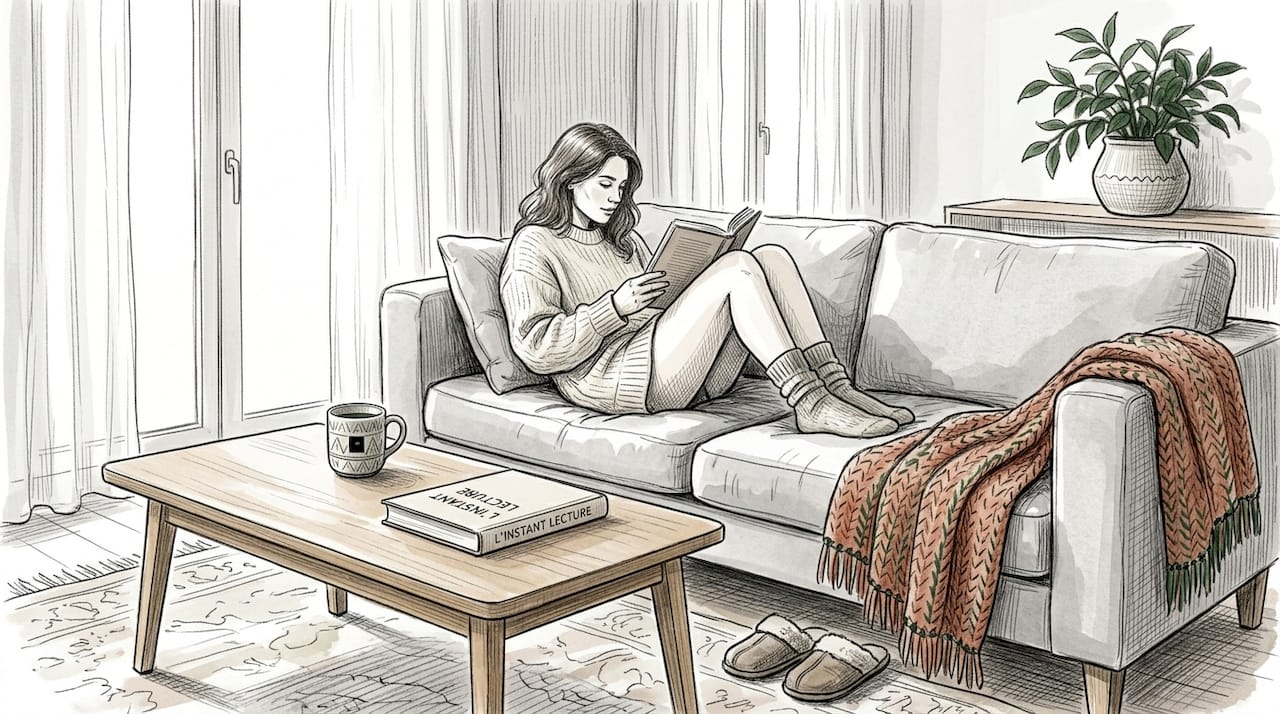
The word hygge (pronounced "hoo-gah") comes from Danish and Norwegian. It has no exact translation into English, but it refers to a state of well-being, shared warmth, and intimate comfort. It’s the feeling you get when you’re wrapped in a blanket in front of a lit candle on an autumn evening.
In decor, hygge translates into layers of textures and soft lighting, which prevent minimalism from being cold. It's a concrete method, not just a vague ambiance.
Here’s how to create a hygge atmosphere step by step:
- Place a low-pile or medium-pile rug under your coffee table to define the living room area and add softness underfoot.
- Layer two or three cushions of different materials on your sofa (velvet, linen, knit) to create visual and tactile depth.
- Add a thick throw blanket casually draped over the armrest. The relaxed effect is intentional.
- Install multiple light sources at different heights: floor lamp, table lamp, candles, or string lights. Avoid using only a ceiling light, which is too harsh.
- Choose warm light bulbs (between 2700 K and 3000 K) to mimic candlelight.
| Room | Recommended textile association | Type of lighting |
|---|---|---|
| Living Room | Wool throw + linen cushions + jute rug | Floor lamp + candles |
| Bedroom | Down duvet + velvet cushion | Soft bedside lamp |
| Office | Cotton rug + light throw | Adjustable desk lamp |
These cozy living room styles don't require a huge budget. The essential is thoughtful layering, not quantity.
Tips for Recognizing True Scandinavian Furniture
The market is flooded with furniture labeled "Scandinavian" that has nothing Scandinavian but the name. A table with hairpin legs, a pastel color, and voilà, the trick is done. But a true Scandinavian piece of furniture can be recognized by specific clues.
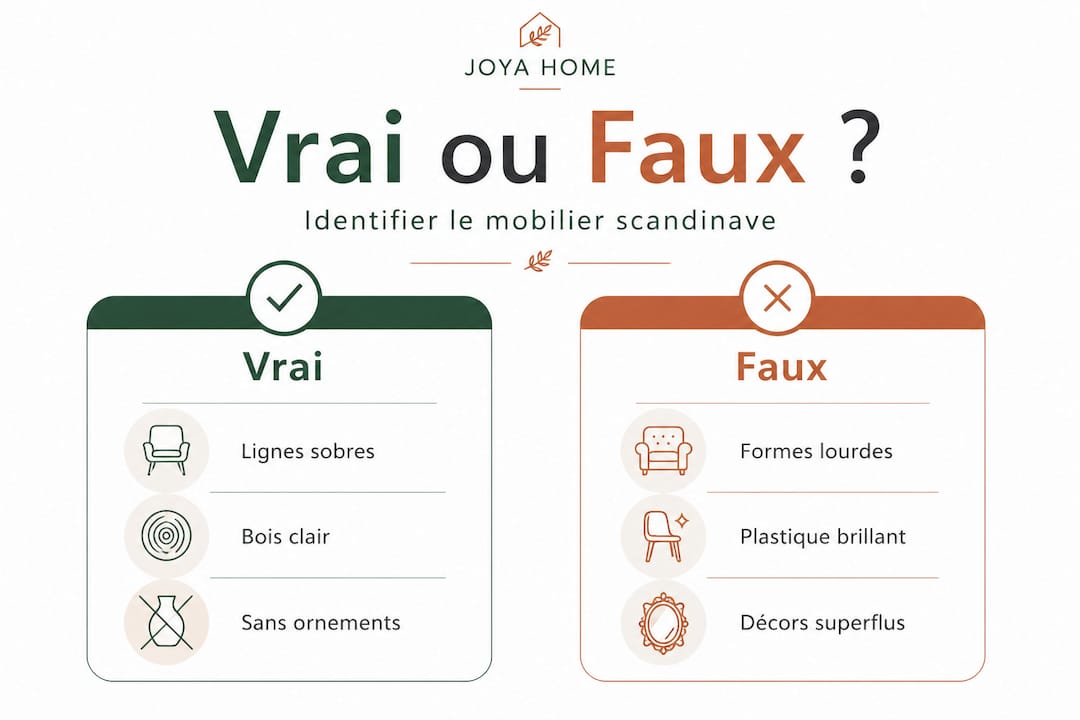
To recognize an authentic piece of furniture, look for clean lines without superfluous ornaments, consistent, often geometric shapes, and natural essences or tones rather than overly shiny or decorative effects.
Here are the concrete clues to check before buying:
- Clean lines and geometric shapes: no carved frills, no baroque volute feet.
- Natural materials to the touch: the wood should be smooth but visibly textured, not covered with a plasticized varnish.
- Neutral or pastel colors: off-white, light gray, beige, soft terracotta. No bright red or glossy black.
- Matte finishes: glossy surfaces break the Scandinavian atmosphere and give a cheap effect.
- Obvious functionality: ask yourself what the furniture is concretely used for. If the answer is vague, it's probably not real Scandinavian furniture.
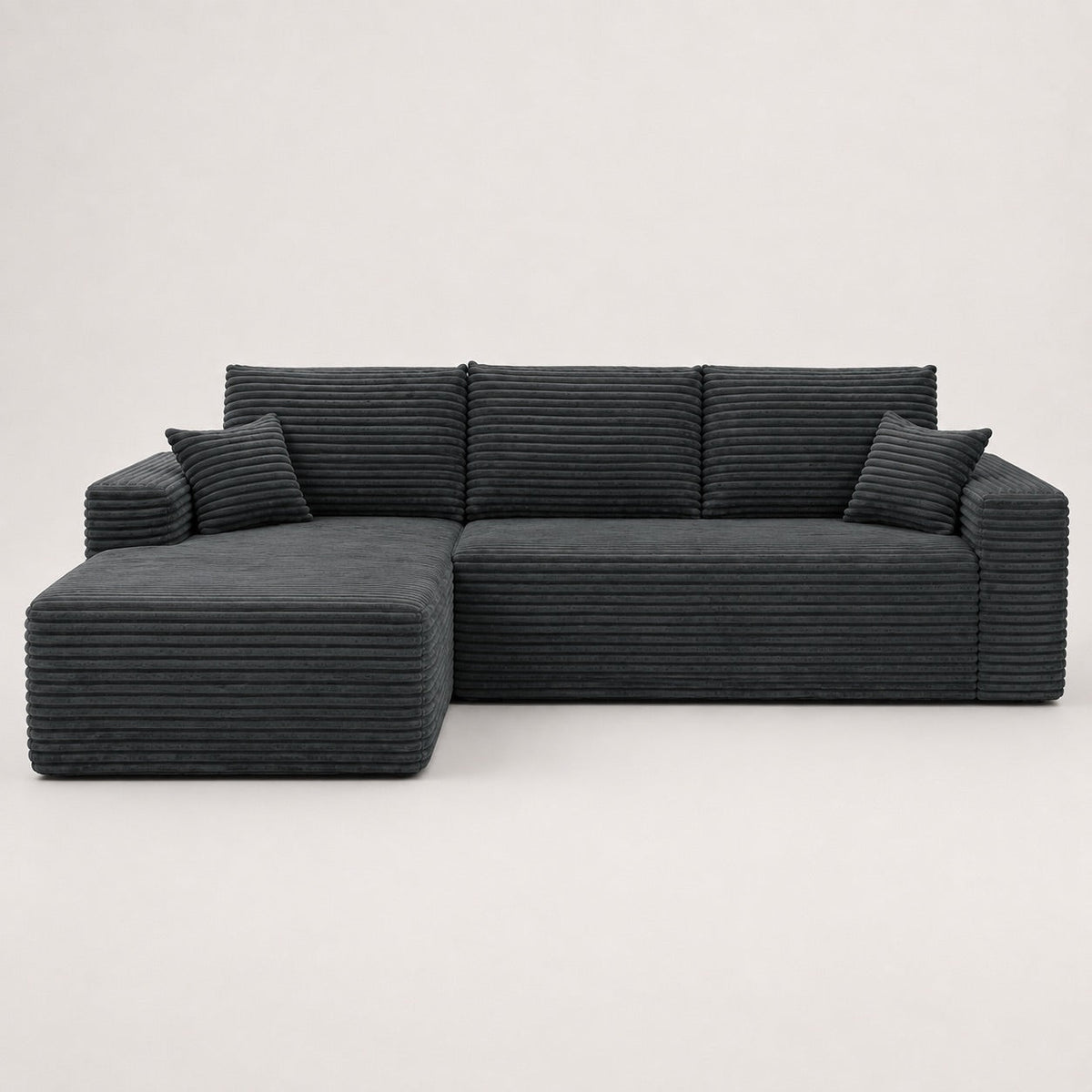
To adapt the design sofa to your living room, apply the same logic: choose a simple model, with clean lines, in a natural or close-to-natural material like corduroy.
Pro tip: When you hesitate between two pieces of furniture, always choose the simpler one. Scandinavian style values restraint. A visually overloaded piece of furniture will never truly fit into a Scandinavian interior, even surrounded by the right accessories.
Our Perspective: Beyond Scandinavian Style Clichés
We often see two opposite errors in people who want to furnish a Scandinavian living room. The first: too much white, too few pieces of furniture, an atmosphere of an empty art gallery rather than a home. The second: accumulating "hygge" objects until the living room turns into a cozy clutter.
The truth is, successful Scandinavian style lives in discreet details. Hidden storage in an entryway bench. A knit cushion placed in the corner of the sofa. A lamp with a washi paper shade. These are the precise choices that create character, not major color or budget decisions.
What we observe in living rooms that truly work is a quiet coherence. Nothing screams, everything harmonizes. And above all, the space invites you to sit, to stay, to live in it. To optimize a small living room with this mindset, the rule is simple: every piece of furniture must earn its place by being both useful AND beautiful. Not one or the other.
A Scandinavian living room is not a showroom. It's a place where you want to spend your evenings.
Want an Easy-to-Live-in Scandinavian Living Room? Discover Our Solutions
You now have all the keys to create an authentic Scandinavian interior: the right materials, the right light, the right layers. All that remains is to choose the central piece of furniture that will set the tone for your living room.
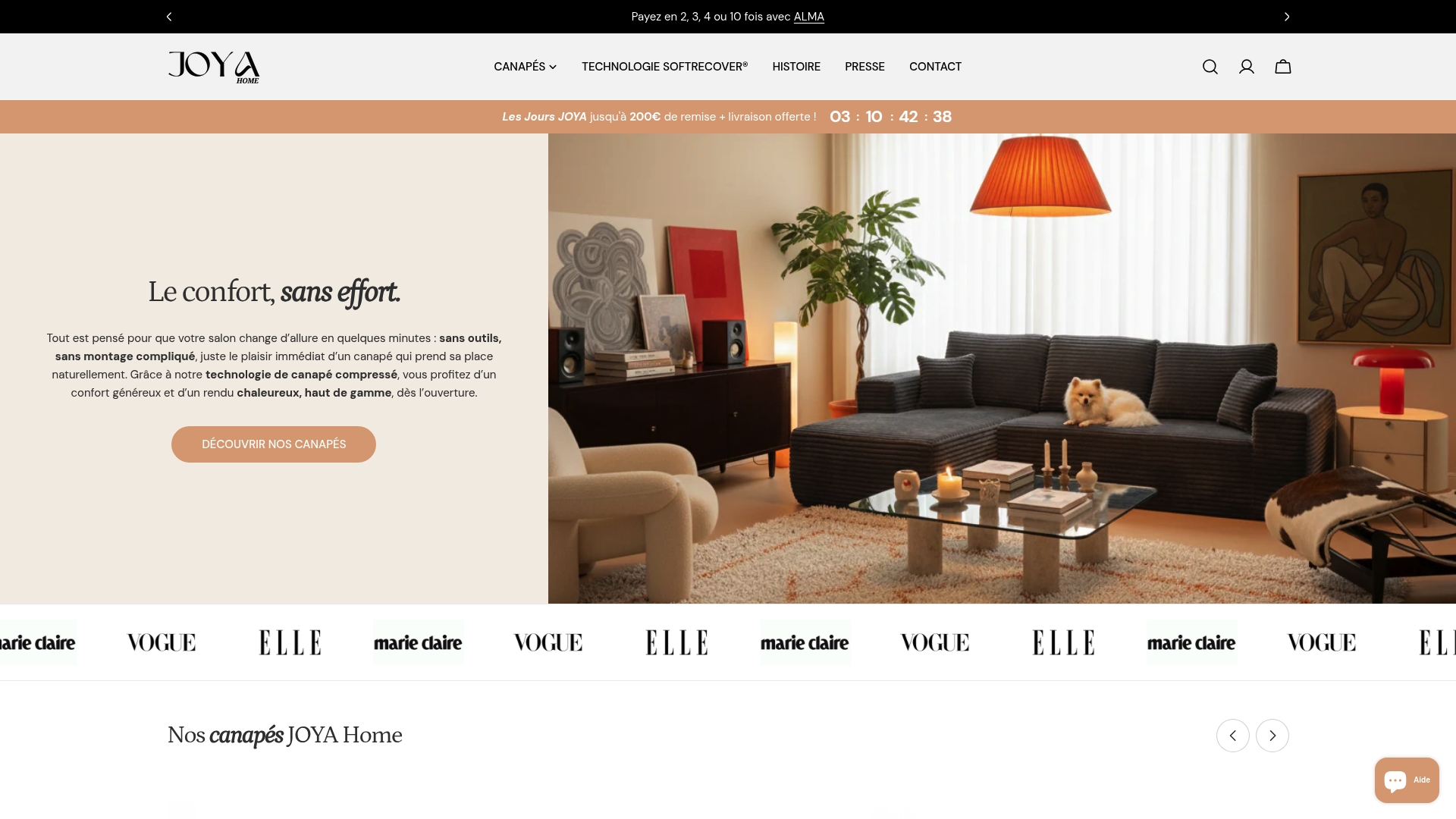
At Joya Home, our sofas are designed to meet exactly this vision: clean lines, soft and durable materials, and delivery designed to simplify your life. Discover our compressed Scandinavian sofa technology, which allows you to receive your sofa in a compact box and deploy it at home in minutes. Also explore our range of corduroy corner sofas, perfect for furnishing your living room with style and warmth.
Frequently Asked Questions About Scandinavian Furniture Style
Which wood species should be preferred for Scandinavian furniture?
Light woods such as pine, oak, ash, and birch are most characteristic of Scandinavian style, as they reflect natural light and bring a soft warmth to the space.
How to avoid a Scandinavian living room that is too cold or impersonal?
Layer soft textiles and multiply warm lighting sources, as hygge relies on textures and soft light to transform minimalism into a welcoming cocoon.
What signs distinguish a real Scandinavian piece of furniture from an imitation?
Look for clean lines, the absence of ornaments, and the use of natural materials, as clean, unornamented lines and natural tones are the hallmarks of authentic Scandinavian furniture.
Can Scandinavian style be mixed with other decor inspirations?
Yes, but keep colors sober and functionality at the center of every choice. A successful mix always respects the visual clarity of the space.