
TL;DR:
- Buying a compressed sofa logically reduces its volume for transport, but the main impact comes from the materials used. Production, particularly foam manufacturing, accounts for the majority of the ecological footprint, far more than transport. The sofa's durability depends mainly on the quality of the materials, certifications, and prolonged use to limit replacements.
Buying a compressed sofa seems, at first glance, to be an automatically virtuous act for the planet. The logic seems simple: a sofa folded into a compact box, delivered without a moving truck, must be greener. However, the furniture sector emits 2.58 Mt CO2eq per year for local production versus 3.4 Mt for imported, which reveals that transport is only a fraction of the problem. The true impact of a compressed sofa mainly depends on the materials, certifications, and your daily use.
Table of Contents
- Deciphering the Life Cycle of Compressed Sofas
- Compression and Logistics: Real Gains or Misconceptions?
- Materials, Quality, and Certifications: The Real Levers of Durability
- Maintenance, Storage, and Longevity: Tips to Limit the Footprint
- Our View: What Most Overlook About the Impact of Compressed Sofas
- Your Next Steps Towards a Sustainable and Modern Living Room
- Frequently Asked Questions About the Ecological Impact of Compressed Sofas
Key Points
| Point | Details |
|---|---|
| Production over transport | The ecological impact of a compressed sofa depends more on its manufacturing than on its logistics. |
| Quality and certification essential | Dense foam and certifications guarantee durability and less indoor air pollution. |
| Preventive maintenance | Aerating and limiting compression time prevents mold risks and extends the sofa's life. |
| Compression: a logistical bonus | Volume reduction speeds up delivery and reduces emissions, while remaining a complementary asset. |
Deciphering the Life Cycle of Compressed Sofas
To measure the real impact of a compressed sofa, you must first understand its life cycle.
A complete life cycle covers five distinct phases: raw material extraction, factory transformation, transport to you, daily use, and end-of-life. Most buyers only look at the logistics phase, because it is visible and measurable. A classic mistake.
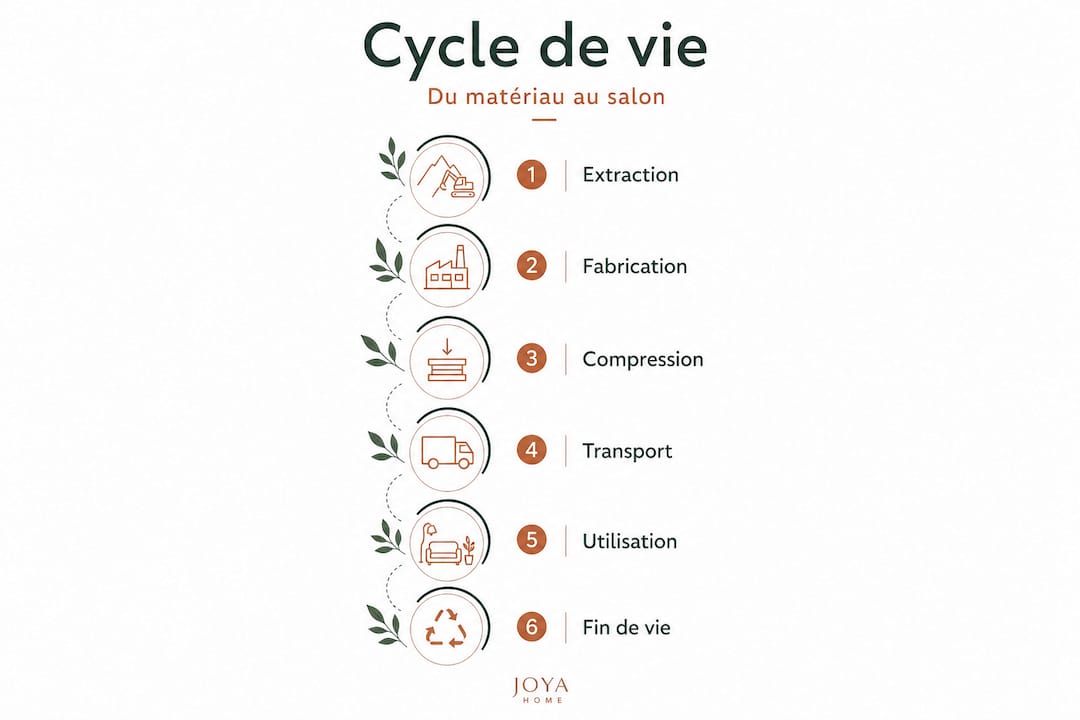
Life cycle analyses for furniture consistently show that material production, particularly the manufacturing of polyurethane foam, represents a dominant share of the total footprint. Transport, even optimized, remains marginal compared to this reality.
Here's how the impacts are generally distributed across the entire cycle:
| Phase | Share of Impact | Determining Factors |
|---|---|---|
| Material Production | 55 to 70% | Foam type, fabric, treatment |
| Manufacturing and Assembly | 10 to 15% | Energy used, location |
| Transport | 5 to 15% | Distance, vehicle type, compression |
| Use and Maintenance | 5 to 10% | Products used, lifespan |
| End of Life | 5 to 10% | Recyclability, waste disposal |
The numbers speak clearly. Foam, made from petrochemical derivatives, consumes an enormous amount of energy and generates significant emissions even before it arrives in your living room. A durable sofa therefore starts with a choice of materials, not the size of its box.
Imported sofas often travel more than 3,000 km, from Southeast Asia or Eastern Europe. A model manufactured locally or in Western Europe can substantially reduce this travel segment.
Pro tip: Before buying, ask for the sofa's country of origin. A product assembled less than 1,500 km from your home automatically reduces the transport footprint, even without compression.
Compression and Logistics: Real Gains or Misconceptions?
After understanding the overall life cycle, let's now look at logistics and the real benefits of compression.
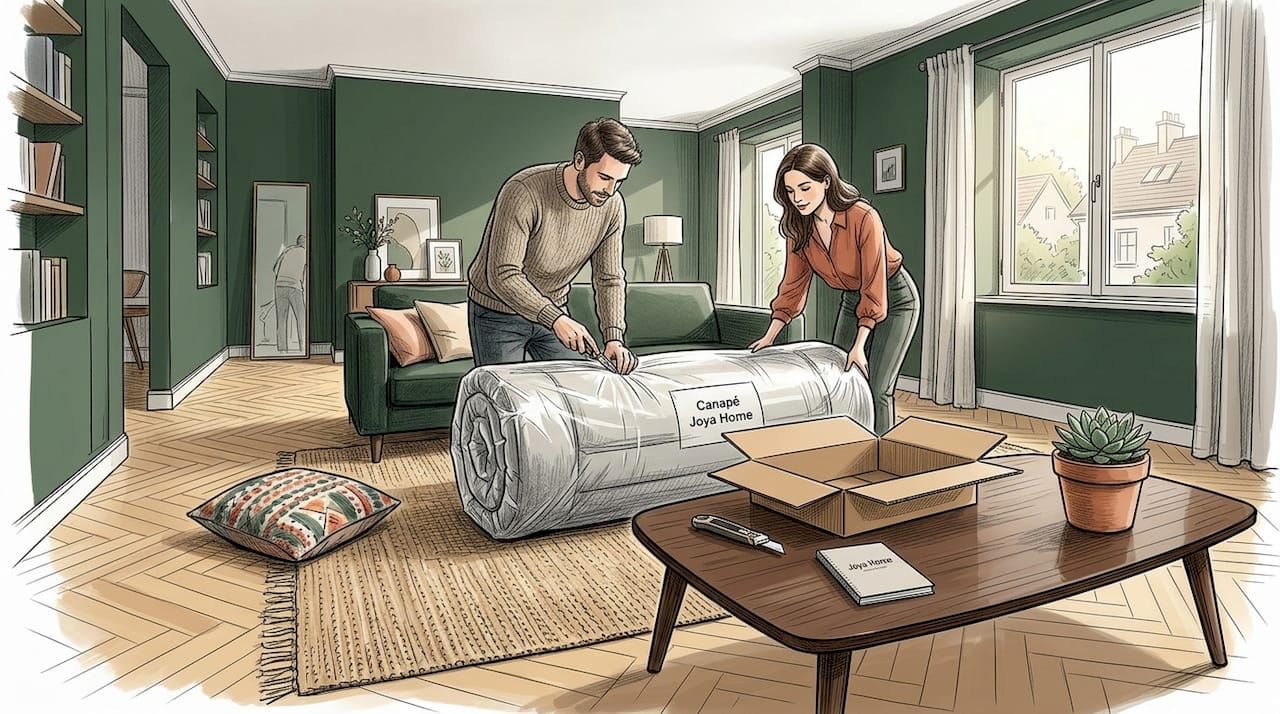
Compression can reduce a sofa's volume by 60 to 70% for transport. The concrete result: the same truck can transport two to three times more units than with a classic disassembled sofa. Fewer rotations, less fuel, fewer emissions per delivered item. This is real, measurable, and not negligible.
"Optimizing transport logistics, particularly through short circuits and better load densification, represents a concrete lever for reducing the carbon footprint of the furniture sector."
That said, the benefits of compression vary greatly depending on the context. Here's a more precise comparison:
| Scenario | Relative Carbon Footprint | Explanation |
|---|---|---|
| Local sofa, classic delivery | Medium | Short distance, but inefficient loading |
| Imported sofa, classic delivery | High | Long distance + low density |
| Local sofa, compressed delivery | Low | Short circuit and optimized loading |
| Imported sofa, compressed delivery | Medium to high | Compression useful but distance remains high |
The conclusion is clear: compressed furniture offers a real logistical advantage, but only when it is part of a short supply chain. A compressed sofa from the other side of the world is less virtuous than a classic sofa manufactured a few hundred kilometers from your home.
The gains also diminish when you forget to include the packaging. Compression boxes, often reinforced and plastic-coated, also generate waste. Check if these packages are recyclable or if the brand offers a take-back program.
Materials, Quality, and Certifications: The Real Levers of Durability
Logistical gains are useful, but the essence of the eco-balance lies primarily in the robustness and certification of materials.
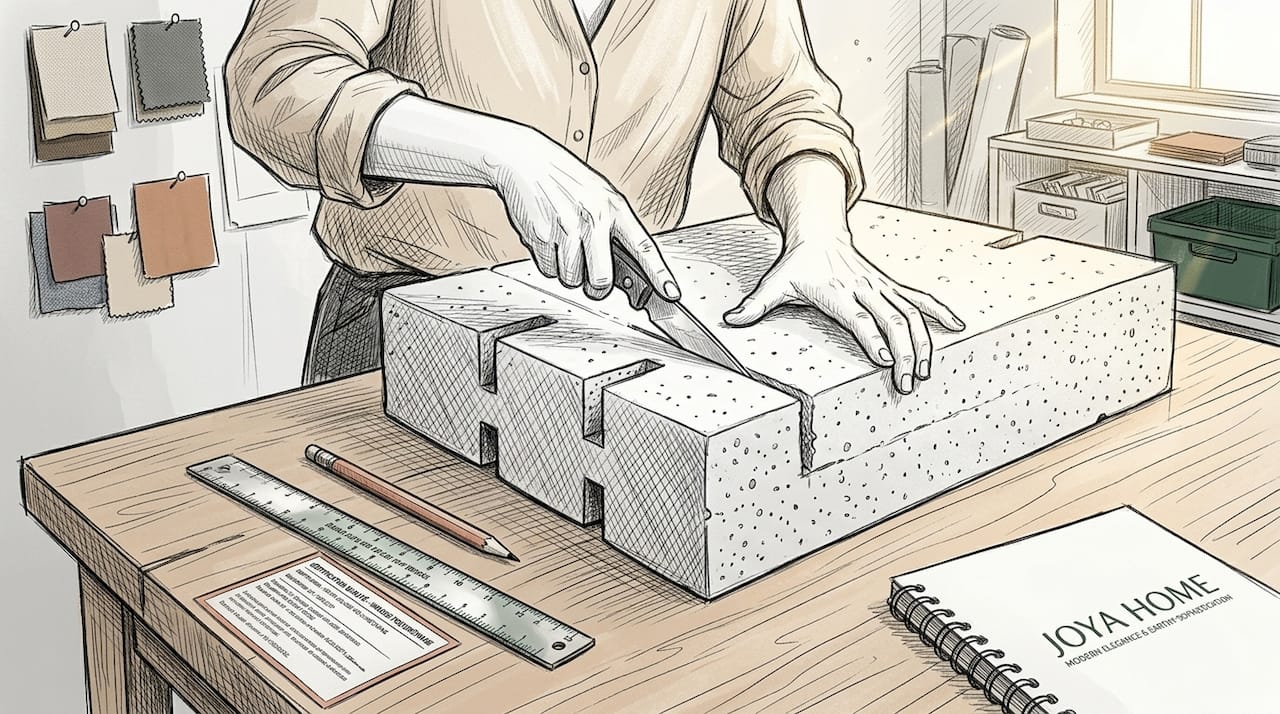
Foam is the soul of a sofa. A foam that is too light, with a density of less than 25 kg/m³, deforms quickly. According to specialists, poor quality foam does not regain its shape correctly after compression, leading to premature wear and requiring faster replacement of the entire sofa. Each anticipated replacement means a new item manufactured, new waste, a new impact.
A sofa that lasts 15 years has a much better track record than a sofa replaced three times in 10 years. This is the arithmetic of durability.
For volatile organic compounds (VOCs), the logic is the same. Upon receiving a compressed sofa, a chemical odor may be released. This is often linked to the foam or textile treatments. OEKO-TEX and CertiPUR certifications guarantee very limited VOC emissions, protecting both your health and the indoor environment of your home.
Here are the concrete steps to check the quality of a compressed sofa before purchase:
- Check the foam density: minimum 30 kg/m³ for intensive daily use.
- Look for labels: OEKO-TEX Standard 100, CertiPUR-US, or European equivalent.
- Inquire about the fabric: a breathable fabric limits unpleasant odors and facilitates long-term maintenance.
- Ask about the origin: fabric and structure produced in Europe generally mean more traceability.
- Consult the warranty: a five-year or longer warranty on the structure reflects the manufacturer's confidence in its materials.
To go even further, choose an eco-friendly sofa that combines several criteria: low VOCs, labeled materials, and controlled origin. This is possible even with compression technology.
Pro tip: If the manufacturer does not communicate about its foam density or certifications, it's often a bad sign. Serious brands display this information without hesitation.
Maintenance, Storage, and Longevity: Tips to Limit the Footprint
Quality guarantees durability, but a few good maintenance practices further reduce environmental pressure.
The first often overlooked point concerns storage. If your sofa remains compressed for too long before being unpacked, trapped humidity can promote mold formation and degrade the internal structure. This risk is real, especially in poorly ventilated warehouses or during humid periods.
Good practices upon receipt:
- Open the package within 24 to 48 hours of delivery.
- Allow the sofa to expand in a well-ventilated room for at least 4 to 6 hours.
- Avoid placing it in direct sunlight during initial deployment.
- Clean with low-VOC products to preserve the quality of the fibers and your indoor air quality.
- Flip or reorient cushions regularly to distribute wear.
For regular maintenance over the years, gentle methods like vacuuming and natural cleaners extend the life of the fabric. Consult reviews of compressed sofas from owners who have applied these practices: many report an immaculate condition after five years or more.
Also consider eco-friendly cleaning practices for hard surfaces around your sofa. A clean and healthy environment reduces deposits on the fabric and decreases the frequency of deep cleaning.
Pro tip: A removable, machine-washable cover is the number one ally for longevity. It protects the foam from accidents and can be replaced at a lower cost if necessary.
Our View: What Most Overlook About the Impact of Compressed Sofas
It's tempting to simplify: compressed sofa equals green sofa. This is a mistake we often observe, and it can be costly for you and the planet.
The design revolution driven by compression is real and deserves recognition. But compression is just a tool, not a guarantee. A compressed sofa made with poor quality foam, imported from the other side of the world, remains a high-impact purchase. Technology does not make up for mediocre material choices.
What many buyers also overlook is the importance of usage. A well-maintained sofa, kept for ten years in a living room, has an infinitely lower annual environmental footprint than a model replaced every three years. Durability begins with your daily behavior, not just the manufacturer's choices.
Our conviction is clear: the true value of an eco-responsible compressed sofa comes from the intersection of optimized logistics AND certified quality materials. When these two dimensions come together, you get a product you can be proud of, both for your home and for your environmental conscience.
Your Next Steps Towards a Sustainable and Modern Living Room
To incorporate your values into your purchase, here's where to explore further.
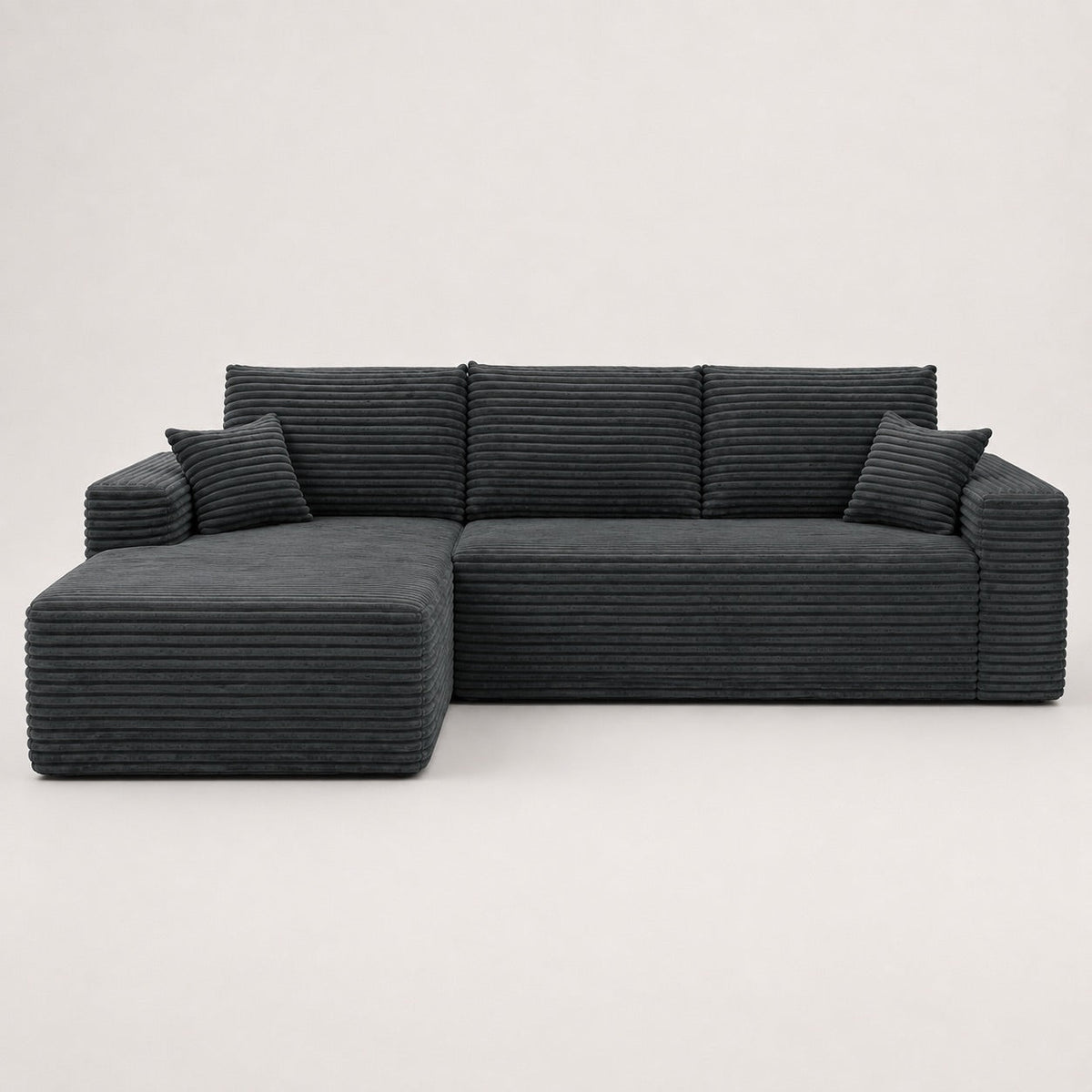
At Joya Home, we have designed each model to meet these precise requirements: high-density foam, certified fabrics, optimized compressed delivery, and packaging designed to limit waste. Our corduroy corner sofas, such as Le Méridia and Le Reverso, combine contemporary style and responsible manufacturing.
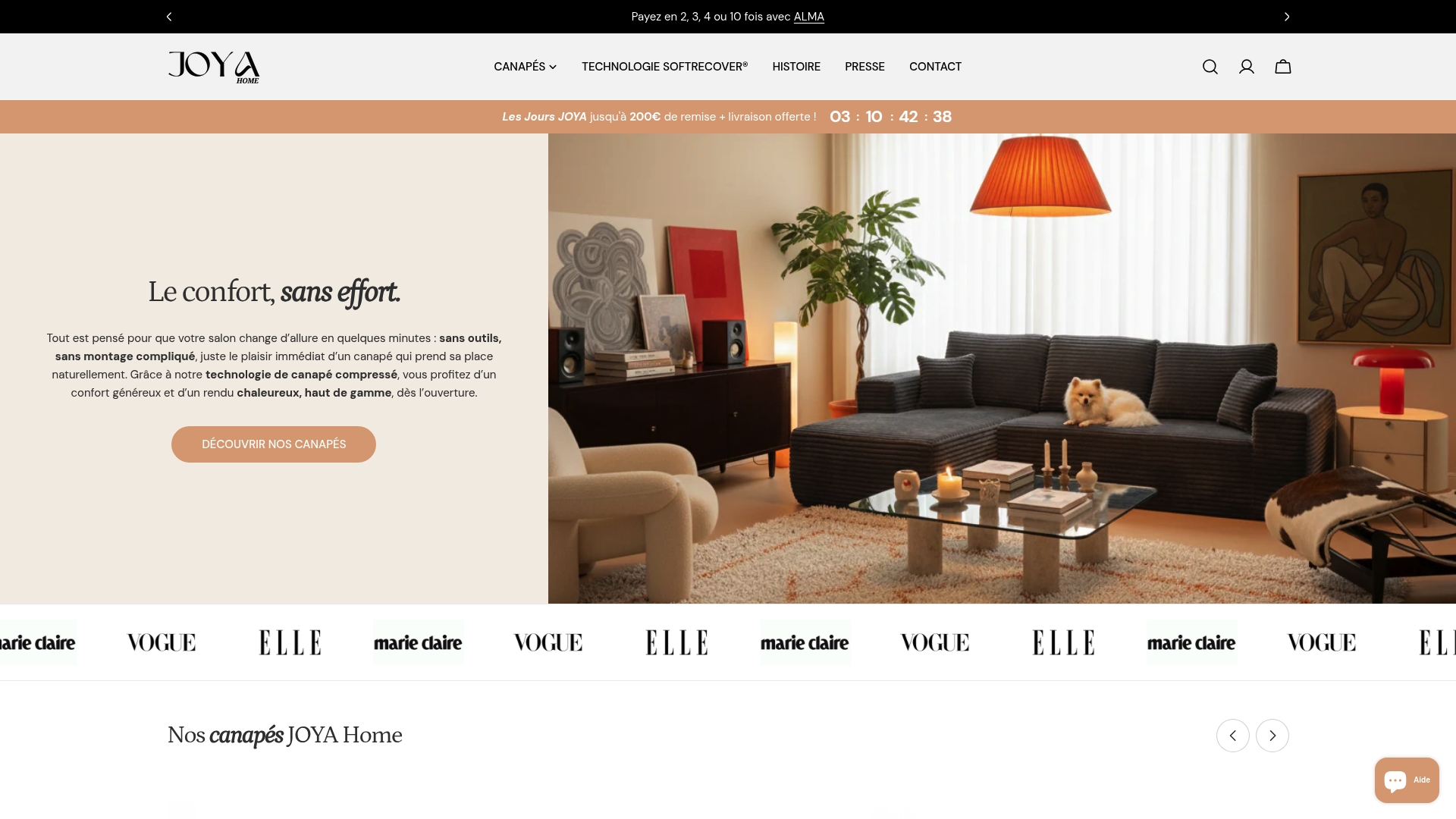
Discover our sofas and their detailed technical specifications, or deepen your knowledge on everything about compressed sofas to make a truly informed decision. If you're looking for a corner model adapted to your space, our selection of compressed corner sofas will guide you to the right choice, without compromising on aesthetics or the environment.
Frequently Asked Questions About the Ecological Impact of Compressed Sofas
Does sofa compression really reduce its carbon footprint?
Compression reduces transport-related emissions by optimizing loads, especially on short routes, but this advantage remains secondary compared to the production impacts of materials like foam.
Which compressed sofa materials should be prioritized for the environment?
Choose high-density foam certified OEKO-TEX or CertiPUR, as cheap foam deforms quickly and forces early replacement, multiplying the total environmental impact.
What are the risks of storing a compressed sofa for too long?
Prolonged storage encourages moisture accumulation, which can cause mold and degrade the internal structure of the foam even before you use it.
How can I limit odors upon receiving a compressed sofa?
Air out the sofa in a ventilated room immediately upon receipt and prioritize models with anti-VOC certifications like OEKO-TEX or CertiPUR for minimal chemical emissions.