
TL;DR:
- An eco-responsible sofa reduces its impact at every stage of its life, not just through its materials.
- Certified labels such as FSC, PEFC, GOTS, and Oeko-Tex guarantee a genuine ecological approach.
- Durability, material origin, and reduced transportation are essential for responsible purchasing.
The majority of a sofa's ecological impact, up to 50% of its footprint, occurs long before it enters your living room. Yet, when we think "eco-responsible sofa," we mostly imagine a natural color or an organic fabric. The reality is more complex, and more interesting. This guide gives you the keys to understanding what an eco-responsible sofa truly means, identifying the materials that matter, debunking greenwashing, and making an informed choice that combines style, comfort, and limited impact on the planet.
Table of Contents
- Defining an eco-responsible sofa: Beyond appearances
- Eco-responsible sofa materials: Which ones to prioritize?
- Labels, certifications, and greenwashing: Recognizing true eco-responsibility
- Buying an eco-responsible sofa: Practical tips and mistakes to avoid
- Our opinion: What we often forget when talking about eco-responsibility
- Discover eco-responsible sofas adapted to your living room
- Frequently asked questions about eco-responsible sofas
Key Points
| Point | Details |
|---|---|
| Crucial life cycle | The environmental impact of a sofa primarily depends on raw materials and overall eco-design. |
| Credible labels to check | FSC, PEFC, Oeko-Tex, and NF Environnement are the main guarantees of eco-responsible reliability. |
| Beware of greenwashing | Only careful reading of labels and the life cycle ensures a coherent choice. |
| Lighter, often better | A lighter sofa often has a lower environmental impact. |
Defining an eco-responsible sofa: Beyond appearances
Having established the stakes, let's clarify what "eco-responsible" truly means when applied to a sofa. This word is everywhere, but it hides very different realities depending on the brands.
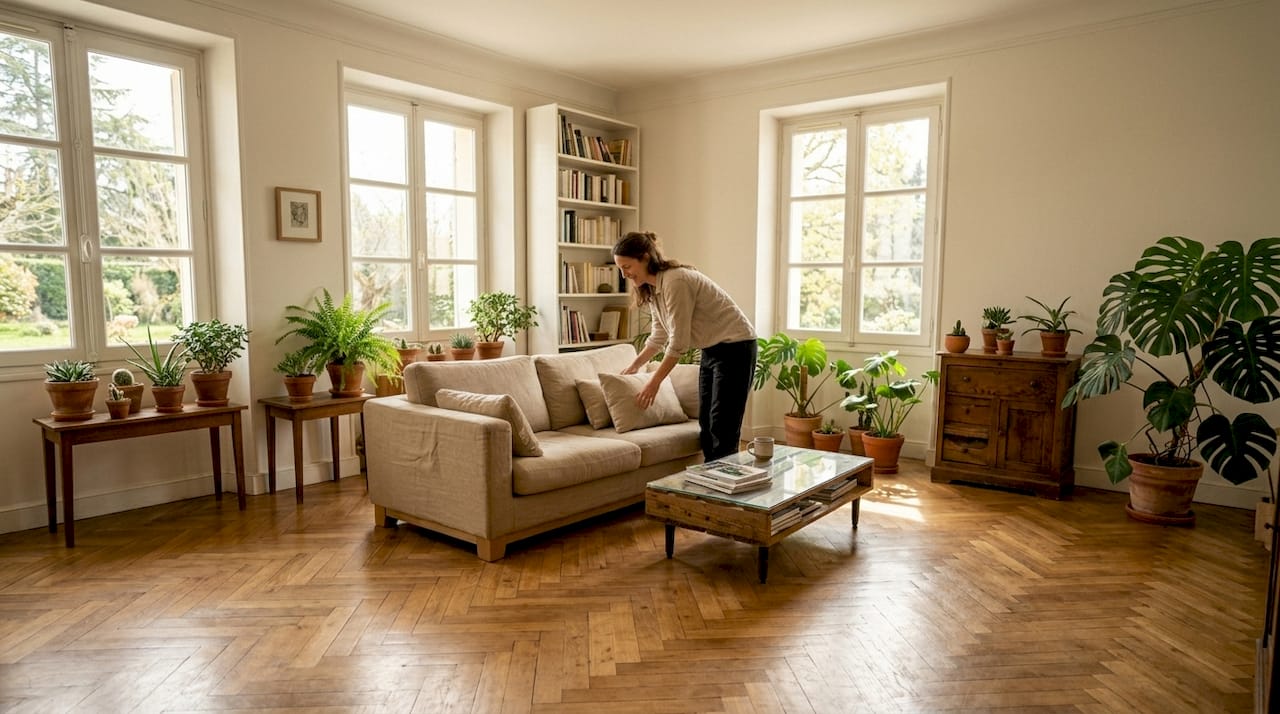
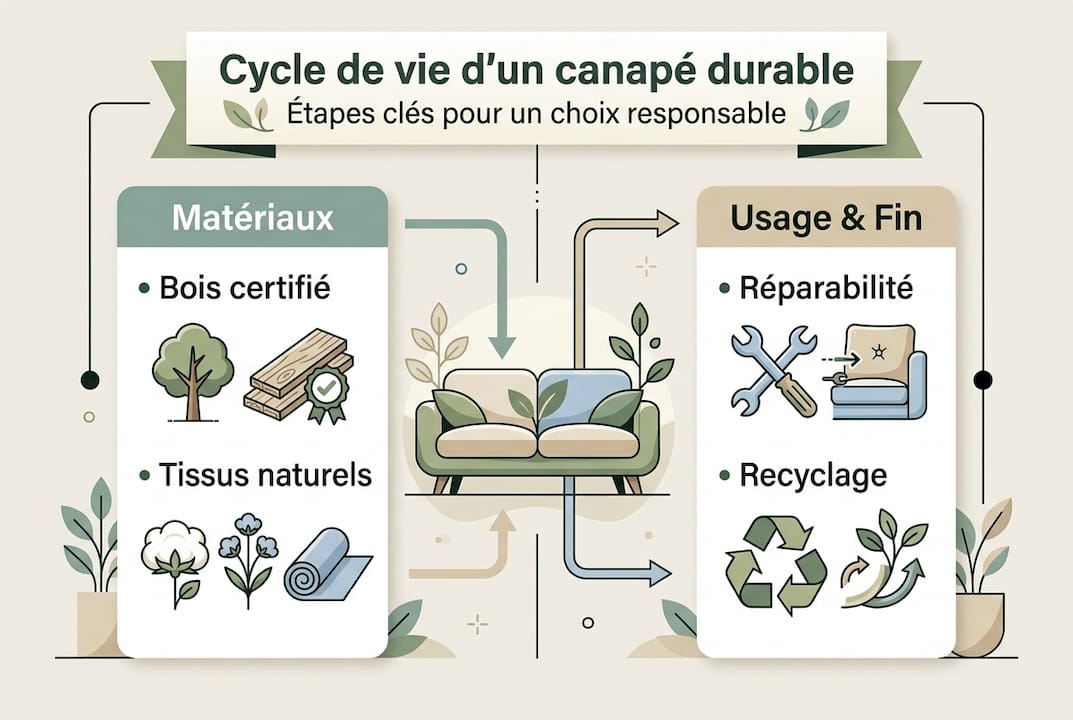
An eco-responsible sofa is a piece of furniture whose environmental impact has been reduced at every stage of its life: raw material extraction, manufacturing, transport, daily use, and end-of-life. It's not just about organic fabric or natural color. It's a holistic approach.
ADEME distinguishes between two often-confused notions. Eco-responsibility refers to a manufacturer's voluntary approach to reduce its impact. Eco-design, however, goes further: it integrates a complete life cycle analysis from the product's conception. An eco-designed sofa meets measurable and verifiable criteria, not just simple intentions.
Greenwashing is a real risk in this sector. Some brands use terms like "natural," "green," or "environmentally friendly" without any concrete proof. To recognize a sustainable sofa, you need to go beyond slogans and look for tangible evidence.
Here are the essential criteria for a sofa to truly earn the eco-responsible label:
- Traceable raw materials: certified wood, textiles free of harmful chemicals
- Clean manufacturing: low energy consumption, little waste, no VOCs (volatile organic compounds)
- Optimized transport: reduced volume, recyclable or compressed packaging
- Durability: designed to last at least 10 to 15 years without degrading
- Thought-out end-of-life: recyclable or compostable materials, possibility of disassembly
"An eco-responsible sofa is not a compromise on comfort or style. It's a better-designed piece of furniture, from start to finish."
Pro tip: Always ask the salesperson for the complete technical sheet of the product. If it doesn't exist or remains vague, it's a warning sign.
Eco-responsible sofa materials: Which ones to prioritize?
Now that the concept of an eco-responsible sofa has been established, let's delve into the materials that truly make it sustainable. Not all are equal, and some "good students" hide surprises.
Recommended ecological materials include FSC or PEFC certified wood, GOTS organic cotton, recycled wool, Oeko-Tex foam, or natural latex. Each has its strengths and limitations depending on its use and manufacturing context.
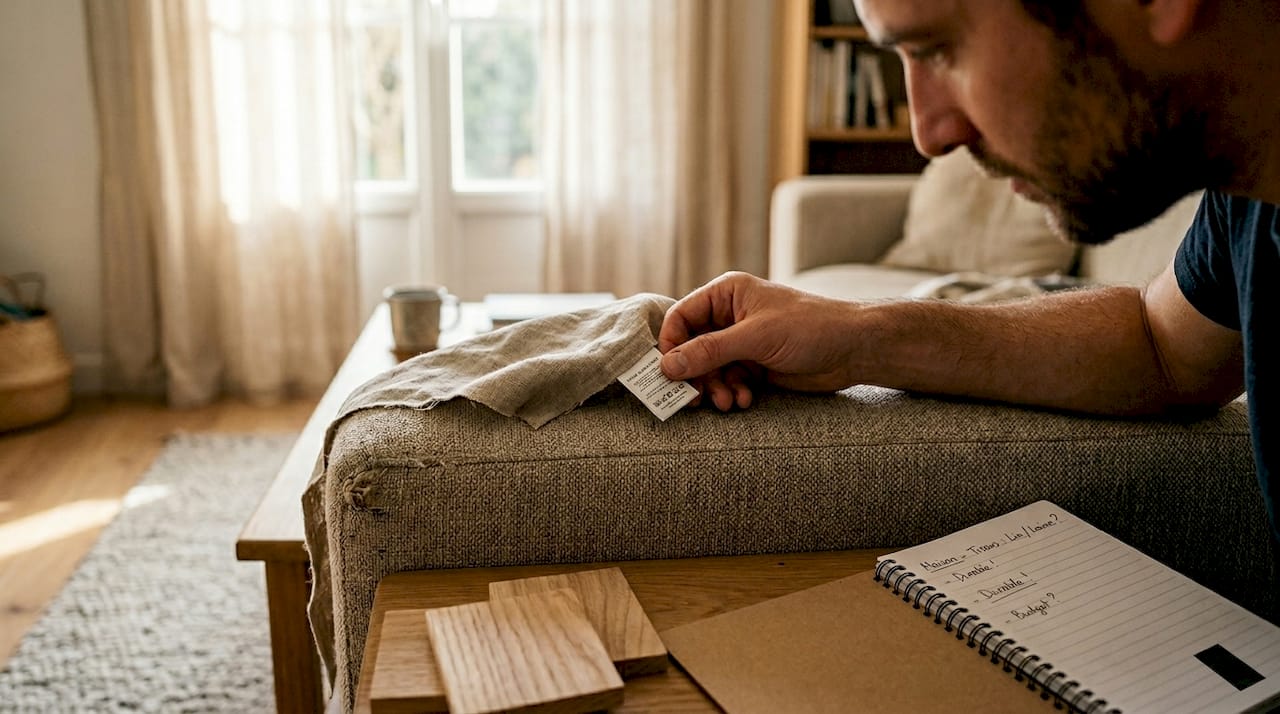
Linen is one of the most virtuous textiles: it grows without intensive irrigation and pesticides in Europe. Recycled wool reuses existing fibers and reduces the demand for virgin resources. CFC-free foam (chlorofluorocarbons) avoids ozone-depleting gases, often present in cheap foams.
Here's a comparative table to help you choose the right sofa materials:
| Material | Advantages | Points of vigilance |
|---|---|---|
| FSC/PEFC Wood | Traceable, renewable | Verify actual certification |
| GOTS Organic Cotton | Pesticide-free, soft | Consumes a lot of water |
| European Linen | Few inputs, biodegradable | Less wear-resistant |
| Recycled Wool | Recycles textile waste | Possible chemical treatment |
| Oeko-Tex Foam | No harmful substances | Not always recyclable |
| Natural Latex | Biodegradable, comfortable | High cost, sourcing to check |
The most common pitfalls? Fake in-house labels, invented by the brand itself without external control. A green logo with a leaf means nothing without an independent certifying body. Also, beware of imprecise sourcing: "natural wood" without certification doesn't guarantee any sustainable forest management.
- Avoid standard polyurethane foams: they often contain toxic flame retardants.
- Prioritize solvent-free glues, often overlooked in the ecological analysis of a sofa.
- Check the geographical origin of materials: organic cotton imported from the other side of the world loses some of its ecological advantage.
Labels, certifications, and greenwashing: Recognizing true eco-responsibility
After materials, it's crucial to identify concrete benchmarks for distinguishing genuine eco-responsible offerings from simple marketing promises.
Greenwashing in the furniture sector is a documented phenomenon. The DGCCRF regularly penalizes companies for unfounded ecological claims, including in the sofa sector. So-called "Type I" labels, with independent control, are the only truly reliable ones.
Labels recommended by ADEME include FSC, PEFC, Oeko-Tex, GOTS, EU Ecolabel, NF Environnement, and NF Ameublement. Here's what they concretely guarantee:
| Label | What it certifies | Independent control |
|---|---|---|
| FSC / PEFC | Sustainable forest management | Yes |
| GOTS | Organic textile from fiber to dye | Yes |
| Oeko-Tex Standard 100 | Absence of harmful substances | Yes |
| EU Ecolabel | Reduced impact throughout the life cycle | Yes |
| NF Environnement | French ecological criteria | Yes |
| NF Ameublement | Furniture quality and durability | Yes |
Statistic to remember: In 2026, the DGCCRF strengthened its controls on environmental claims in the furniture sector. Fines can reach tens of thousands of euros for brands that mislead consumers.
To verify the authenticity of an ecological approach before buying, follow these steps:
- Look for the certification number on the certifying body's website.
- Check that the label covers the final product, not just a component.
- Read the brand's CSR policy: Is it precise or full of generalities?
- Consult independent reviews or comparisons on sites like eco-responsible tips at home.
- Ask direct questions to customer service: a true commitment is reflected in the answers.
To choose based on solid sofa selection criteria, always cross-reference multiple sources of information rather than relying on a single marketing promise.
Buying an eco-responsible sofa: Practical tips and mistakes to avoid
Once you've grasped the labels and learned to be wary of greenwashing, let's move on to practical steps for choosing an eco-responsible sofa.
Before any purchase, ask yourself these essential questions: How long will this sofa last? Can it be repaired if a component fails? What will happen to it at the end of its life? These simple questions already filter out 80% of bad options.
One often overlooked point: the weight of the furniture. Heavier furniture generates an increased impact during transport, but well-managed eco-design can reduce the environmental impact by 10 to 40%. A compact sofa, delivered compressed, reduces transport volume and thus emissions related to logistics.
Here are the key steps to check a sofa's ecological footprint before buying:
- Check certifications: FSC, Oeko-Tex, GOTS should be mentioned with their number.
- Analyze the product sheet: materials, country of manufacture, foam composition.
- Evaluate durability: foam density, frame solidity, warranty offered.
- Compare delivery methods: a compact or traditional sofa compressed reduces the logistical footprint.
- Consider assembly: an easy-to-assemble sofa without tools or glue avoids additional chemicals.
Pro tip: Don't sacrifice durability for price. an eco-responsible sofa at 800 euros that lasts 15 years is much more virtuous than a 300 euro model replaced every 5 years. The real cost per year of use is often lower for the quality model.
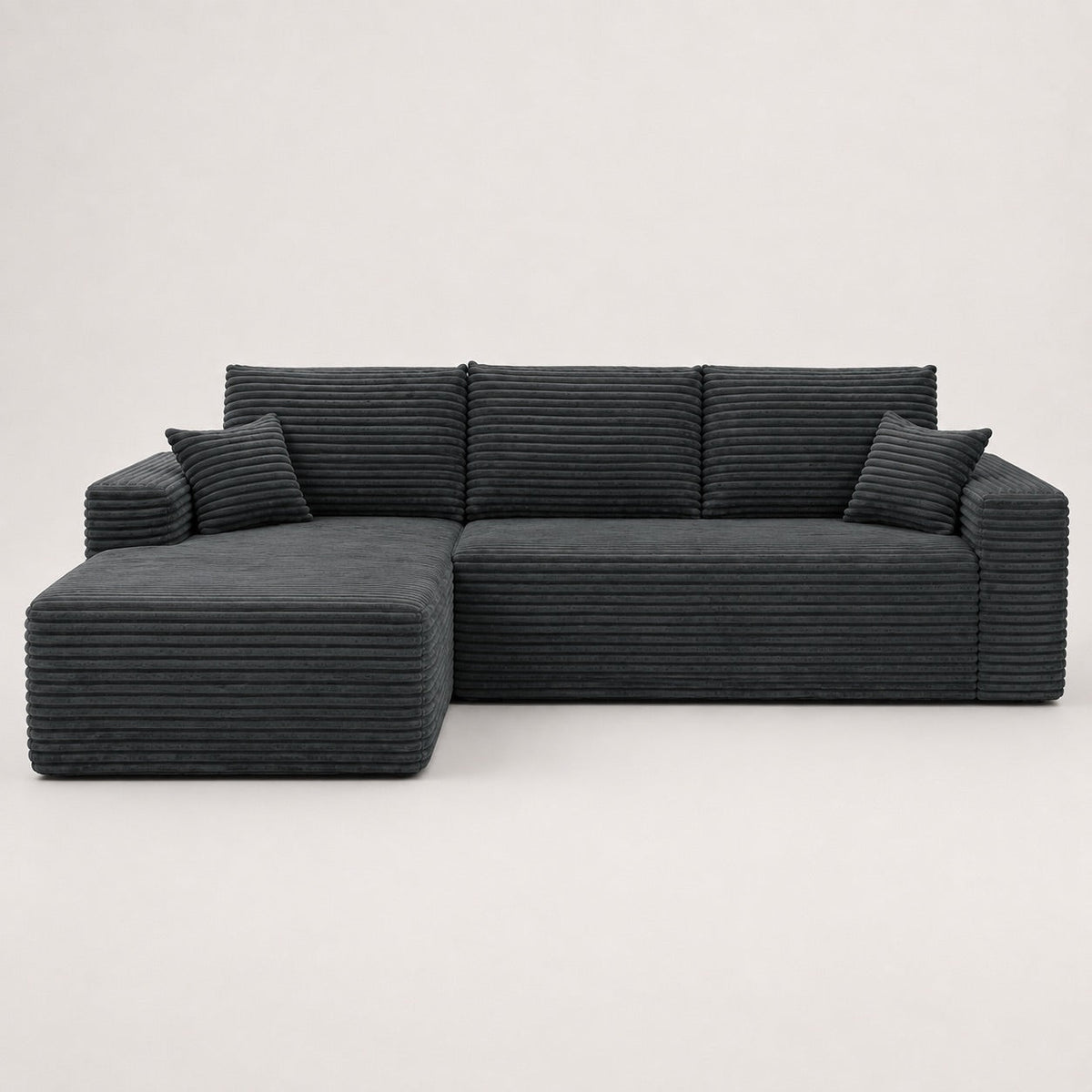
Style and functionality are not enemies of eco-responsibility. Corduroy velvets, natural shades, and modular shapes allow you to create an aesthetic living room without ecological compromise. The classic mistake is to believe that "eco-responsible" necessarily rhymes with sober or austere.
Our opinion: what is often forgotten when talking about eco-responsibility
We too often reduce the eco-responsibility of a sofa to the question of raw materials. This is understandable, but insufficient. At Joya Home, we believe that the true approach begins long before the choice of fabric and extends long after delivery.
Transport, for example, is a frequent blind spot. A sofa made with organic cotton but delivered in a half-empty truck over 2,000 kilometers negates some of its benefits. Compressing sofas for delivery is not just a logistical feat: it's a concrete ecological choice, reducing the number of trips and the carbon footprint of the last mile.
We invite you to read our analysis on compact vs. classic sofas to understand why the shape of the furniture directly influences its environmental impact. Eco-responsibility is a critical look at the entire life cycle, not a marketing argument.
Discover eco-responsible sofas adapted to your living room
You now have the tools to make a truly informed choice. At Joya Home, we have designed our sofas taking these issues into account: materials selected for their quality and traceability, compressed delivery that reduces the logistical footprint, and simplified assembly without chemical products.
Our models like Le Méridia and Le Reverso combine corduroy velvet, durable comfort, and contemporary design. They are designed to last, not to be replaced. Discover our Joya Home sofa collection and explore our designer and innovative sofas to find the model that suits your living room and your values.
Frequently asked questions about eco-responsible sofas
What are the reliable labels for an eco-responsible sofa?
In France, prioritize FSC and PEFC for wood, Oeko-Tex for textiles, GOTS for organic cotton, as well as NF Environnement and EU Ecolabel for overall product certification. These labels guarantee independent control.
How to avoid greenwashing when buying an eco-responsible sofa?
Always verify the certification number on the issuing body's website, and beware of vague arguments. Fake labels without independent control are common in the furniture sector: only Type I labels offer a true guarantee.
Does buying an eco-responsible sofa cost more?
The price is often slightly higher, but the durability and quality of the materials reduce the real cost in the long run. A good eco-responsible sofa costs you less per year of use than a low-end model replaced frequently.
Which materials are truly ecological for a sofa?
FSC/PEFC wood, GOTS organic cotton, recycled wool, and Oeko-Tex foam are the industry standards. Each must be accompanied by verifiable certification to guarantee its genuinely reduced impact.