
TL;DR:
- Fabric breathability promotes air circulation for prolonged comfort.
- Linen and cotton offer high permeability, better than synthetics.
- Choosing a breathable fabric helps prevent moisture, mold, and improves durability.
Many people choose their sofa for its appearance or price, without ever considering the breathability of the fabric. Yet, this is the detail that makes all the difference between a sofa where you sweat after twenty minutes and a place where you can stay comfortably seated for hours. A beautiful fabric can be stifling. A breathable fabric, on the other hand, regulates heat, prevents moisture, and extends the furniture's lifespan. This guide explains everything you need to know to make the right choice.
Table of Contents
- What is the breathability of upholstery fabric?
- Characteristics of breathable fabrics: measurements and materials
- Advantages and limitations of breathable fabrics for a sofa
- How to choose a stylish and breathable sofa?
- Our opinion on breathable fabrics: what most people forget
- Do you want a stylish, comfortable, and breathable sofa?
- Frequently asked questions about breathable upholstery fabrics
Key Points
| Point | Details |
|---|---|
| Clearly defining breathability | A fabric's breathability refers to its ability to allow air to pass through for greater comfort. |
| Linen and cotton preferred | Opt for linen or cotton to combine natural aesthetics with excellent ventilation. |
| Don't rely solely on marketing | Prefer to check data and ask technical questions in-store. |
| Blends = clever compromise | Natural/synthetic blends offer a good balance of style, comfort, and easy care. |
| Upholstery also important | A truly breathable sofa combines aerated fabric with ventilated padding. |
What is the breathability of upholstery fabric?
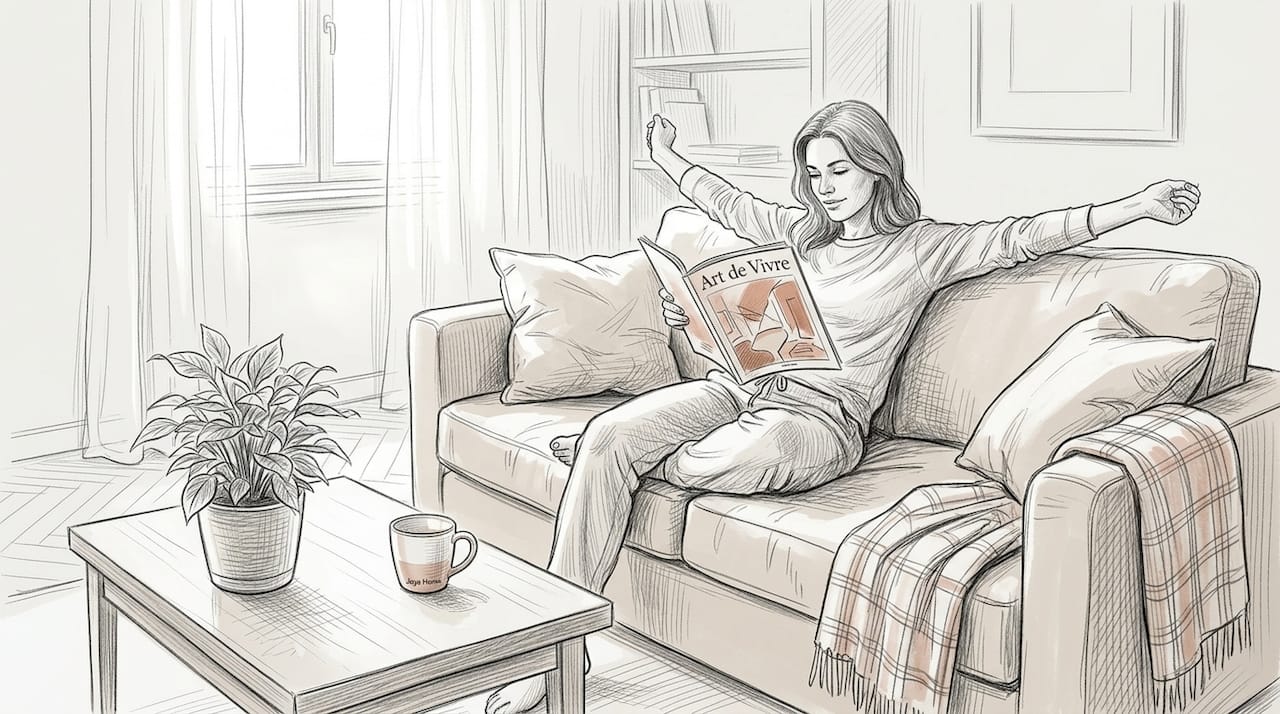
Fabric breathability is its ability to allow air to circulate through its fibers. Specifically, a breathable fabric allows body heat and moisture to escape rather than being trapped between you and the sofa. This is not an abstract quality: it can be measured, compared, and it radically changes your daily experience.
Many people confuse breathability with absorbency. These are two very different properties. An absorbent fabric retains liquids like a sponge. A breathable fabric, on the other hand, allows air to pass through without necessarily absorbing anything. A fabric can be highly absorbent and not very breathable, or vice versa. Understanding this nuance helps you avoid a common marketing trap.
The breathability of a fabric is distinct from its absorbency. It prevents mold, is particularly suitable for humid climates, and must be combined with ventilated padding for optimal comfort on sofas.
Why is this property so important for a sofa? Because you spend hours on it. Your body constantly emits heat. If the fabric does not allow air to circulate, this heat accumulates, moisture sets in, and in the long run, mold can form inside the padding. It's discreet, but it's real, especially in poorly ventilated apartments.
The padding also plays a key role. A breathable fabric combined with dense, closed padding will not yield optimal results. This is why SoftRecover technology combines aerated fabric with a ventilated internal structure to maximize thermal comfort. The best sofas consider the entire system, not just the surface.
The main benefits of a breathable fabric for a sofa:
- Natural regulation of body heat
- Prevention of moisture and mold
- Extended comfort during long sitting sessions
- Increased lifespan of padding and fabric
Characteristics of breathable fabrics: measurements and materials
Now that you know what breathability is, let's look at how it's measured and which fabrics perform best.
Breathability is quantified by the air permeability value, expressed in CFM (cubic feet per minute) or in liters per square meter per second (L/m²/s). The higher this value, the more freely air circulates through the fabric. For upholstery, a good balance is between 5 and 50 CFM, or approximately 0.08 to 0.80 L/m²/s. Linen reaches values of 200 to 500 L/m²/s, and cotton between 100 and 300 L/m²/s, which places them well above classic synthetics.
📊 Comparison of fabrics by breathability
| Fabric | Air Permeability | Resistance | Care |
|---|---|---|---|
| Linen | Very high (200-500 L/m²/s) | Good | Delicate |
| Cotton | High (100-300 L/m²/s) | Medium | Easy |
| Corduroy | Medium to good | Very good | Moderate |
| Polyester | Low | Excellent | Very easy |
| Microfiber | Very low | Excellent | Very easy |
| Blend fabric | Variable | Good to very good | Easy |
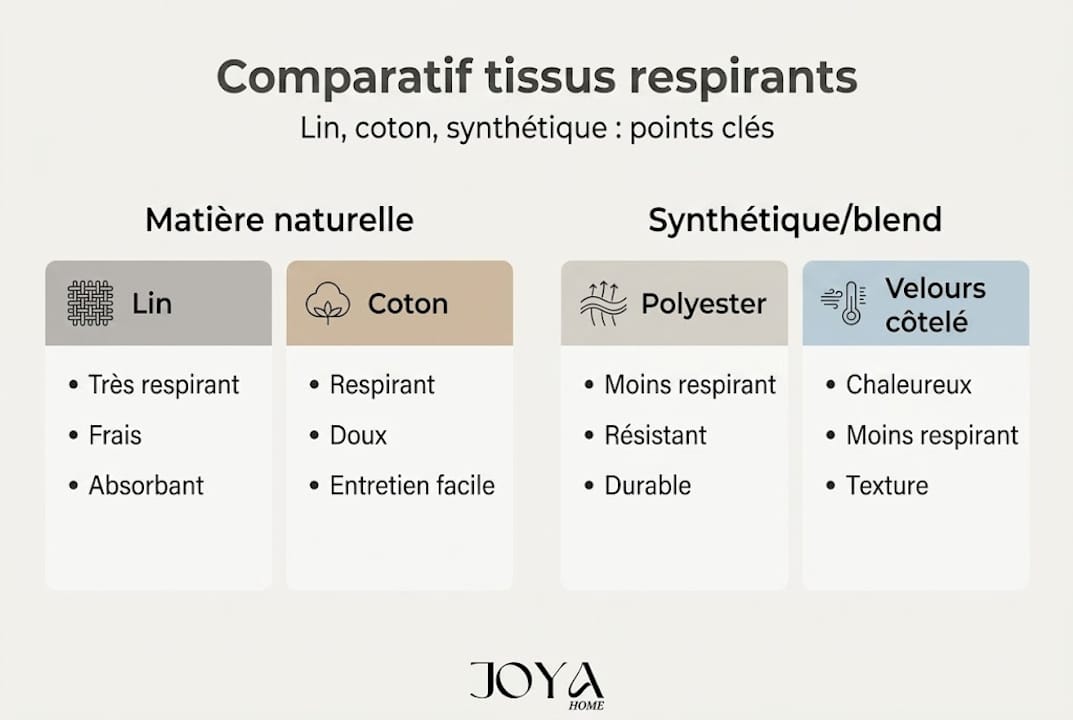
Linen is the undisputed champion of breathability. Its hollow natural fibers allow air to pass through remarkably well. Cotton follows closely, with the advantage of being softer to the touch and easier to care for. Corduroy, often associated with designer sofas, offers intermediate breathability but superior to most pure synthetics, especially due to its ribbed structure which creates micro-aeration spaces.
Synthetic fabrics like polyester or microfiber are very durable and easy to clean, but their tight structure blocks air circulation. The result: you sweat more during prolonged sitting. For a compressed sofa delivered directly to your home, the choice of outer fabric is therefore as important as the compression technology.
Pro tip: When reading a product sheet, look for actual air permeability values. If the seller doesn't provide them, ask for them. A concrete number is worth more than ten adjectives like "airy" or "comfortable."
Advantages and limitations of breathable fabrics for a sofa
After reviewing materials and measurements, let's evaluate the advantages and limitations of each type of fabric to guide your choice.
The advantages of a breathable fabric are numerous and tangible:
- Real thermal comfort: you won't overheat after thirty minutes of sitting, even in summer.
- Mold prevention: moisture doesn't stagnate in the padding, which extends the sofa's life.
- Indoor air quality: less trapped moisture means fewer allergen risks.
- Pleasant feel: natural fibers have a softer and more natural finish.
But breathable fabrics also have their limitations. Natural materials like linen or cotton are more susceptible to stains and creasing. They require more careful maintenance. A breathable natural fabric is breathable but can wrinkle easily and remains sensitive to stains, unlike more durable but less airy synthetics. Blends often offer the best practical balance.
| Criterion | Natural Fabric | Synthetic Fabric | Blend Fabric |
|---|---|---|---|
| Breathability | Excellent | Low to medium | Good |
| Stain Resistance | Low | Very good | Good |
| Durability | Medium | Very good | Very good |
| Aesthetics | Natural and warm | Uniform | Variable |
| Maintenance | Delicate | Easy | Easy |
Also, beware of marketing. Some stain-treated fabrics lose much of their breathability due to applied coatings. The terms "breathable" or "airy" are often used without measurable data behind them. A coated fabric can block up to 60% of the initial air circulation of the raw fabric.
Pro tip: If you have children or pets, a breathable corduroy fabric with a good Martindale (abrasion resistance) offers the best compromise between breathability, aesthetics, and daily resistance.
How to choose a stylish and breathable sofa?
Once the advantages are identified, here's how to apply this knowledge when choosing the right model for your interior.
Start by defining your actual usage. Do you watch movies every night? Do you have frequent guests? Do you live in a hot or humid apartment? These answers directly guide the choice of fabric. A well-ventilated living room can tolerate a less breathable fabric. A studio in summer, no.
Here are the points to check before buying:
- The Martindale test: it measures abrasion resistance. For an active living room, aim for a score above 25,000 cycles. For intensive use, 40,000 cycles and more. For a stylish and durable sofa, check for a Martindale above 25k as a minimum for a young adult's living room.
- Fabric composition: look for at least 30% natural fibers in a blend to ensure proper breathability.
- Air permeability data: ask for it if not displayed.
- The padding: check that the foam or filling is ventilated, not compact and closed.
- Size and shape: a well-sized corner sofa for your living room avoids costly mistakes.
For a modern and warm interior, corduroy decor ideas show how this fabric integrates into contemporary spaces while maintaining good aeration. And if you are looking for a versatile model, the breathable convertible sofa Le Reverso combines aerated fabric and a convertible function, ideal for small spaces.
Pro tip: Don't trust product photos alone. Ask for a fabric sample if possible, or read customer reviews looking for mentions of heat or sweating in summer. These experiences are often more reliable than technical specifications.
Our opinion on breathable fabrics: what most people forget
Breathability is important, but it's not everything. We see many people choose a very airy fabric and then end up with an uncomfortable sofa because the padding is too dense or too soft. Comfort is a complete system: fabric, padding, structure, dimensions.
What we also observe is that true luxury for an active young adult is a sofa that lasts without sacrificing aesthetics. A sofa that ages well, that remains beautiful after two years of real life, is worth far more than a model that looks perfect in the showroom but is disappointing in use. The concept of a vacuum-packed sofa perfectly illustrates this logic: innovating in delivery and structure, not just in the surface fabric.
Choose a breathable fabric, yes. But always think about the entire piece of furniture.
Do you want a stylish, comfortable, and breathable sofa?
After this overview, discover what Joya Home brings to the table.
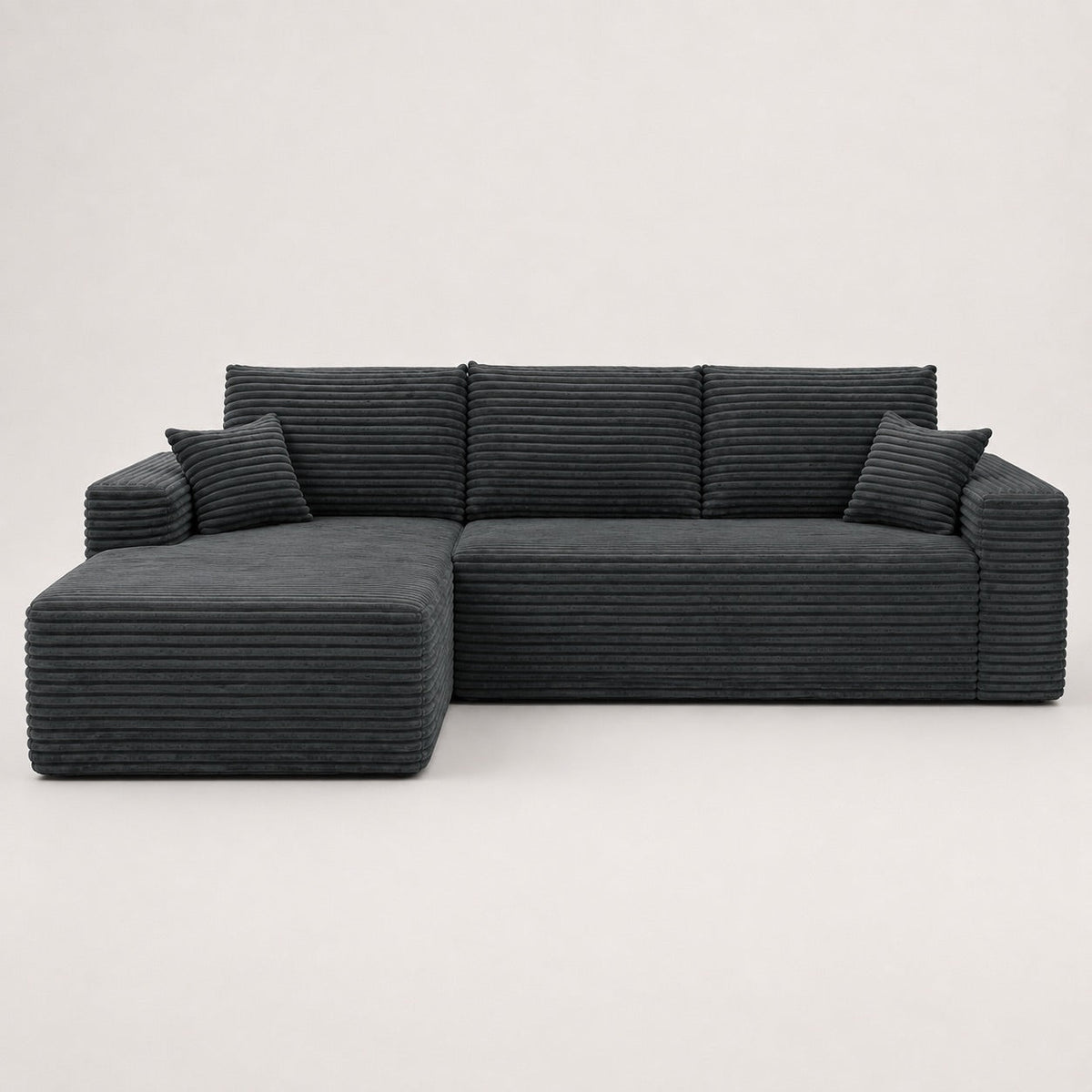
At Joya Home, our sofas are designed to combine modern aesthetics, breathability, and innovation. The corduroy fabrics of our models offer natural ventilation superior to classic synthetics, combined with ventilated padding for real daily comfort. Explore our designer and breathable sofas or browse our entire Joya Home sofa collection to find the model that transforms your living room.
Each model is delivered compressed directly to your home, without assembly stress. Your living room deserves better than a sofa that makes you sweat.
Frequently asked questions about breathable upholstery fabrics
Why choose a breathable fabric for a sofa?
A breathable fabric prevents heat and moisture buildup, thereby reducing the risk of mold and offering optimal thermal comfort in all seasons, as textile experts emphasize.
What are the most breathable fabrics for a sofa?
Linen and cotton largely dominate, with air permeability values of 200 to 500 L/m²/s for linen and 100 to 300 L/m²/s for cotton, well above synthetics.
Does a fabric's breathability mean it absorbs liquids better?
No, these are two distinct properties: breathability concerns air circulation, not water or stain absorption, and a fabric can be very breathable without absorbing liquids.
How to tell if a fabric is truly breathable?
Ask the seller for the air permeability values measured in L/m²/s or CFM. If no figures are available, be wary of marketing claims without concrete data.