

TL;DR:
- The fiber composition determines how easy velvet is to care for; silk velvet requires dry cleaning, while synthetic velvet tolerates controlled wet cleaning. It is essential to identify the fiber, respect the pile direction, and control moisture to preserve the fabric's texture. Regular maintenance, such as gentle vacuuming and brushing in the direction of the pile, helps maintain the beauty and durability of velvet.
The ease of velvet care primarily depends on its fiber composition, not the cleaning products used. Silk velvet requires professional dry cleaning, while synthetic or cotton velvet tolerates controlled wet cleaning at home. Explanations for the ease of velvet care are based on three principles: identifying the fiber, respecting the pile direction, and controlling moisture. Sources like La Compagnie du Blanc and Deco.fr confirm that weekly gentle vacuuming with a brush attachment is the foundation of successful care.
How does velvet's composition influence its ease of care?
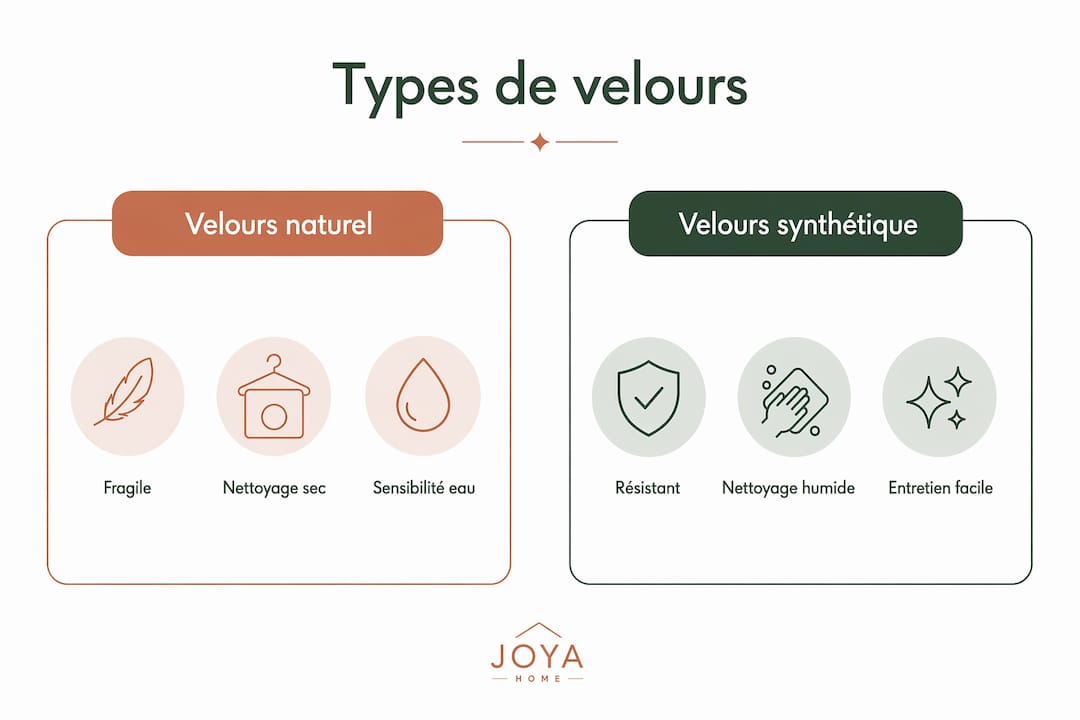
The fiber is the determining factor in velvet care. Silk velvet is fragile, sensitive to water and friction, and almost always requires professional dry cleaning. Cotton velvet tolerates light moisture better but remains susceptible to watermarks. Synthetic velvet, on the other hand, offers the best everyday resistance.
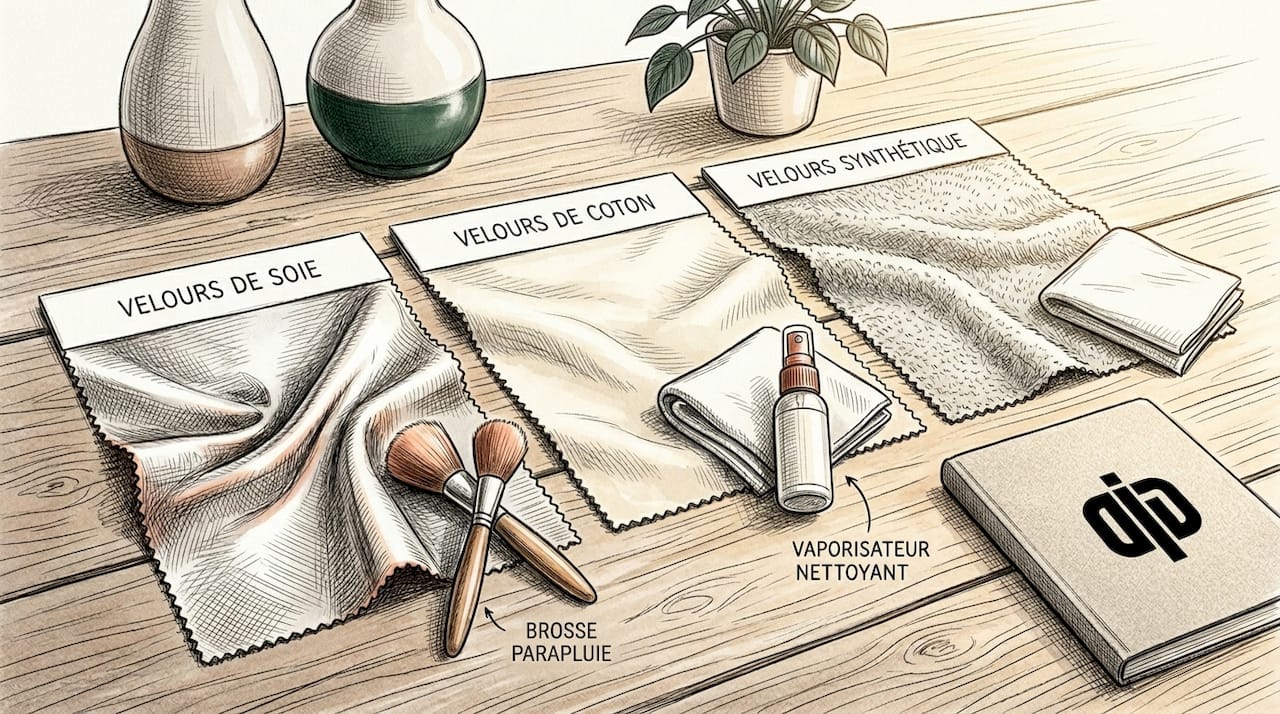
Reading the care label before any intervention is not an unnecessary precaution. It is the only way to know if your fabric tolerates water, dry cleaning, or only brushing. Ignoring this step risks irreversible discoloration or felting.
| Type of velvet | Water resistance | Recommended method | Main risks |
|---|---|---|---|
| Silk | Very low | Dry cleaning only | Watermarks, discoloration |
| Cotton | Moderate | Very controlled wet cleaning | Watermarks, stiffening |
| Synthetic | Good | Controlled wet or dry cleaning | Few risks if dried properly |
| Corduroy | Good to very good | Wet or dry depending on fiber | Crushing of the texture if rubbed |
Modern synthetic velvet imitates the luxurious appearance of natural fibers while being more resistant and easier to maintain. For intensive family use, it is clearly the most practical choice.
What common mistakes damage velvet during cleaning?
Vigorous rubbing is the most destructive mistake. It crushes the pile, creates visible dull areas, and permanently deforms the texture. According to Deco.fr, rubbing a stain on velvet spreads it and embeds it further into the fiber, complicating any subsequent cleaning attempts.
Here are the mistakes to absolutely avoid:
- Rubbing vigorously: crushes the pile and creates dull areas that are difficult to restore.
- Using a steam cleaner: wet heat damages fibers and creates watermarks. Wecasa confirms that steam cleaners are not recommended for any type of velvet.
- Soaking the fabric: excess water stiffens the pile and leaves marks upon drying.
- Drying with direct heat: hair dryers, radiators, or direct sunlight alter the texture. Always air dry.
- Neglecting to brush after cleaning: without brushing in the direction of the pile, the velvet dries with an uneven texture.
Pro tip: To spot dull areas before they worsen, examine your sofa under a grazing light. Crushed areas reflect light differently. A gentle brush in the direction of the pile, done in time, is often enough to correct them.
How to clean and maintain velvet daily?
Regular maintenance is better than occasional deep cleaning. The quality of the result depends less on the product used than on controlling water and the pile direction. Soaking or crushing the pile creates visual irregularities that are difficult to correct, even with the best products.
Weekly maintenance routine
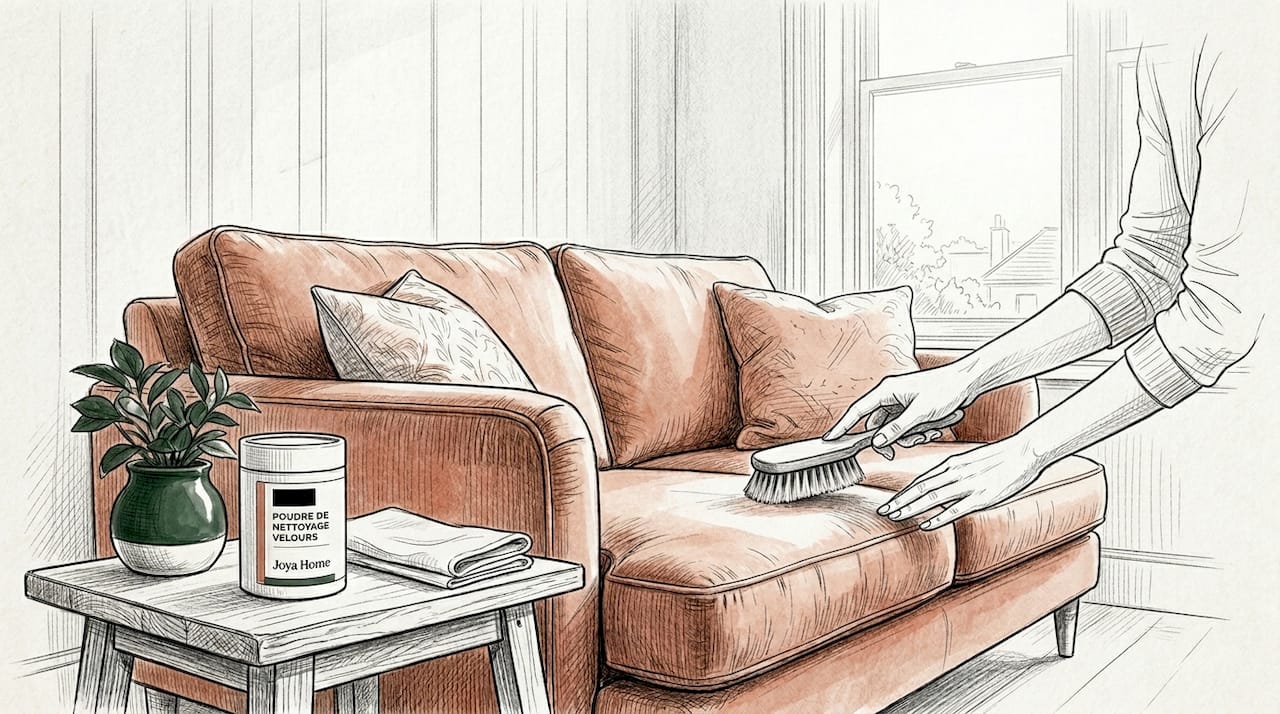
- Vacuum with a brush attachment at low power, following the direction of the pile. This step removes embedded dust without flattening the fibers.
- Brush gently with a soft-bristled brush to revive the velvet's shine and even out the texture.
- Inspect contact areas (armrests, seats) to detect initial signs of crushing or stains.
Stain treatment
- Fresh stain: blot immediately with a clean absorbent cloth, without rubbing. Air dry.
- Greasy stain: sprinkle with Sommières earth, let sit for several hours, then brush and vacuum. This method removes oil without opening the fiber with water.
- Light dry stain: white clay or baking soda work on the same absorbent principle.
- Occasional wet cleaning: first test on a hidden area, use very diluted soapy water or diluted white vinegar, apply with a slightly damp (never wet) cloth, and air dry.
Essential tools for optimal maintenance: soft-bristled brush, vacuum cleaner with adjustable brush attachment, microfiber cloths, Sommières earth, and white vinegar.
Pro tip: After any wet cleaning, brush the velvet in the direction of the pile while it dries. This gesture, recommended by Top Bricolages, prevents felting and ensures a uniform finish.
Traditional or modern velvet: which is easier to care for?
Modern synthetic velvet has transformed the ease of care for upholstery fabrics. Where classic silk velvet imposes strict constraints (dry cleaning, delicate handling, high maintenance cost), synthetic velvet allows for less frequent and simpler cleaning, suitable for families with children or pets.
| Criterion | Natural velvet (silk, cotton) | Modern synthetic velvet |
|---|---|---|
| Stain resistance | Low to moderate | Good to very good |
| Moisture tolerance | Low | Moderate to good |
| Cleaning frequency | High | Reduced |
| Maintenance cost | High (professional cleaning) | Low (home maintenance) |
| Durability | Moderate | High |
Synthetic corduroy sofas, such as those offered by Joya-home with the Le Méridia and Le Reverso models, perfectly illustrate these advantages. Corduroy adds a textured relief that better conceals small imperfections and resists pile crushing. To delve deeper into the maintenance of this type of fabric, Joya-home's corduroy guide details practical specificities.
Key points
Velvet care relies on fiber, moisture control, and respecting the pile direction: these three factors determine 90% of the result.
| Point | Details |
|---|---|
| Identify the fiber first | Silk requires dry cleaning; synthetic tolerates controlled wet cleaning at home. |
| Blot, never rub | Rubbing spreads the stain and irreversibly crushes the pile. |
| Avoid steam and heat | Steam cleaners damage fibers and create watermarks on all types of velvet. |
| Brush after each cleaning | Brushing in the direction of the pile restores the texture and prevents felting. |
| Prefer synthetic for daily use | Modern synthetic velvet reduces the frequency and cost of maintenance. |
What experience has taught me about velvet care
After advising dozens of homeowners on furniture care, I am convinced that most velvet damage does not come from a bad product. It comes from haste. People rub because they panic at a fresh stain, they pull out the hairdryer because they want it to dry quickly. These two reflexes are the most destructive.
What I have observed: people who best maintain their velvet are those who have adopted two simple habits. A weekly vacuuming with a brush attachment, and a gentle brushing after every incident. Nothing more. Professional cleaning only becomes necessary when these actions have been neglected for months.
My most counter-intuitive advice: the less you intervene, the better the velvet fares. Minimal but regular maintenance always trumps quarterly deep cleaning. And if you choose quality synthetic velvet from the start, you significantly reduce constraints without sacrificing aesthetics.
— Charles
Discover Joya-home velvet sofas, designed for simplified care
Choosing an easy-to-maintain sofa starts with fabric selection. Joya-home offers a range of corduroy velvet sofas, designed to combine contemporary aesthetics with everyday durability. The Le Méridia and Le Reverso models use corduroy whose textured relief naturally conceals small imperfections and supports simple domestic maintenance.

Compressed delivery directly to your home and easy assembly make Joya-home a solution designed to simplify every step, from purchase to maintenance. To learn more, consult the complete care guide for velvet sofas on the Joya-home blog.
FAQ
Is velvet difficult to maintain daily?
No, provided the right methods are used. Weekly vacuuming and gentle brushing are sufficient for most synthetic and cotton velvets.
Can a velvet sofa be cleaned with water?
Yes, but with caution. Test on a hidden area, use very little water, and air dry without heat to avoid watermarks and pile stiffening.
What is the best method to remove a grease stain from velvet?
Sommières earth is the most effective method: sprinkle, let sit for several hours, then brush and vacuum without wetting the fabric.
Why should a steam cleaner be avoided on velvet?
Wet heat damages fibers, distorts the pile, and creates watermarks that are difficult to remove. This method is not recommended for any type of velvet.
Is corduroy easier to maintain than smooth velvet?
Yes. The textured relief of corduroy better conceals small imperfections and is more resistant to pile crushing, which reduces the frequency of necessary interventions.