
TL;DR:
- Choosing a sofa requires careful measurement of space, logistics, and material quality to avoid unpleasant surprises. Testing morphological comfort for at least ten minutes ensures satisfactory support tailored to one's habits. Opting for neutral colors and modular designs facilitates decoration and installation in small spaces.
Buying a sofa seems simple until you find yourself stuck with a piece of furniture too big for your living room, or slumped in a seat that collapses after six months. Sofa buying mistakes are often predictable, but rarely anticipated. When you're starting out in life, space is limited, as is the budget, and a poorly thought-out sofa choice can be very costly in terms of comfort and money. This guide gives you concrete keys to choosing your sofa without regret.
Table of Contents
- Key points
- 1. Misjudging available space before purchase
- 2. Neglecting material quality and structure
- 3. Buying without testing morphological comfort
- 4. Choosing a style or color that unbalances the room
- 5. Ignoring logistical and maintenance constraints
- 6. Comparative table of common mistakes and their solutions
- My opinion after seeing too many bad purchases
- Joya-home: sofas designed to avoid these mistakes
- FAQ
Key points
| Point | Details |
|---|---|
| Measure before buying | Take precise measurements of your living room and access points to avoid unpleasant surprises upon delivery. |
| Check foam density | A minimum foam density of 35 kg/m³ guarantees a comfortable sofa for 7 to 10 years. |
| Test before validating | Sit for at least 10 minutes to assess back and leg support. |
| Choose a neutral color | A sofa occupies 70% of the living room's visual volume, so it's better to plan for decorative flexibility. |
| Anticipate logistics | Check access, assembly, and maintenance conditions before ordering. |
1. Misjudging available space before purchase
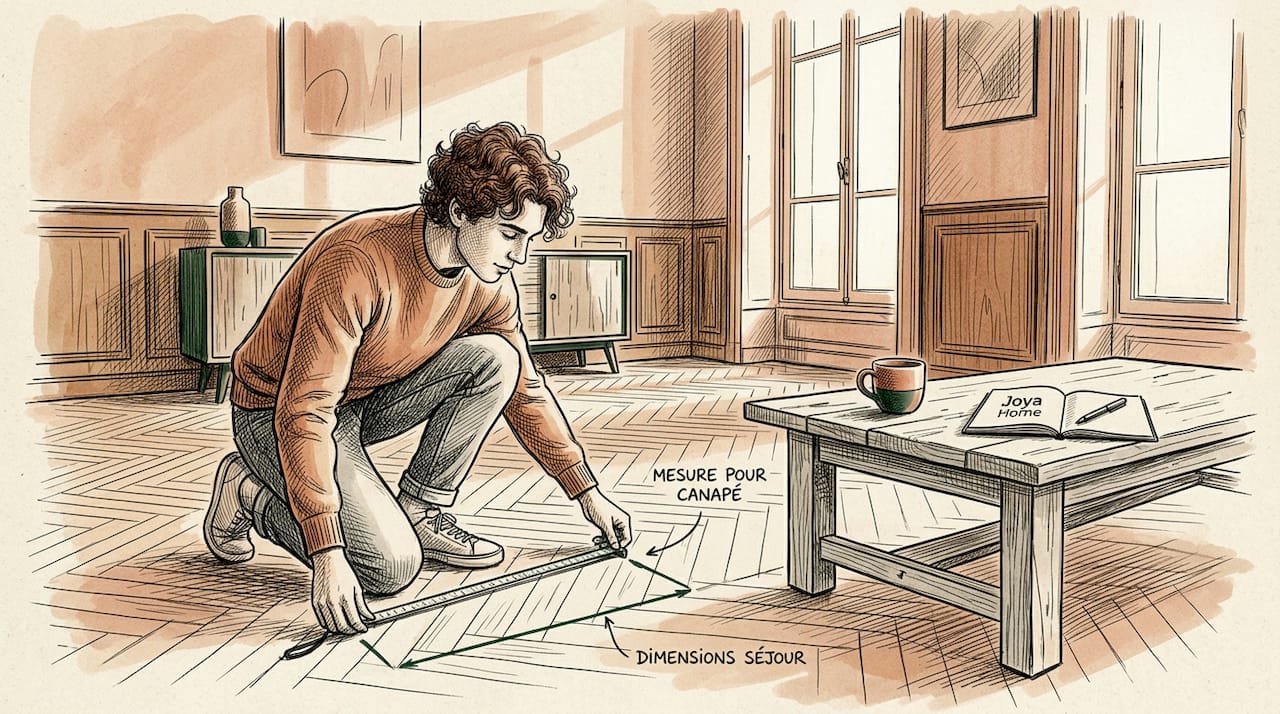
This is the number one mistake, and it's more common than you might think. Many young adults buy a sofa based on their visual impression of the living room, without ever pulling out a tape measure. The result: a sofa that blocks the entrance or leaves no room to move around.
The 60 cm rule is the standard recommended by interior designers to ensure fluid circulation around the sofa. For the distance between your sofa and the coffee table, allow between 40 and 45 cm. It's precise, but 90 cm for main passageways remains the norm to avoid feeling cramped.
Before buying, measure:
- The length and width of the planned installation area
- The ceiling height if you opt for a sofa with a high backrest
- The width of doors, hallways, and stairs for delivery access
- The seat depth relative to your body type
Pro tip: Mark out the future sofa's footprint on the floor with painter's tape. Live with this template for 48 hours to check that the circulation truly suits you. Also consult this guide to prepare the space before delivery.
2. Neglecting material quality and structure
This is often what differentiates a 400-euro sofa that lasts three years from an 800-euro sofa that lasts a decade. Quality isn't always visible from the outside. It's found in the technical specifications.
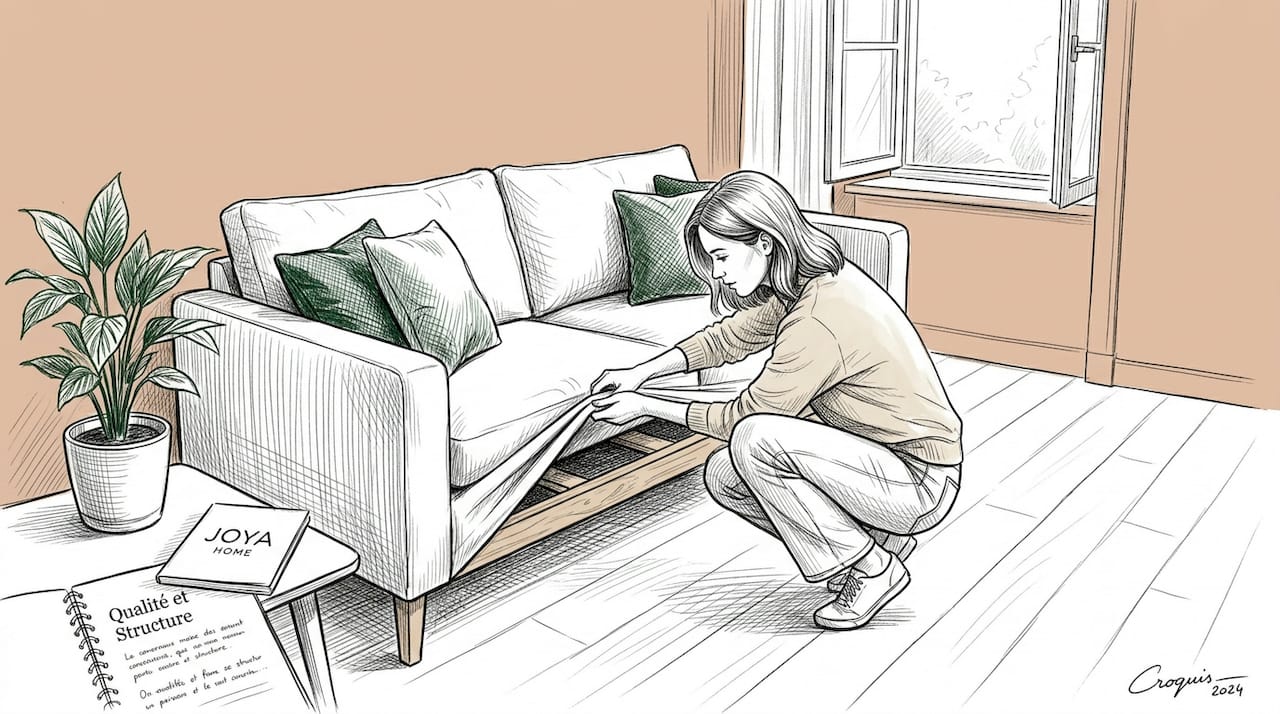
Foam density is the most important criterion for longevity. A foam density of 35 kg/m³ ensures 7 to 10 years of comfort, compared to only 3 to 5 years for 25 kg/m³ foam. And if the seller doesn't mention the density, you can estimate the quality by calculating weight divided by volume to check it yourself.
| Criterion | Acceptable Standard | Recommended Standard |
|---|---|---|
| Foam Density | 25 kg/m³ | 35 kg/m³ and above |
| Structure | Particle Board | Solid Wood |
| Fabric Resistance | Less than 20,000 Martindale cycles | More than 30,000 Martindale cycles |
| Mattress Thickness (convertible) | 10 cm | 14 cm minimum |
A solid wood frame and a fabric with a Martindale index greater than 30,000 cycles are the two reliable indicators of a sturdy sofa. Particle board, often found in entry-level ranges, warps and cracks much faster.
Pro tip: Always ask for the product's technical sheet before buying online. If the seller doesn't provide it, that's a red flag. Learn more about how to recognize a durable sofa before signing.
3. Buying without testing morphological comfort
Photos are deceiving. A sofa that looks deep and comfortable on screen can turn out to be too firm, too low, or provide too little back support once you sit on it. This is one of the most common sofa mistakes that is difficult to correct once purchased.
A morphological test of at least 10 minutes is essential to validate real comfort. Here's what you should assess during this test:
- Lumbar support: Does your back stay naturally straight without effort?
- Seat height: Do your feet touch the floor flat?
- Depth: Are your thighs supported up to your knees without pressure?
- Rebound: Does the seat return to its shape after you get up?
Also try different positions: lying down, semi-reclined, sitting upright. Testing in various positions for a sufficient duration is what validates true comfort, not the initial glance. If you buy online, check that returns are possible within 30 days.
4. Choosing a style or color that unbalances the room
The sofa is not just an object of comfort. It is the visual centerpiece of your living room. Approximately 70% of a living room's visual volume is occupied by the sofa. A wrong choice of color or style, and the entire room seems unbalanced.
Overly bold colors may seem appealing in the store, but they complicate decorative changes. A forest green or burgundy sofa dictates an entire color palette around it. Neutrals (gray, beige, ecru, off-white) allow much more freedom to change cushions, curtains, or rugs according to your desires.
- Prefer neutral tones for long-term decorative flexibility
- Beware of textures that are too fragile for intensive daily use
- Integrate the sofa into your overall style rather than building the rest around it
- If you opt for velvet, check the Martindale resistance and ease of maintenance
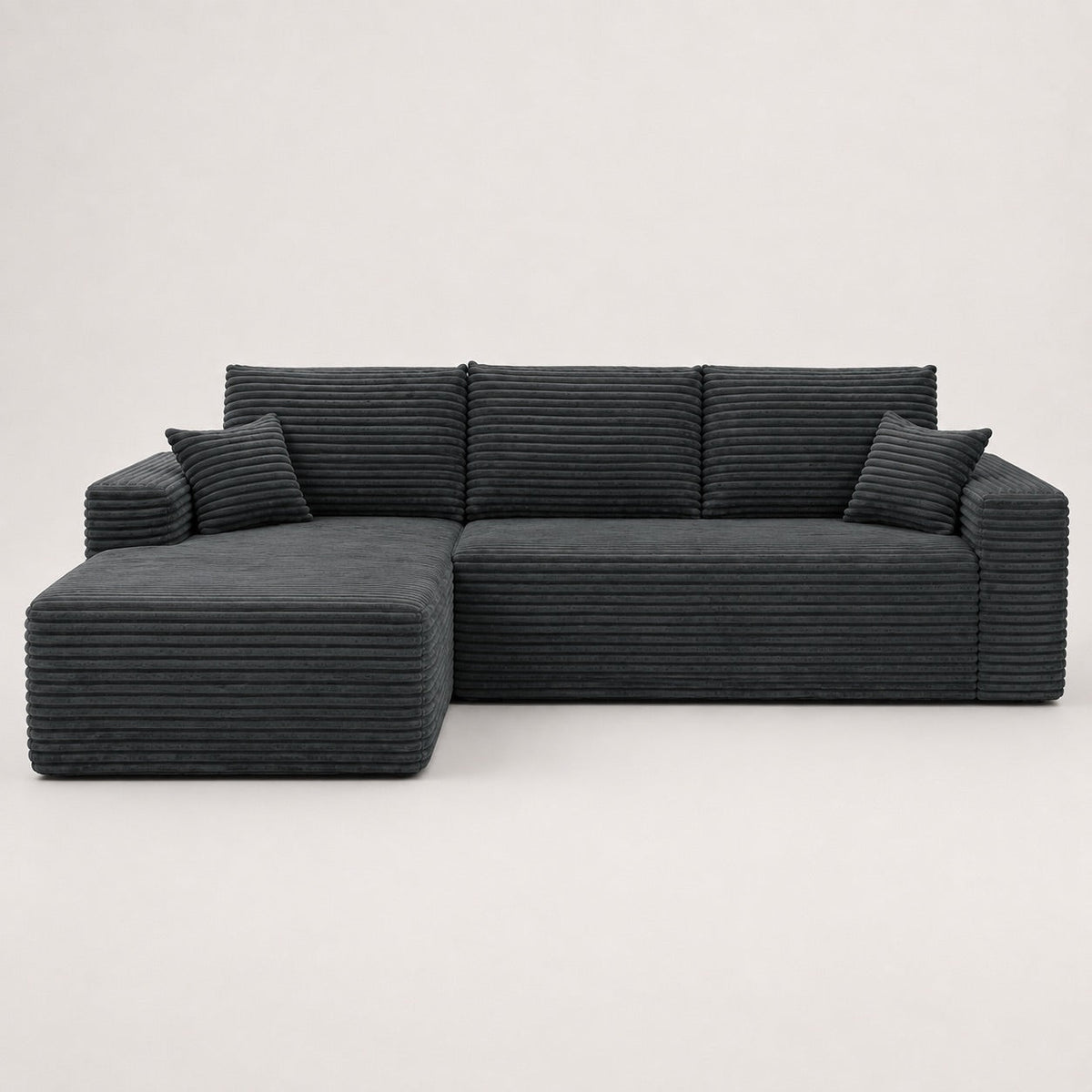
For those who want the best of both worlds, corduroy velvet is an option that combines visual character and robustness. A guide on harmonizing velvet with your decor can save you a lot of regret.
5. Ignoring logistical and maintenance constraints
Many people discover at the time of delivery that their sofa won't fit through the stairwell. This is avoidable, and yet it's a common mistake when buying a sofa that still happens in 2026.
Before finalizing your purchase, check these points in order:
- Measure the width and height of your entrance door, hallway, and stairs or elevator.
- Compare these dimensions with the disassembled dimensions of the sofa.
- Check if the sofa is modular or delivered in several separate elements.
- Inquire about removable and washable covers if you have pets or children.
- Ask if the fabric can be waterproofed or if it accepts protective treatments.
Modular sofas or those delivered compressed solve most access problems. The 3-2-1 method can also help you adapt your sofa's configuration to the shape of your living room.
6. Comparative table of common mistakes and their solutions
| Common mistake | Consequence | Practical solution |
|---|---|---|
| No measurements taken | Sofa too big or inaccessible | Measure living room and access points before any purchase |
| Low-density foam | Sagging in less than 3 years | Demand a density of at least 35 kg/m³ |
| Purchase without physical testing | Chronic back discomfort | Test for at least 10 minutes in-store or test at home |
| Too strong a color | Stagnant and difficult to renew decor | Opt for neutral tones or sober textures |
| Access dimensions ignored | Sofa blocked upon delivery | Check passage measurements before ordering |
My opinion after seeing too many bad purchases
I've helped many people with their furniture choices, and I can tell you that the same mistakes keep coming up. The most costly isn't spending too much. It's buying quickly, without measuring, without testing, without checking the technical details behind the product.
What always strikes me is that the comfort test is consistently underestimated. People sit for thirty seconds, say "it's good," and order. Thirty seconds isn't enough to know if you'll spend your evenings getting up with a stiff back.
The other point I often insist on reminding people about: foam density is not a marketing detail. It's the difference between a sofa that lasts 4 years and one that lasts 10 years. This number alone should guide a good portion of your sofa purchase budget.
Investing intelligently also means choosing furniture that adapts to your real life, not to the ideal living room you imagine. Measure twice, buy once.
— Charles
Joya-home: sofas designed to avoid these mistakes
Joya-home has designed its sofas specifically for young adults living in small apartments who want to avoid the usual complications. Models like Le Méridia and Le Reverso are delivered compressed in a compact box, which immediately solves the problem of access in staircases or small elevators.
In terms of materials, Joya-home corner sofas are designed with high-density foam and highly resistant corduroy velvet. If you're looking for furniture suitable for a small space with quick and stress-free assembly, discover the selection of sofas for small spaces directly on the website.
FAQ
What foam density should I choose for a durable sofa?
Opt for foam with a density of at least 35 kg/m³. This density guarantees a lifespan of 7 to 10 years, compared to 3 to 5 years for less dense foams.
How do I measure my living room before buying a sofa?
Measure the length, width, and height of the planned area, then add 60 cm on each side for circulation. Also check the dimensions of doors and hallways for delivery.
Can I buy a comfortable sofa online without testing it?
Yes, provided the seller offers 30-day returns and provides a complete technical sheet with foam density and fabric Martindale index.
What color sofa should I choose for a small living room?
Neutral shades such as beige, light gray, or off-white visually enlarge the space and facilitate decorative changes over time.
What is a compressed sofa and what are its advantages?
A compressed sofa is delivered in a compact box thanks to foam compression technology. It easily fits through staircases and unfolds itself in a few hours, without any special tools.