
TL;DR:
- To efficiently arrange a sofa, you need to measure the space, simulate the placement with tape, and respect comfort distances.
- A suitable configuration prioritizes circulation, the focal point, and harmony with other furniture for a functional and harmonious living room.
- Physically testing the placement avoids costly errors and optimizes space by integrating appropriate accessories and lighting.
A good sofa placement is defined by the balance between comfort of use, fluid circulation, and visual coherence with the rest of the living room. This sofa placement preparation guide gives you a concrete, step-by-step method for measuring your space, testing configurations, and avoiding common mistakes before purchasing. Whether you're moving into your first apartment or redesigning your living room as a couple, every decision made beforehand will save you costly regrets. The tools are simple, the rules are clear, and the results are visible from the first installation.
What criteria and tools to prepare before arranging your sofa?
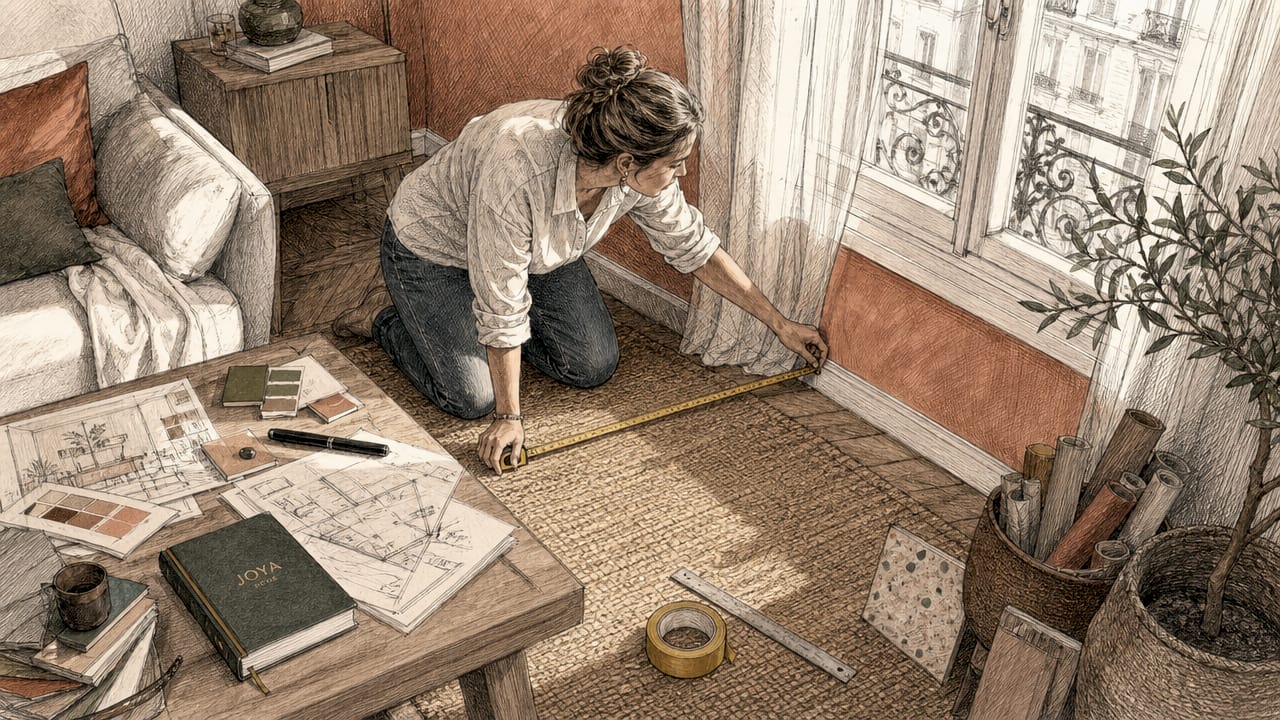
Space preparation is the most neglected and crucial phase of any living room arrangement. Before choosing a model or color, you need to know the precise dimensions of your room and access constraints.
Here are the measurements and tools to gather first:
- Room dimensions: length, width, and ceiling height. These three measurements define what your living room can physically accommodate.
- Opening widths: entrance doors, hallways, stairs, and elevators. Measuring these access points is essential to avoid unpleasant surprises upon delivery. A sofa refused at the front door is a mistake many people make.
- Existing pathways: identify natural routes in your apartment (kitchen to living room, entrance to bedroom) so as not to block them with the sofa.
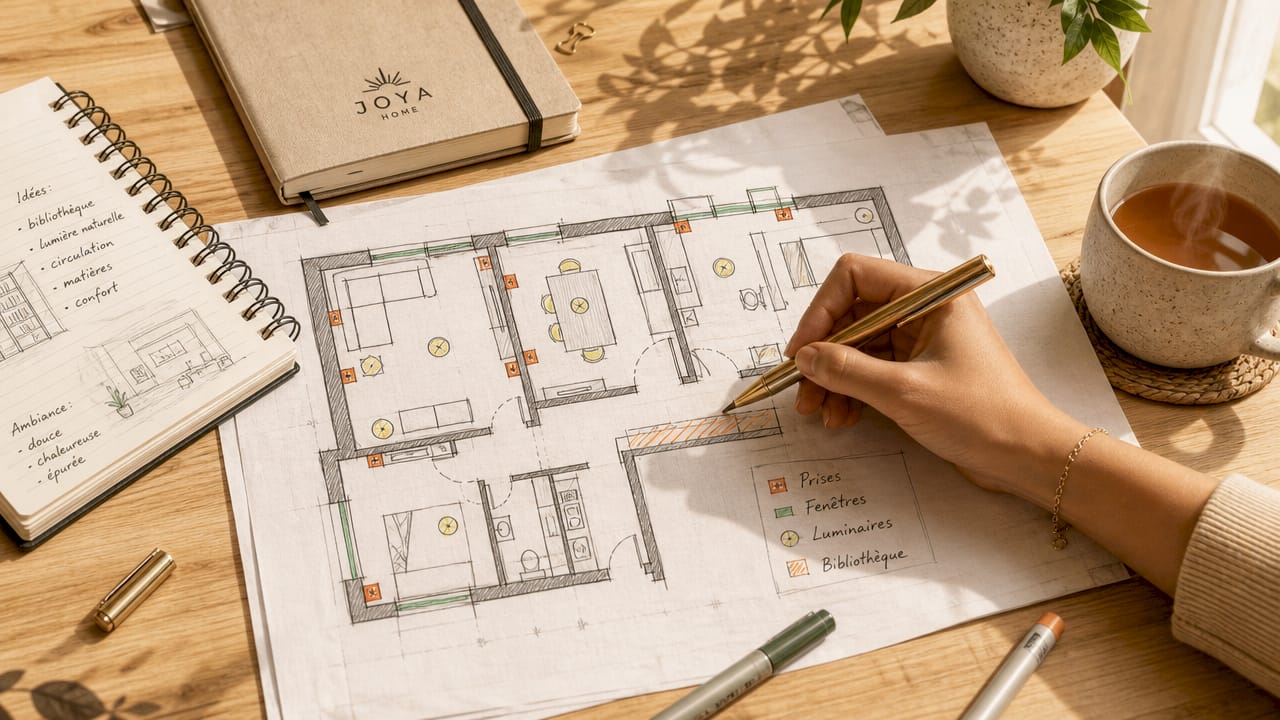
- Practical tools: a tape measure, painter's tape, a scaled plan drawn on graph paper or using an application like MagicPlan or RoomSketcher.
Once you have this data, note the locations of electrical outlets, windows, and light sources. These elements directly influence the orientation of the sofa and the position of accent lamps.
Pro tip: Before ordering anything, prepare the floor space with tape to mark the exact footprint of the sofa. You'll immediately see if the passage remains clear and if the proportions are consistent with the room.
How to choose the ideal sofa placement?
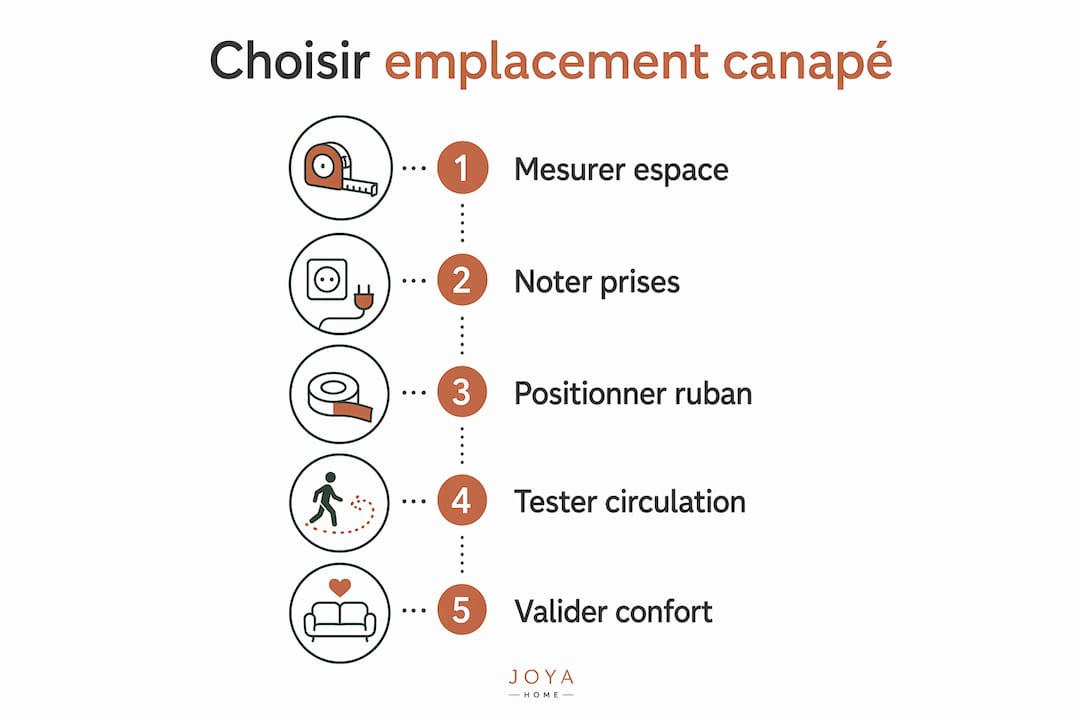
The ideal sofa placement meets three criteria simultaneously: it faces the room's focal point, it respects comfort distances, and it allows free circulation around it.
The focal point is the element towards which the eye naturally turns. In most living rooms, this is the television or a bay window. The recommended distance between the sofa and a 140 cm screen is 2.5 meters. This rule corresponds to two to three times the diagonal of the screen, which protects the eyes and ensures a comfortable viewing experience.
Here are the key distances to respect in your arrangement:
- Between the sofa and the coffee table: 40 to 50 cm to pass easily without bumping into it while keeping the table accessible from the sofa.
- On the sides of the sofa: at least 60 cm of clearance to move around without squeezing.
- In front of the sofa: 80 cm minimum so that seated people can get up without constraint.
- Between the sofa and the wall: a 5 to 10 cm gap creates a feeling of space thanks to the cast shadows. Pushing the sofa against the wall visually shrinks the room.
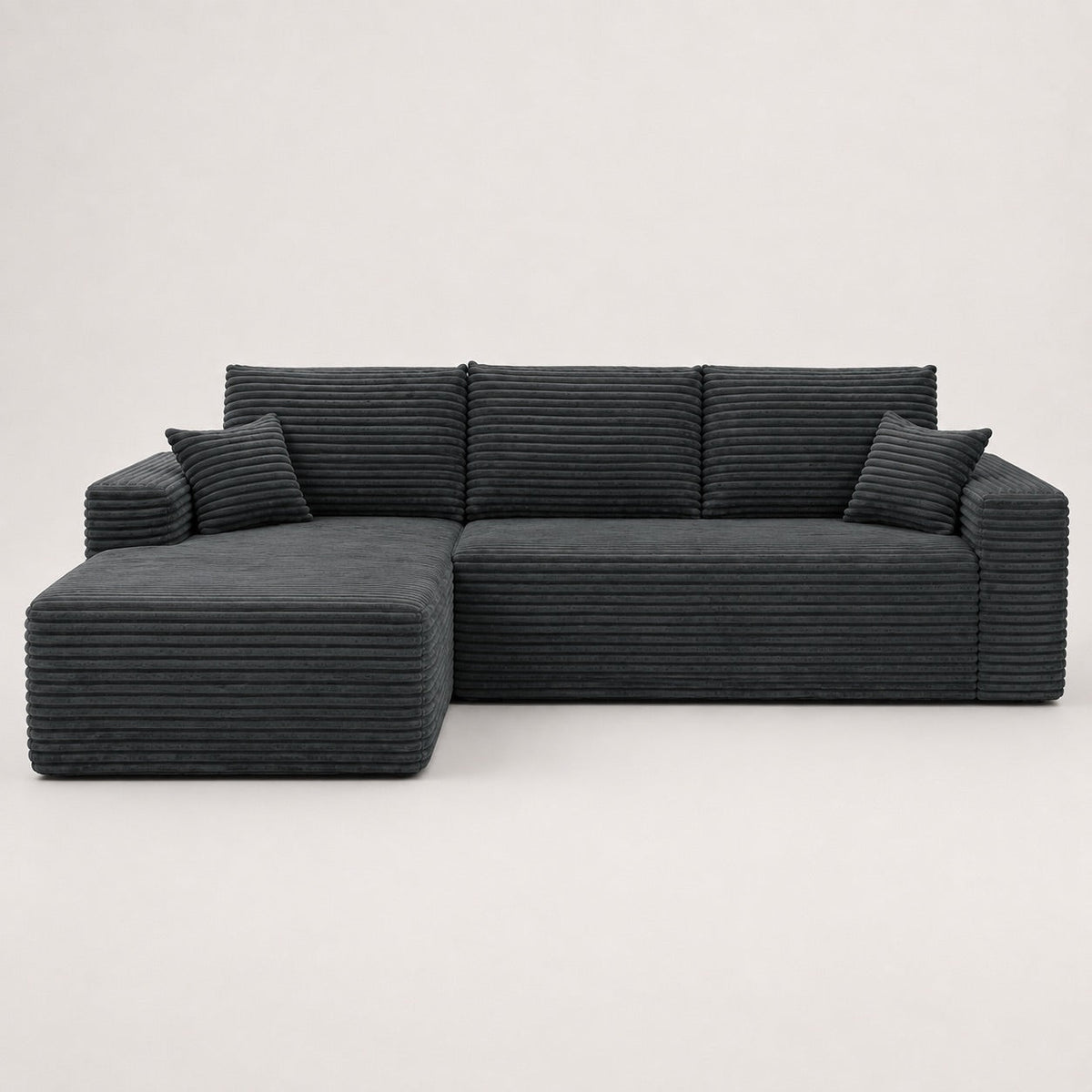
A corner sofa is often the best solution for large living rooms or open spaces: it naturally defines the relaxation area and maximizes seating capacity without multiplying furniture. For small spaces, a compact model oriented towards the main window creates a sense of depth.
Pro tip: Adapt your configuration to your daily use, not to your Saturday night receptions. Decorators recommend designing the living room for ordinary moments, those when you watch a series during the week or read on Saturday morning.
What is the step-by-step method for simulating placement?
Testing the placement before purchasing is the only way to validate a configuration without risk. The tape-on-the-floor method is a proven technique used by professional interior designers to simulate the actual footprint of a piece of furniture.
Here's the complete process:
- Outline the footprint with painter's tape, respecting the exact dimensions of the sofa you are considering. Include the armrests in the measurement.
- Mark the passageways around the rectangle: 60 cm on the sides, 80 cm in front. If these areas encroach on other furniture or the door, the sofa is too large.
- Simulate your daily use: sit on the floor inside the rectangle, lie down, test if you can place a glass on the imaginary coffee table's location. This physical test reveals what plans don't show.
- Check harmony with existing furniture: the coffee table, bookshelf, TV unit. No element should feel cramped or isolated.
- Test several orientations before making your final choice. Rotate the rectangle 90 degrees and compare the two configurations in terms of natural light and circulation.
Pro tip: Testing the ergonomics of a sofa in a store for at least 10 minutes is as useful as simulating its placement at home. Both tests together eliminate 90% of bad purchasing decisions.
What accessories improve functionality around the sofa?
The space around the sofa is structured with a few well-chosen elements. These accessories are not optional: they define whether your living room appears organized or cluttered.
- The rug: this is the most underestimated element in the living room. The front feet of the sofa should rest on the rug to visually anchor the furniture in the space. A rug that is too small floats under the coffee table without structuring the area. Choose a model whose width extends at least 30 cm beyond the sofa on each side.
- Low furniture: a console behind the sofa (if it is offset from the wall), a low bookshelf on the side, or ottomans with integrated storage. These elements fill the space without making the room feel heavy. Lighting: a floor lamp placed at the corner of the sofa or a wall sconce at reading height transforms the ambiance of the living room. Lighting positioned near the sofa creates an intimate zone distinct from the rest of the room.
| Accessory | Main Role | Placement Tip |
|---|---|---|
| Rug | Visually structure the area | Front feet of the sofa on it |
| Coffee table | Accessibility and conviviality | 40 to 50 cm from the sofa |
| Floor lamp | Ambiance and reading | Back corner of the sofa |
| Ottoman with storage | Flexibility and storage | In front or on the side |
Also, remember to check the proximity of electrical outlets before finalizing the placement. A sofa far from any outlet forces you to run cables across the floor, which detracts from aesthetics and creates a tripping hazard.
What I've learned after years of observing poorly arranged living rooms
Most arrangement mistakes don't come from bad taste. They come from wrong priorities: people arrange to impress guests rather than to live comfortably day-to-day. I've seen living rooms where the sofa was oriented towards the front door to "make a good impression" when visitors arrived, while the occupants watched television at an angle for years.
Another common mistake is skipping the physical simulation step. People look at a plan, trust the dimensions on paper, and order. The sofa arrives, it's too big, and they spend six months bumping into it. Physically testing the floor space before buying takes twenty minutes and prevents months of discomfort.
What surprised me most over time: an 8 cm gap between the sofa and the wall radically changes the perception of a room. It's not intuitive, but the shadow cast behind the furniture adds depth to the wall and visually enlarges the living room. It's a detail no one consciously notices, but everyone feels.
— Charles
Find the perfect sofa for your living room with Joya-home
You now have the method. All that remains is to find the sofa that matches your space and style. Joya-home offers a range of corduroy corner sofas designed to fit both large living rooms and small apartments. The Le Méridia and Le Reverso models combine generous seating capacity and sleek design, with compression technology that radically simplifies delivery and installation.
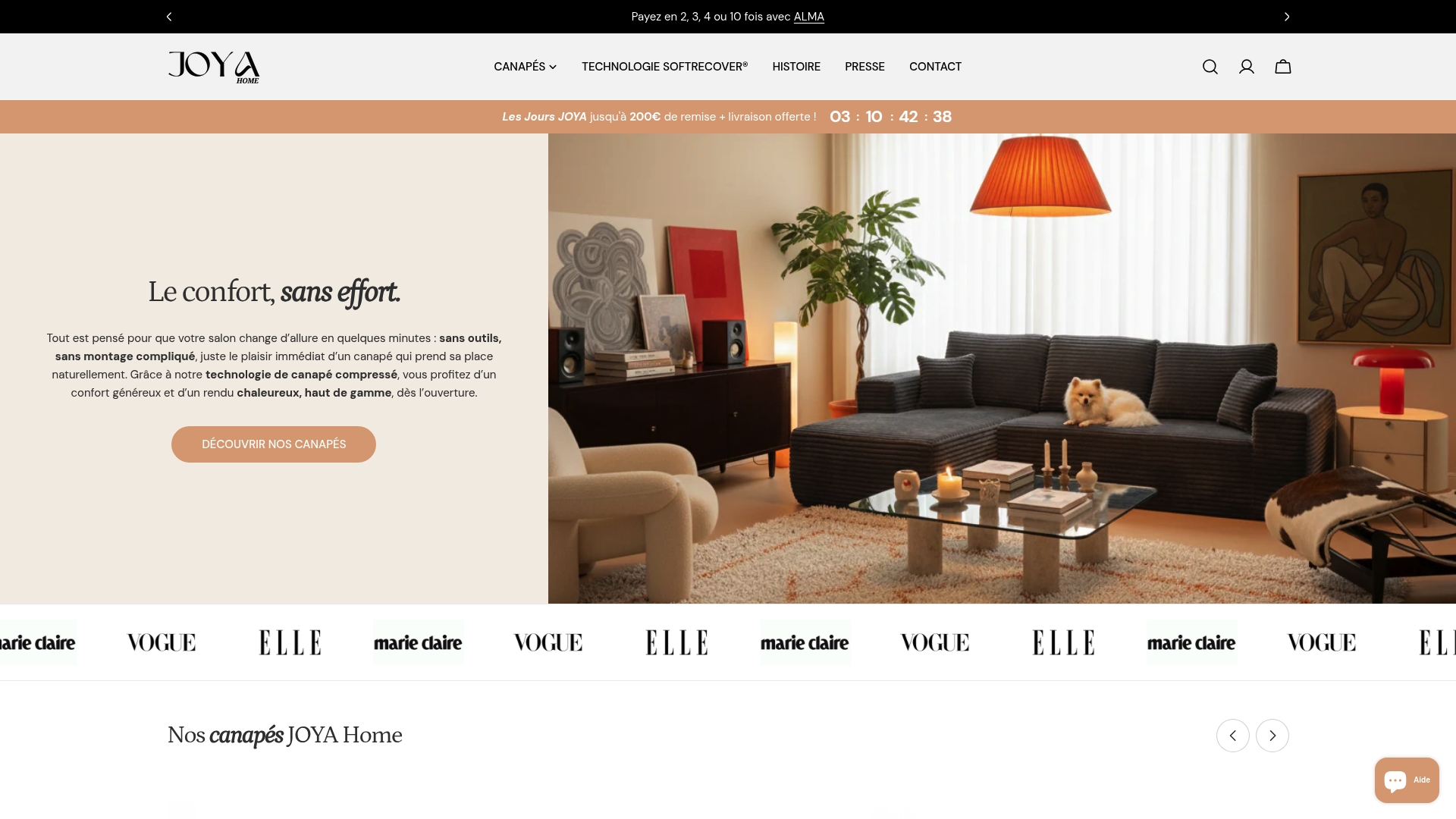
Thanks to Joya-home's compressed sofa technology, the furniture arrives in a compact box that fits through all standard doors, thus immediately solving the most common access constraint. Before ordering, apply the tape method described in this guide to validate the dimensions. You'll know exactly which model to choose and how to position it from day one.
FAQ
What is the ideal distance between a sofa and a television?
The recommended distance is 2.5 meters for a 140 cm screen, which is two to three times the diagonal of the screen. This rule protects the eyes and ensures comfortable viewing from the sofa.
How to simulate the placement of a sofa before buying?
Use painter's tape on the floor to mark the exact dimensions of the sofa. Then test the circulation around it (60 cm on the sides, 80 cm in front) and simulate your use, sitting or lying down, within the rectangle.
Should the sofa be placed against the wall?
No. A 5 to 10 cm gap between the sofa and the wall improves the visual perception of space through cast shadows. Pushing the sofa against the wall compresses the room and gives a feeling of reduced space.
What size rug should I choose for a sofa?
Choose a rug whose width extends at least 30 cm beyond the sofa on each side. The front feet of the sofa should rest on the rug to visually structure the living room area.
Is a corner sofa suitable for small spaces?
A compact corner sofa can be suitable for a small space if it is well-sized. For apartments under 40 sq m, Joya-home offers models adapted for small spaces with quick assembly and optimized footprint.
Key points
Successful sofa placement relies on three non-negotiable rules: measure before buying, simulate on the floor before installing, and design for your daily use rather than for occasional guests.
| Point | Details |
|---|---|
| Measure access points | Check doors, hallways, and stairs before ordering to avoid delivery blockages. |
| Simulate on the floor | Mark the footprint with tape and test circulation before confirming placement. |
| Respect distances | 2.5 m from the TV, 40 to 50 cm from the coffee table, 60 to 80 cm clearance around the sofa. |
| Offset from the wall | A 5 to 10 cm gap creates visual depth and enlarges the perception of the room. |
| Choose the right accessories | Well-positioned rugs, lighting, and coffee tables structure and enhance the sofa area. |