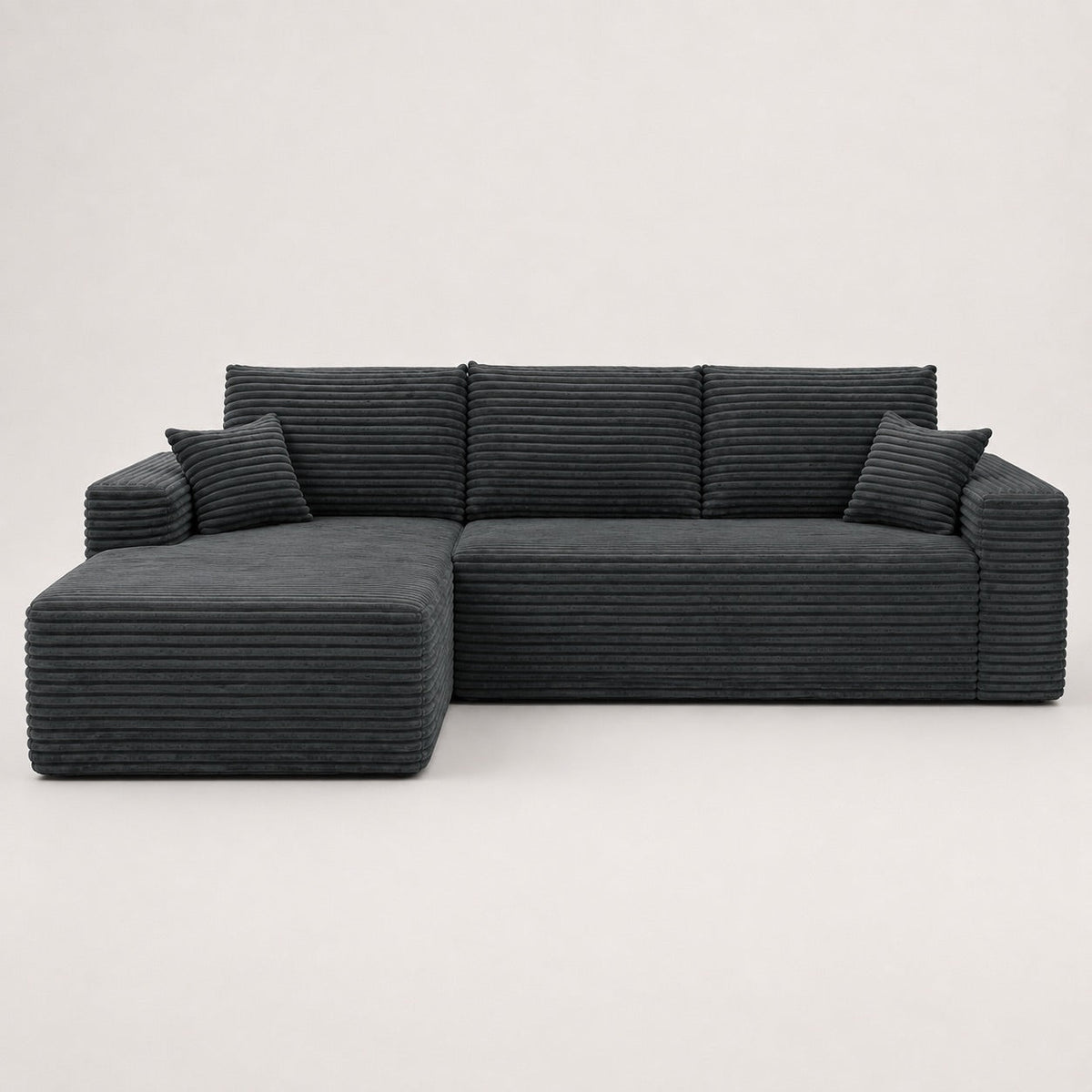

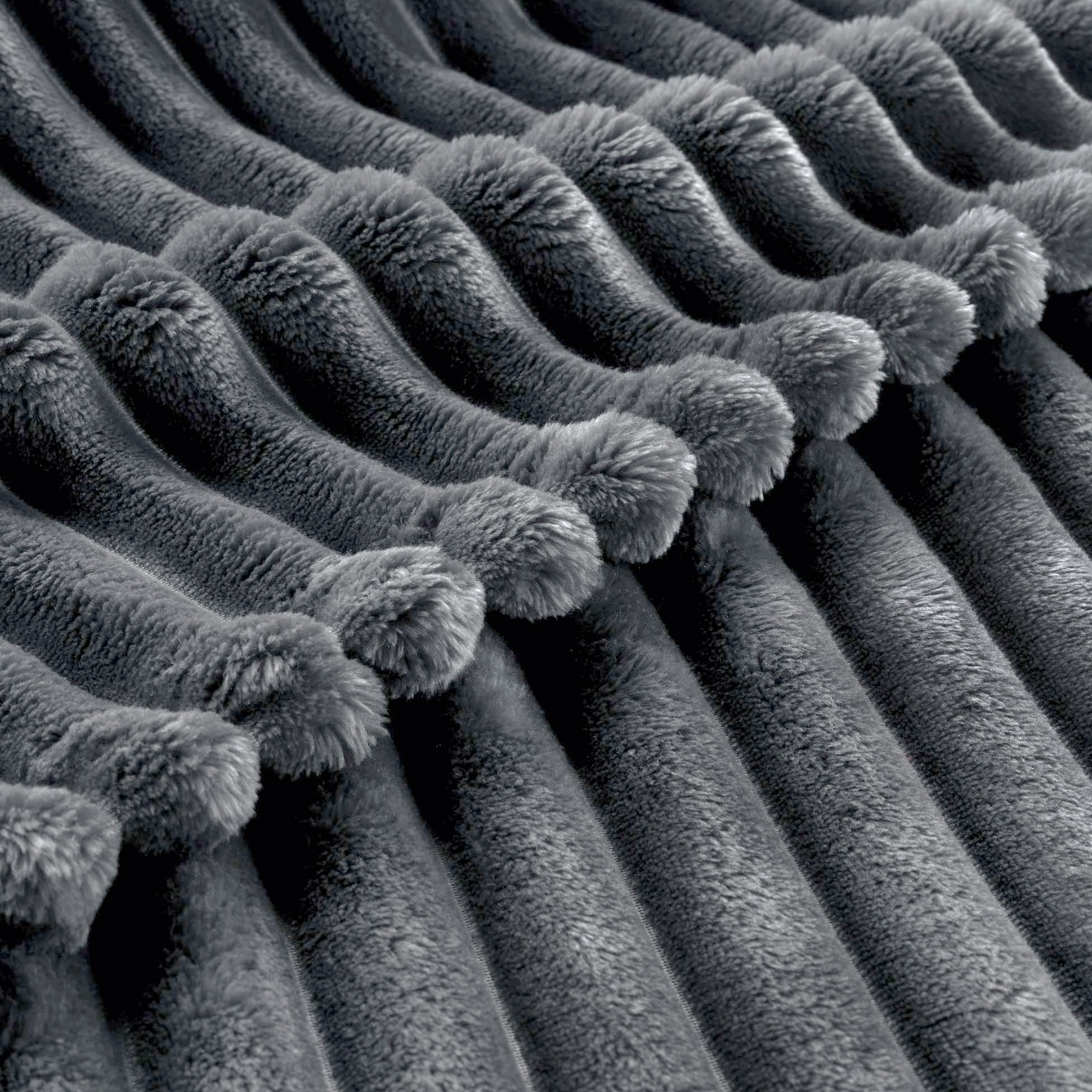
Long associated with professor pants and somewhat retro jackets, corduroy has quietly established itself as a star fabric in fashion… and then in home decor. Today, it can be found on sofas, armchairs, and headboards, where it provides both visual warmth, softness to the touch, and real everyday durability.
But where exactly does this recognizable ribbed fabric come from? And how did it go from the worker's workshop to the designer sofa in our living rooms?
What is corduroy?
Corduroy is a woven fabric with raised ribs – the "wales" – formed by a series of small, cut "cords" on the surface. It's somewhere between velvet and a textured cotton canvas: soft, yet robust.
Technically, modern corduroy is often made of cotton (sometimes blended), with more or less wide ribs:
-
fine (pincord) for an elegant look,
-
wide (wide wale) for a more casual and vintage feel.
Ancient roots: from fustian to velvet
To understand corduroy, we need to go back long before its current name. Most textile historians link it to an ancient fabric: fustian, developed around the 2nd century AD in the Fustat region, near Cairo. This thick cotton fabric, with a brushed surface, is the direct ancestor of modern velvets and corduroys.
In parallel, the history of velvet in the broad sense developed around silk:
-
it appeared in the East (Egypt, Kashmir, Persia, according to sources),
-
then arrived in Europe in the Middle Ages, particularly through the great cities of Italy (Genoa, Venice, Florence),
-
where it became a symbol of luxury reserved for elites and ceremonial attire.
Corduroy, however, would take a different path: less palace, more practical.
The invention of modern corduroy in England

The version of corduroy we know today became more defined in England, in the 18th century, around the textile mills of the North of the country (notably Manchester). There, a thick, brushed cotton with regular longitudinal ribs was developed: corduroy.
This fabric offered several advantages:
-
it was durable,
-
it provided warmth,
-
it withstood wear and tear well.
It was therefore naturally adopted for work clothes, uniforms, and outdoor wear: workers, farmers, mountaineers, scouts, soldiers... Corduroy became the material for people who moved, worked outdoors, and wore out their elbows and knees.
From workwear to "intellectual" uniform
In the 20th century, corduroy gradually moved from the world of work to "civilian" fashion. Press articles and historical analyses show that it was adopted by:
-
students,
-
professors,
-
certain artistic and bohemian circles,
-
and then the counter-cultures of the 60s and 70s.
Corduroy pants or jackets became a kind of unofficial "intellectual/artist/literature professor" uniform. It was seen in films, literature, and on campuses. It retained its robust side, but gained a stylistic and somewhat nostalgic dimension. Then, as often in fashion, this fabric went back and forth between trendy and outdated... before making a strong comeback.

The grand return of corduroy in fashion and decor
In recent years, corduroy has experienced a real comeback:
-
in fashion (pants, jackets, shirts),
-
but also in interior design.
In decor, it is loved for several reasons:
-
its texture adds depth to a sofa or armchair,
-
its slightly matte appearance gives a very cozy visual warmth,
-
its ribbed structure makes it durable and suitable for daily use.
It is therefore increasingly found on:
-
corner sofas,
-
club armchairs,
-
benches,
-
headboards and cushions.
Corduroy today: comfort, character, and sofas

Today, corduroy has a somewhat special status; it retains its heritage as a practical and solid fabric, while being seen as a chic, warm, and slightly retro material.
On a sofa:
-
the ribs visually structure the seating,
-
the touch is more "lively" than a smooth fabric,
-
the colors (beige, grey, black, off-white…) stand out with depth, especially in a bright living room.
This is exactly why brands like Joya Home have chosen OEKO-TEX® certified corduroy for their corner sofas: you benefit from both the history of a robust fabric, the comfort of modern velvet, and a real decorative value in the living room.